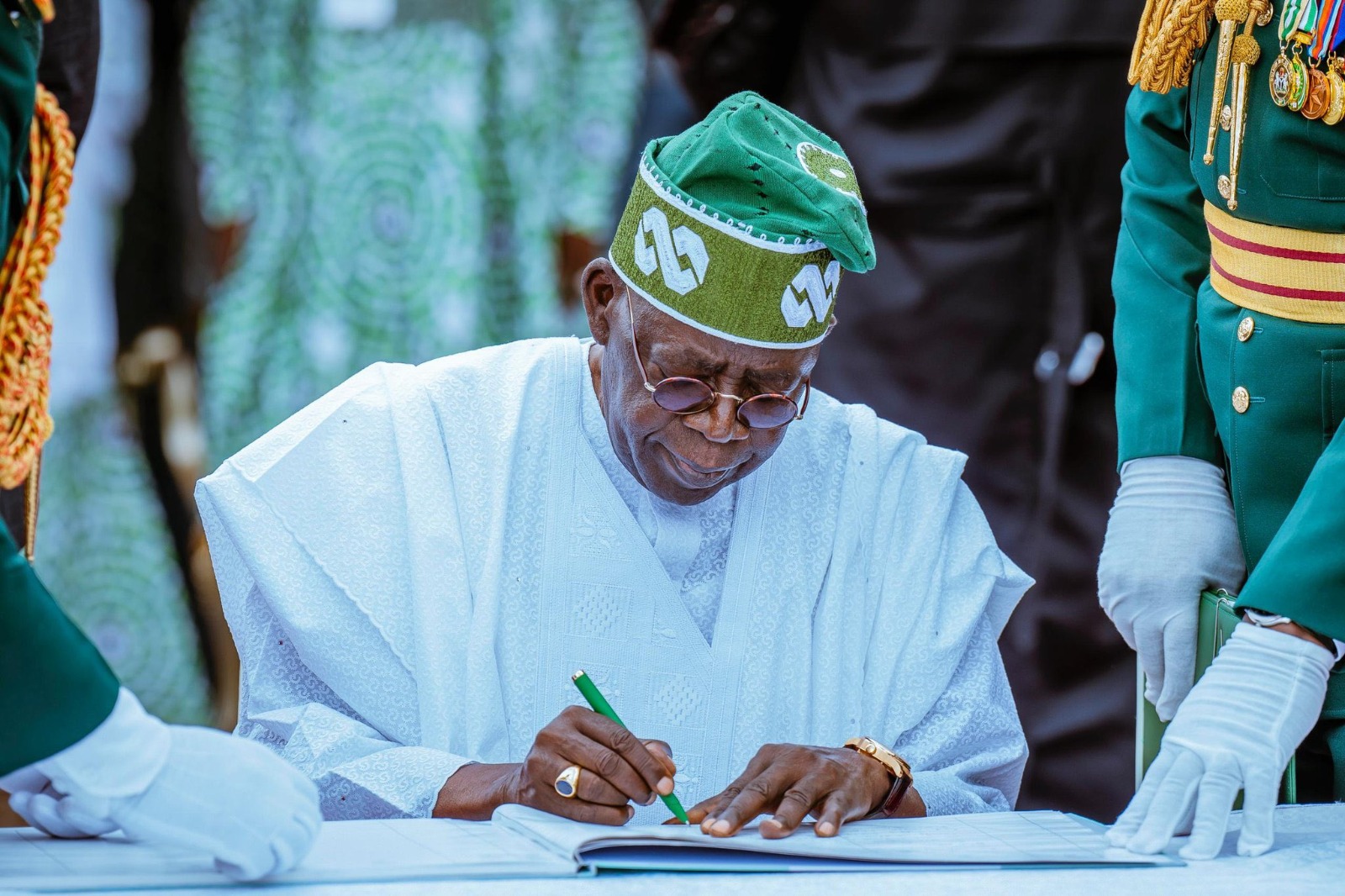
The recent directive by Bola Ahmed Tinubu requiring all political office holders seeking elective positions to resign on or before March 31, 2026, has once again brought into sharp focus the reality that the electoral season is fast approaching.
Beyond its legal and procedural implications, the directive signals an inevitable shift in national attention from governance to politicking, as the country inches closer to the next general elections. This transition, though expected within a democratic cycle, raises serious concerns about the continuity and effectiveness of governance in the intervening period.
As a newspaper, we anticipate that this directive will trigger the resignation of several high-profile appointees occupying strategic positions in government. Such exits, while compliant with electoral laws, are not without consequences. Governance is a continuum, and abrupt departures from key offices risk disrupting policy implementation and institutional stability. A critical question therefore arises: will the President appoint replacements to fill these vacancies for the remainder of the administration’s tenure, or will these positions be left in a temporary state of flux?
If new appointments are made, there is a legitimate concern that such moves could reduce governance to a mere formality. Appointees brought in at this late stage may lack the time, mandate, or political capital to initiate or sustain meaningful policy directions. Governance, in such circumstances, risks becoming perfunctory rather than purposeful. Moreover, there is no assurance that incoming officials will maintain continuity with the policies and programmes of their predecessors, thereby creating further fragmentation within the system.
On the other hand, leaving these offices vacant – or managed in an ad hoc manner – could equally create a vacuum in governance. Ministries and agencies play critical roles in policy execution, service delivery, and economic co-ordination. Any leadership gap at this level may slow decision-making processes, weaken institutional oversight, and ultimately affect the quality of governance delivered to citizens. There is also the added risk that incoming or acting officials may prioritize political consolidation over administrative efficiency, seeking to build alliances ahead of the elections rather than focusing on national priorities.
This newspaper is particularly concerned about the potential governance gaps that may arise as a direct consequence of this directive. While it is acknowledged that the President’s order aligns with the provisions of the Electoral Act, designed to ensure fairness and prevent abuse of incumbency, it is equally important to recognize that such compliance must not come at the expense of effective governance. Laws are meant to strengthen democratic practice, not inadvertently weaken state capacity.
To mitigate these risks, the government must adopt a pragmatic and forward-looking approach. One option is to appoint interim or placeholder officials who can maintain administrative continuity without necessarily undergoing the full rigours of confirmation processes, especially given the limited time frame. However, such an approach must be handled within the bounds of constitutional and legal propriety to avoid further complications.
Alternatively, the President may consider assigning supervisory responsibilities to existing ministers, allowing them to oversee additional portfolios temporarily. In collaboration with permanent secretaries, who provide institutional memory and bureaucratic stability, this arrangement could ensure that the machinery of government continues to function with minimal disruption. This model, though not perfect, offers a practical solution to an otherwise complex administrative challenge.
It is also important to situate this development within the broader national and global context. Nigeria is currently grappling with significant socioeconomic pressures, many of which are exacerbated by external factors such as the ongoing tensions in the Middle East. The resulting volatility in global energy markets has led to rising costs of petroleum products, with a ripple effect on transportation, food prices, and overall cost of living. For a country like Nigeria, which remains vulnerable to external economic shocks, this is not the time for governance to take a back seat.
Economic experts have warned that prolonged instability in global energy supply chains could have far-reaching consequences, particularly for developing economies with limited buffers. Nigeria’s experience in recent years underscores this vulnerability. Inflationary pressures, currency fluctuations, and declining purchasing power continue to strain households and businesses alike. In such a climate, the primary focus of government should be on stabilizing the economy, protecting livelihoods, and implementing policies that cushion the impact of global disruptions.
The impending wave of political resignations, therefore, presents a delicate balancing act. While democratic processes must be respected and upheld, governance must not be sacrificed on the altar of political ambition. The responsibility lies squarely with the administration to ensure that the transition from governance to politicking is managed in a manner that does not compromise national stability.
Ultimately, this is a test of institutional resilience and leadership foresight. The President must take proactive steps to address the administrative gaps that may emerge, while also sending a clear signal that governance remains a priority, even in an election season. Nigerians deserve a government that remains fully functional and responsive, regardless of the political calendar.
As the March 31 deadline approaches, it is imperative that all stakeholders act with a sense of responsibility and urgency. The nation cannot afford a slowdown in governance at a time when decisive action is most needed. Elections will come and go, but the business of governance must continue, steadily, effectively, and in the best interest of the Nigerian people.
We’ve got the edge. Get real-time reports, breaking scoops, and exclusive angles delivered straight to your phone. Don’t settle for stale news. Join LEADERSHIP NEWS on WhatsApp for 24/7 updates →
Join Our WhatsApp Channel