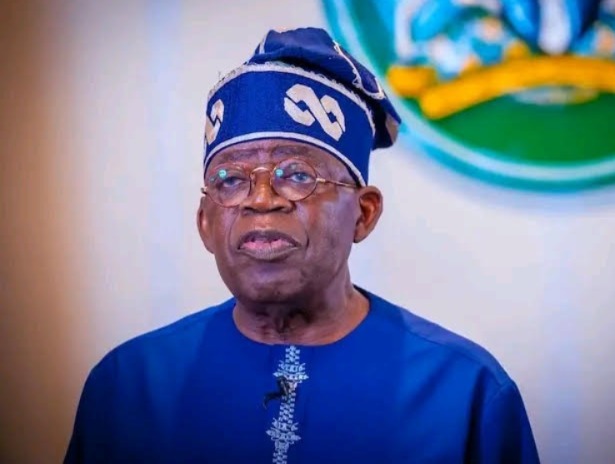
Shortly before the inauguration of President Bola Ahmed Tinubu (PBAT), I wrote an article titled “The Coronation of a Storm Rider,” chronicling his difficult, controversial, and, to many, improbable path to Aso Rock. Few political figures in recent Nigerian history have faced such an intense barrage of opposition. Allegations, ranging from disputed personal history and education to corruption, criminal accusations, and questions about health, were deployed relentlessly. Yet, through the storm, Tinubu endured. He was sworn in as President of the most populous nation in Africa. Notably, the population of those opposed to his ascendancy has not significantly diminished, despite his declared commitment to national renewal.
The purpose of this essay is not to litigate those accusations nor to demand unanimity of opinion. Rather, it is an appeal to Nigerians to look beyond immediate discomfort and partisan passions, to examine the broader economic trajectory now unfolding, and to reflect soberly on what the future may yet hold. Nigeria stands at a historic crossroads. After years of economic stagnation, rising debt, fiscal distortion, and structural inertia, the nation required leadership willing to confront entrenched problems, not with comforting rhetoric, but with difficult, sometimes disruptive action. In this moment of urgency, Bola Ahmed Tinubu emerged as president, not by mere happenstance, but, in the eyes of many Nigerians, by providence.
Like Jephthah in the ancient biblical account, an unlikely and initially rejected figure summoned in a moment of national peril, Nigeria’s present attempt at renewal appears to be unfolding through leadership many did not expect, and some still resist. Yet history often reveals that redemption does not always arrive in familiar or comfortable forms. What matters now is whether Nigerians can understand the trajectory that brought this leadership to power, acknowledge the early outcomes of its policies, and commit collectively to the work that lies ahead.
President Tinubu’s journey to the nation’s highest office was neither linear nor predictable. Known primarily as a political strategist and former governor of Lagos State, he assumed national leadership at a time when Nigeria’s economy was weighed down by deep structural inefficiencies, dwindling investor confidence, and mounting fiscal pressures. His emergence was met with intense skepticism. Many believed that meaningful reform would prove too painful, too disruptive, or too politically costly to sustain. Yet Tinubu pressed forward, guided by a conviction that Nigeria’s problems could no longer be postponed without worsening their eventual cost.
Indeed, the early phase of reform produced visible dislocation in both personal and corporate lives. It was, as I once described it, “a loud reggae of reform,” accompanied by loud lamentation across the land. Subsidy removal, foreign exchange realignment, and fiscal tightening imposed undeniable hardship. Yet as the dust begins to settle, there are emerging signs that the economic rebalancing, anchored on fiscal discipline, market liberalisation, institutional reform, and the correction of long-standing distortions, is beginning to yield cautious but meaningful gains.
Despite persistent criticism and strong headwinds, recent economic indicators suggest that Nigeria’s economy may be stabilising. Quarterly data point to strengthened GDP growth, exceeding four percent, marking the strongest performance in several years and surpassing earlier multilateral projections. Fiscal discipline has begun to take root, easing some of the acute pressures that previously constrained public finance. Debt-service obligations, which once consumed nearly all federally collected revenue, have moderated from crisis levels, restoring limited but important fiscal breathing space.
Inflation, which surged to historic highs during the initial reform shock, has shown early signs of moderation. While the cost of living remains a serious concern for millions of households, recent data offer cautious optimism that price pressures may be cresting. Foreign exchange reserves have strengthened in recent months, reinforcing Nigeria’s external buffers and restoring a measure of investor confidence that had been eroded over time.
Equally notable is the changing revenue and trade profile. Non-oil revenue performance has improved significantly, reflecting early gains from tax reform, improved compliance, and a gradual widening of the productive base. Trade balances and export growth point toward tentative progress in economic diversification, an objective long proclaimed but rarely realised. Social investment and infrastructure programmes have also expanded, even as questions persist about transparency and execution. Targeted social safety interventions have reached millions of households, while renewed investment in roads, rail, and transport corridors is beginning to reshape connectivity and economic integration.
These developments, while encouraging, do not negate the gravity of Nigeria’s remaining socio-economic challenges. No reform of this magnitude occurs without pain. The cost of living remains high, poverty and underemployment persist, and many Nigerians continue to struggle with precarious livelihoods. Security challenges still undermine agricultural productivity and investor confidence in several regions. These realities demand not triumphalism, but empathy; not denial but coordinated policy action; not division, but national cohesion.
It is in this context that the call for unity becomes most urgent. Nigeria is at a decisive moment. Reform has begun, but it is far from complete. The early outcomes of President Tinubu’s policies suggest direction, not destination. Structural transformation rarely delivers immediate relief to every household; its benefits unfold unevenly and over time.
To retreat now, to allow reform fatigue, political antagonism, or cynicism to derail the process, would be to deny the nation its chance at lasting renewal. History teaches that societies undergoing transformation must first endure discomfort. Criticism is not only legitimate; it is necessary. But criticism must be accompanied by contribution of ideas, of engagement, and of the patience that serious reform requires. A fragmented nation cannot sustain reform; only a united one can.
This is, therefore, a rally for progress rather than conformity. One may continue to believe that the inauguration of May 2023 was a mistake; such convictions are the right of any citizen in a democracy. Yet it is worth reflecting soberly on the alternative before us. If reform succeeds, if it is refined, humanised, and sustained, Nigeria stands to emerge stronger, more resilient, and more self-reliant than it has been in decades.
Like Jephthah, summoned from the margins to confront an existential threat, Nigeria’s present leadership represents a paradox of disruption and possibility. What ultimately matters is not how this chapter began, but whether Nigerians choose to walk together toward renewal.
Nigerians are therefore called not merely to observe from the sidelines, but to participate actively in building the nation we envision; economically resilient, socially inclusive, and institutionally stable. Let us give Nigeria the chance to succeed. Let us support the continuation and deepening of reforms that, though imperfect, aim to unlock our vast national potential.
History reminds us that nations are not renewed in moments of comfort, but in seasons of courage. Nigeria’s destiny is not yet sealed; it is still being written, by leadership, by policy, and by the collective will of its people. And in years to come, history will ask not only what President Tinubu did, but what Nigerians chose to do with the moment they were given.
– Dr. Lolu Ojo, a Consultant Pharmacist
We’ve got the edge. Get real-time reports, breaking scoops, and exclusive angles delivered straight to your phone. Don’t settle for stale news. Join LEADERSHIP NEWS on WhatsApp for 24/7 updates →
Join Our WhatsApp Channel