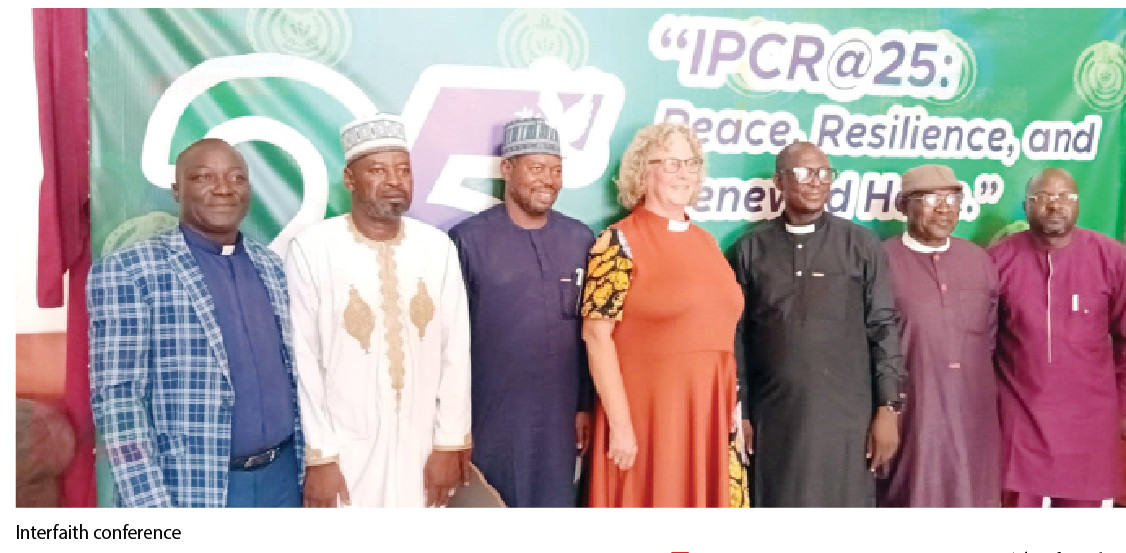
Last week, we began laying the foundation of “Fasting, Faith and Peace: Interfaith Dialogue for National Harmony” by placing Nigeria’s interfaith reality—especially within Muslim and Christian communities—at the heart of the discourse. We recalled how the sacred seasons of Ramadan and Lent invite fasting, prayer, and charity, offering a shared space for ethical reflection that can strengthen peace and social responsibility in the nation.
We also highlighted the gathering in Abuja as a focal point for thoughtful dialogue, rooted in theological depth and aimed at translating sacred disciplines into public wisdom. From there, we examined the presentation’s objective: to promote interfaith understanding and peaceful coexistence through joint reflection on the spiritual teachings of Ramadan and Lent, with implications for scholarly exchange, policy discussions, and cooperative community action in Nigeria.
The discussion then moved into Ramadan and nation building, beginning with how fasting serves as more than abstention—it trains moral character and supports moral leadership grounded in humility, service, and justice. We drew attention to Qur’anic anchors that connect fasting to Taqwa (conscious righteousness), guidance through revelation, and steadfast justice even when facing hatred or grievance. We further reflected on the shared heritage of fasting across faiths and noted that the Qur’anic understanding of righteousness places belief alongside action and social responsibility. The first part of this presentation also addressed charity and social responsibility, emphasising that fasting heightens awareness of the vulnerable and turns spiritual renewal into concrete commitments to care, solidarity, and an ethical economy that prioritises the welfare of the whole community.
This week, we continue from there—moving into “The Contribution of Islamic Teachings to Peaceful Society.” The focus shifts to how the central Ramadan ethos—self-control, compassion, gratitude, and social responsibility—maps onto the universal aspirations for peaceful civic life, offering a robust foundation for interfaith cooperation in Nigeria.
The Contribution of Islamic Teachings to Peaceful Society
The core Ramadan ethos—self-control, compassion, gratitude, and social responsibility—maps closely onto universal aspirations for peaceful civic life. The Qur’anic emphasis on justice, mercy, and accountability provides a robust framework for interfaith cooperation. By centring discussions on these shared values, this assembly can highlight how Islamic teachings contribute to a peaceful society that respects diversity and protects human dignity. The Prophet Muhammad’s guidance on personal virtue and communal welfare offers a complementary lens for interfaith understanding. The Qur’anic call to patience and restraint is complemented by the Hadeeth that connect personal piety with social beneficence. For example, the Prophet is reported to have said that fasting during Ramadan with sincere faith and in the hope of reward yields forgiveness of sins, underscoring that spiritual renewal should culminate in responsible, compassionate action within the community. Equally, the maxim that “the best of people are those who are most beneficial to others” remains a powerful summons to interfaith cooperation, service, and shared problem-solving in a plural state such as Nigeria. This is a principle that links religious devotion with civic virtue, offering a practical pathway for peace-building across faith lines.
Key Texts: Qur’anic Verses and Hadith Anchors
The Qur’anic verses provide a concise framework for discipline, guidance, and justice, while the Hadeeth illuminate the personal and social dimensions of faith that motivate constructive interfaith engagement. The foundational texts include the following: “O you who have believed, fasting has been prescribed for you as it was prescribed for those before you, that you may become righteous” (Q2:183); “Ramadan is the month in which the Qur’an was revealed, a guidance for the people and clear proofs of guidance and criterion. So whoever of you is present this month should fast it, and whoever is sick or on a journey should fast a number of other days” (Q2:185); and “O you who have believed, be steadfast witnesses for Allah in justice, and do not let the hatred of a people prevent you from being just” (Q5:8).
Hadeeth anchors provide a bridge between inward discipline and outward social responsibility. The Prophet is reported to have stated that fasting during Ramadan, undertaken with sincere faith and in the hope of reward, yields forgiveness of sins from the past, underscoring the transformative ethical aim of Ramadan: personal purification that radiates into a community-building peace. The traditional maxim often summarised as, “the best of people are those who are most beneficial to others,” highlights the social imperative of interfaith cooperation and mutual service, a principle widely cited in classical collections and transmitted through diverse chains of narration. Taken together, these texts offer a shared vocabulary for a dialogue that seeks not merely doctrinal agreement but concrete acts of mercy, justice, and solidarity.
Practical Implications for Abuja and Nigeria
The Interfaith Ramadan–Lent meeting in Abuja can translate spiritual reflections into tangible, collaborative action. Practical formats might include joint study circles that examine selected Qur’anic exegesis alongside Christian reflections on Lent, with emphasis on the ethical themes of self-discipline, charity, and social responsibility. A programme of joint service days—feeding programmes, support for the vulnerable, healthcare outreach, and educational initiatives—could be designed to demonstrate the unity of purpose across faith lines while addressing local needs. Public seminars and moderated dialogues can help translate insights into policy recommendations that advance peace-building, conflict resolution, and inclusive governance. In a country with diverse religious communities, these activities can serve as a narrative of common humanity and shared responsibility, reinforcing social cohesion and contributing to national harmony. By aligning spiritual renewal with civic duty, interfaith leaders can model a form of governance and civil society that is both spiritually grounded and practically effective.
The gathering of Muslim and Christian scholars in Abuja offers a particularly auspicious space to model the integration of personal piety with public virtue. It invites participants to translate the discipline of Ramadan and the contemplative ethos of Lent into a cooperative agenda—one that honours religious difference while prioritising the common good. In doing so, it affirms the conviction that faith-based moral reflection, when opened to one another, can illuminate a path towards peace, mutual respect, and durable harmony in Nigeria.
Conclusion
Today’s meeting here in Abuja stands at the intersection of spiritual discipline, moral leadership, and practical peacebuilding. By naming and honouring the shared ethical terrain of fasting, charity, justice, and service, Muslim and Christian scholars can cultivate a language of interfaith partnership that is both morally compelling and socially transformative. The verses of the Qur’an and the prophetic traditions offer a robust compass: fasting disciplines the heart; charity binds communities; justice governs public life; and service to others becomes the highest expression of faith. In a nation as richly diverse as Nigeria, such a programme can become a living exemplar of peaceable coexistence—an ethical project that nourishes national harmony while preserving the unique identities of its faith communities. It is an invitation to scholars, policymakers, religious leaders, educators, and civil society to join in sustained, collaborative reflection and action for a more just, compassionate, and united Nigeria.
We’ve got the edge. Get real-time reports, breaking scoops, and exclusive angles delivered straight to your phone. Don’t settle for stale news. Join LEADERSHIP NEWS on WhatsApp for 24/7 updates →
Join Our WhatsApp Channel