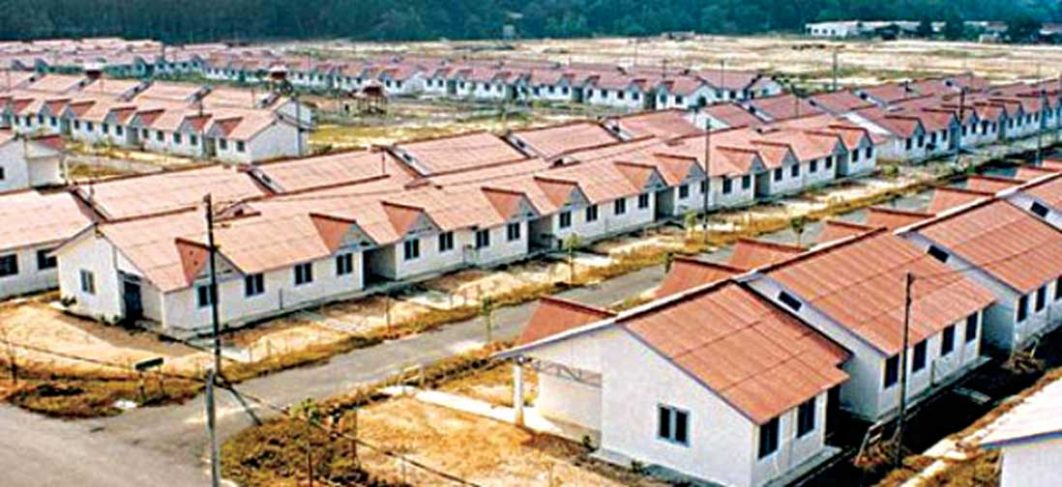
Stakeholders are advocating the regulation of house rent charges in the real estate sector amidst arbitrary hikes by some overzealous landlords, which is making life uncomfortable for tenants in the country.
Currently, tenants are forced to bear the additional burdens of agency fees, caution fees, maintenance fees, service charges, and inflated charges from commission agents, which now range from 25 to 30 per cent of the annual rent.
These costs consume a significant share of household incomes, forcing many residents to relocate to suburbs or distant villages where cheaper accommodation is available for rent.
The consequence is longer as commuting through this uncharted territory on daily basis has reduced productivity, decline overall quality of life and mount financial strains and burdens on budgets and income.
The absence of rent control mechanisms and effective regulatory oversight have enabled arbitrary rent hikes and exploitative practices in the property market, worsening inequality and fuelling social challenges such as homelessness, poverty and social exclusion.
Stakeholders believe that, residential landlords, if left unchecked, are determined to spiral rents beyond control such that the imbalance will even push rents even higher and worsen affordability and housing crisis for Nigerians.
Similarly, the additional shocks of rental cost has put pressure on disposable and shoestring budgets of families who rely on monthly and daily wages for survival hence arbitrary increments will leave a protracted crisis for the housing sector.
Speaking to a Landlord in the Ojodu Berger area of Lagos, Dipo Karounwi, a retired civil servant who built a modest two-storey house after decades of savings, said tax threats and other reforms in the housing sector felt like a trap, adding that he spent 5 years building his house.
He said, “Tenants think landlords are rich, but they don’t know the cost of cement, the constant repairs, and the ground taxes people collect yearly. Now the government says I must insure the house, and at the same time, they want to regulate rent and make tenants pay three months’ rent? How will we survive? Banks don’t wait. Contractors don’t wait.
For Kemi Ajibade, a Secondary school teacher in Meiran area of Lagos, she said: “I earn N120,000 a month,” complaining bitterly to LEADERSHIP, but my landlord asked for N800,000 for a two-bedroom flat. I had to borrow from friends and our cooperative savings to pay rent.
“It almost broke me. If the government can help us regulate the actions of unscrupulous landlords and estate agents in just three months, it will be much better for us.”
For Lagos tenants, paying one to two years’ rent upfront has been a longstanding nightmare. It locks many families out of decent homes, traps others in cramped apartments, and forces some into debt spirals.
Advocacy groups have long argued that such practices are exploitative in a city where housing is scarce and incomes are meagre. They say the proposed Lagos Tenancy Bill is a long-overdue correction.
Earlier, the Lagos State House of Assembly reviewed a comprehensive tenancy bill that seeks to overhaul rent collection practices, regulate the operations of estate agents, define the rights and responsibilities of landlords and tenants, and streamline tenancy dispute resolution.
The proposed legislation, titled, ‘A Bill for a Law to Regulate the Relationship Between Landlords and Tenants, Including the Procedure for the Recovery of Premises in Lagos State, and for Other Connected Matters,’ is set to repeal the Tenancy Law Cap. T1, Laws of Lagos State 2015. Under the bill, it would be unlawful for a landlord or agent to demand from a sitting tenant more than three months’ rent in advance for a monthly tenancy, or more than one year for a yearly tenancy, regardless of the tenancy’s original terms
Speaking on the impact of tax threats on landlords, the immediate past chairman of NIESV Lagos chapter, Gbenga Ismail, noted that, for many Landlords in Lagos and some other parts of the country, they see rental income as a form of retirement security. The lump-sum rent collection system, often one or two years paid in advance, provides a cushion against Nigeria’s volatile economy, where inflation erodes the value of monthly rents and irregular income flows make long-term planning difficult.
He explained that by stripping that away with taxes will further erode vacancy and home availability as this is expected to compound more woes for tenant seeking accommodations.
Also speaking to LEADERSHIP, CEO of Greenchell Homes and Property, Ezekiel Oke warned that, the idea of punitive taxes sounds good, it protects lives and property, but warned that the economic realities don’t support such blanket enforcement. “Landlords will find ways around it, either by inflating rents, demanding hidden charges, or pulling their houses off the market altogether. Ultimately, it is tenants who will still suffer.” he said.
His caution is echoed by analysts who point to Nigeria’s weak regulatory record. Laws are often passed with fanfare but falter at the point of enforcement. With institutions underfunded and corruption entrenched, the danger is that the new rules could become another layer of bureaucracy that punishes compliant landlords while rogue operators escape unscathed.
Meanwhile, Lagos’ proposed tenancy law has wider provisions beyond the three-month rent cap. It mandates landlords to issue receipts for every rent payment, with fines for non-compliance. It defines notice periods for evictions, encourages alternative dispute resolution mechanisms, and seeks to regulate estate agents through mandatory registration and defined commission rates.
On his part, the chairman of the Association of Capital Markets Valuers (ACMV), Chudi Ubosi, highlights that punitive taxes will further erode the structures of rents as more landlords will take property off the market, and this will create more housing deficits for home renters and homeowners
Ubosi said, “I think that my first reaction would be that many policies that work elsewhere in the world rarely, very rarely have same impact in Nigeria. Reason is simply that Nigeria does not have the same economic structures & strength of institutions that these other countries have to back up the policies.
”I do not think that a punitive tax against Landlords as a way of bringing down rents will have that effect. In fact, it will serve to further increase the rents as the tax will be passed onto the tenants one way or another.
”The government should focus on what the factors giving rise to high rents (land cost, no access to land, no mortgages, high interest costs, Legal bureaucracy etc etc) are and deal with them from a long-term perspective not a short-term thing for political purposes.”
We’ve got the edge. Get real-time reports, breaking scoops, and exclusive angles delivered straight to your phone. Don’t settle for stale news. Join LEADERSHIP NEWS on WhatsApp for 24/7 updates →
Join Our WhatsApp Channel