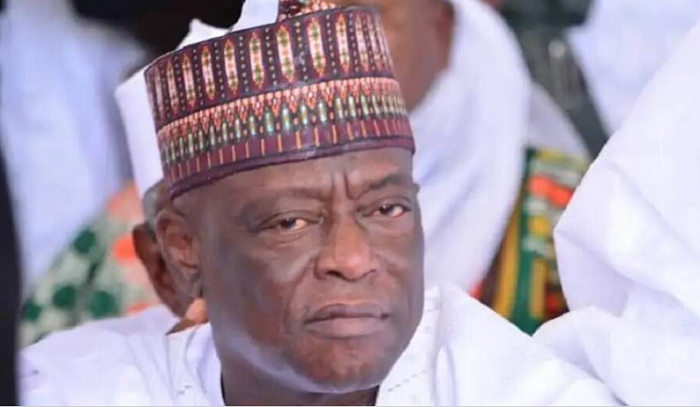
In the crowded pantheon of Nigeria’s self-made industrialists, Dahiru Barau Mangal, CON, stands out not merely for the scale of his wealth but for the texture of his journey. It is a story that begins not in boardrooms or inherited privilege, but behind the wheel of a hired vehicle—where grit, patience and an instinct for opportunity first took shape.
Born on August 3, 1957, in Katsina State to the family of Alhaji Barau Mangal and Hajiya Murjanatu Barau Mangal, Dahiru Mangal grew up in a close-knit household alongside his siblings. Like many northern Nigerian families of his generation, life was defined by modest means and hard work. His early years offered little hint of the industrial empire he would one day build—except perhaps an uncommon determination to move forward, no matter how slow the road appeared.
Mangal’s entrepreneurial life began humbly. He started as a truck driver, transporting goods across long distances and unforgiving roads. It was here, in the daily grind of logistics and movement, that he learned the value of reliability. Eventually, he bought his own car for hire, laying the foundation for a reputation built on trust. One vehicle became several; small contracts became bigger ones. Transportation, it turned out, was not just a livelihood—it was a gateway.
From transport, Mangal expanded into oil and gas, construction, and manufacturing, guided by a philosophy of calculated risk. By the time he founded Max Air in 2008, he had already mastered the art of turning uncertainty into advantage. What began as a modest airline has since grown into one of Nigeria’s leading aviation brands, operating domestic, regional and international routes. In a sector notorious for turbulence, Max Air’s resilience reflects the temperament of its founder: steady, patient and strategic.
But aviation was only one piece of a far larger puzzle. Mangal’s influence extended into the energy sector, where he served as a Non-Executive Director at MRS Oil Nigeria Plc until his resignation in 2017. He also emerged as a major shareholder in Oando Plc, a role that thrust him into one of Nigeria’s most high-profile corporate disputes. In 2017, a petition alleging financial mismanagement led to regulatory intervention and the temporary suspension of Oando’s trading on the Lagos and Johannesburg stock exchanges. The matter, resolved in early 2018 through mediation by the Emir of Kano, Lamido Sanusi, underscored Mangal’s reputation as a businessman unafraid to challenge powerful interests in the pursuit of accountability.
Perhaps the most dramatic statement of Mangal’s industrial ambition is found in Kogi State. In November 2021, Mangal Industries signed a $600 million agreement with China’s Sinoma International Engineering to construct a three-million-metric-ton-per-year cement plant, supported by a 50-megawatt captive power facility, in Mopa. By July 2024, the first bags of Mangal Cement rolled off the production line. Valued today at over $1.5 billion, the plant—with a daily capacity of about 6,000 tons—represents a seismic shift in Nigeria’s cement landscape, promising jobs, technology transfer and reduced dependence on imports.
At an annual stakeholders’ forum themed “Building Stronger Partnerships: Quality-Driven Solutions and Value for Money,” Mangal Industries reaffirmed its commitment to innovation and quality. Company executives described a vision anchored on efficiency, customer-centricity and adherence to the highest environmental and safety standards. For Mangal, manufacturing is not just about output; it is about building systems that endure.
Yet, beyond factories and fleets, philanthropy remains a defining pillar of his legacy. Through the Mangal Foundation, established in 2016, he has sponsored thousands of medical interventions, including eye, hernia, hydrocele and urology surgeries. In Katsina State alone, over ₦80 million has been committed to healthcare for more than 3,000 vulnerable patients, many of whom would otherwise have no access to treatment. His generosity also extends to education, food distribution, support for internally displaced persons, and daily relief efforts across Katsina, Kano and Kaduna.
For beneficiaries like Mallam Adamu Aliyu, a staff member of the State Polytechnic, Mangal’s philanthropy is not abstract goodwill—it is a life-changing intervention. Such stories explain why, in many northern communities, his name is spoken with gratitude as much as admiration.
At 66, Dahiru Barau Mangal has little left to prove. Titles and honours may follow, but they are secondary to the more profound imprint he continues to make on Nigeria’s economy. From a single-car-hire business to airlines, oil, and a billion-dollar cement plant, his journey affirms a powerful truth: in Nigeria, as elsewhere, disciplined ambition can still redraw destiny.
For those willing to bet on themselves, Mangal’s life is not just an inspiration—it is evidence.
We’ve got the edge. Get real-time reports, breaking scoops, and exclusive angles delivered straight to your phone. Don’t settle for stale news. Join LEADERSHIP NEWS on WhatsApp for 24/7 updates →
Join Our WhatsApp Channel