One in four Nigerians will experience mental ill-health in their lifetime – Experts
As Nigeria joins the rest of the world to mark World Mental Health Day, experts say millions of Nigerians are living with depression, anxiety, substance use disorders and other mental health conditions, often without access to appropriate care.
They also say that stigma, poverty, cultural misconceptions and a severe shortage of mental health professionals have compounded the problem, leaving many patients to suffer in silence.
Despite growing awareness of mental health as an essential component of overall well-being, access to treatment remains uneven, particularly in rural communities where specialist facilities and trained professionals are scarce.
The World Health Organisation (WHO) defines mental health as a state of well-being that enables people to cope with life’s stresses, realise their abilities, work productively and contribute to their communities. It considers mental health both a fundamental human right and an essential component of individual and collective well-being.
Mental health exists along a continuum and is influenced by individual, family, community and societal factors. Although many mental health conditions can be treated effectively, underfunded health systems continue to leave millions without appropriate care.
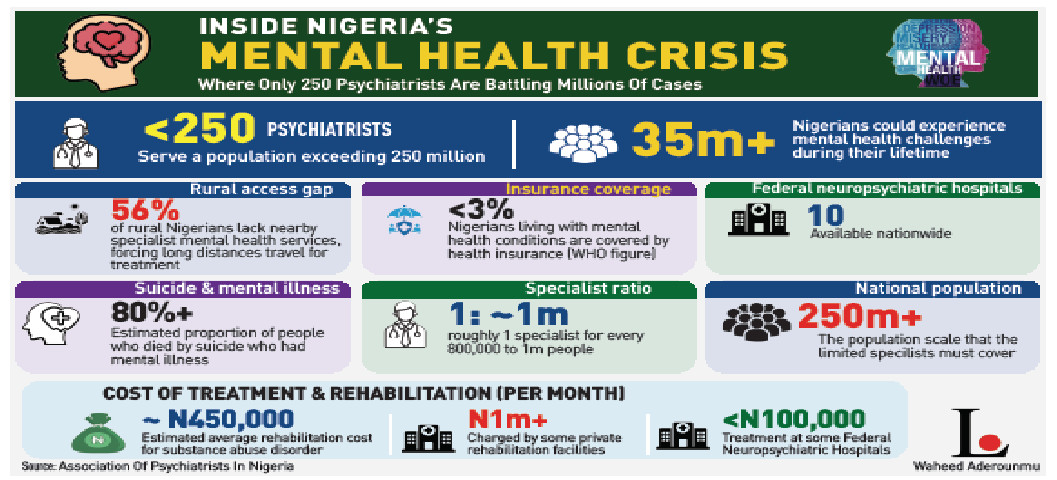
The president of the Association of Psychiatrists in Nigeria (APN), Professor Taiwo Obindo, said estimates suggest that between one in four and one in eight Nigerians could experience mental health challenges during their lifetime, representing more than 35 million people of the present population.
He, however, told LEADERSHIP Weekend that Nigeria lacked comprehensive national data on the prevalence of mental health conditions, making reliable statistics essential for effective planning, resource allocation and intervention.
Obindo identified genetic predisposition, childhood abuse, bullying, malnutrition, pregnancy and delivery complications, insecurity, kidnapping and other environmental pressures as factors that could contribute to mental health conditions.
He also highlighted the shortage of mental health professionals, the concentration of psychiatric facilities in urban centres, the high cost of treatment and the continued criminalisation of attempted suicide.
Shortage Of Mental Health Professionals
Obindo said Nigeria had fewer than 250 psychiatrists, equivalent to approximately one psychiatrist per 800,000 to 1,000,000 people.
The shortage, he added, was exacerbated by the migration of trained professionals, with some leaving the country even as new specialists were being trained.
Nigeria also lacked adequate numbers of clinical psychologists, psychiatric nurses, social workers, and psychiatric social workers compared with WHO-recommended levels.
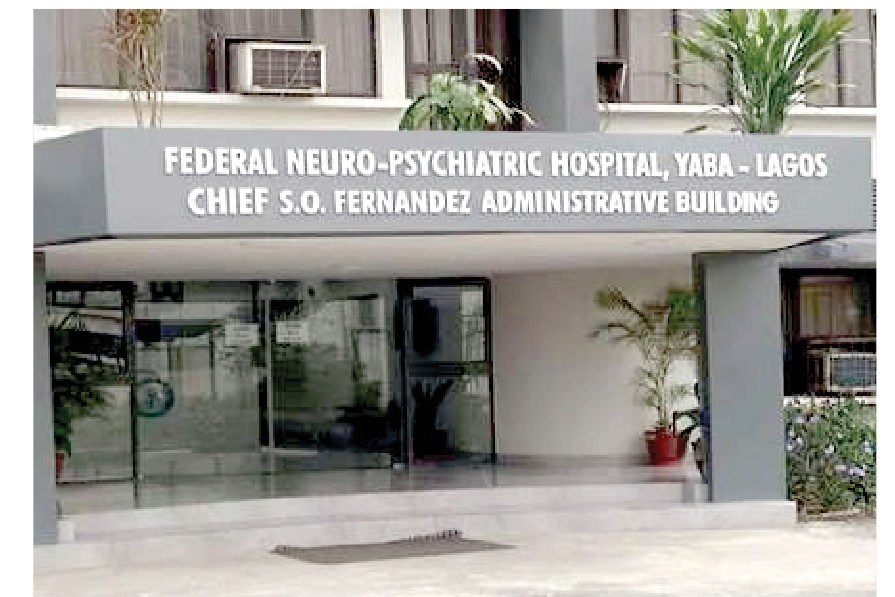
According to him, the country had 10 federal neuropsychiatric hospitals, in addition to psychiatric departments in several universities. However, the distribution of these facilities remained heavily skewed towards urban centres.
“More than 65 per cent of Nigerians live in rural areas,” he said, explaining that many residents had to travel long distances to obtain specialist care.
He cited the example of a resident of a community in Benue State who might have to travel to Makurdi for treatment.
Such distances could discourage people from seeking formal healthcare, prompting some to consult spiritualists, herbalists, traditional healers and religious leaders instead.
By the time some patients reached appropriate healthcare facilities, he said, their conditions might have become chronic and more difficult to treat.
Treatment Costs Remain A Barrier
The cost of treatment presents another challenge, particularly for people requiring rehabilitation for substance use disorders.
Obindo said costs varied according to the facility, location and whether a public or private institution provided treatment.
He estimated that rehabilitation for a person with a substance use disorder could cost an average of N450,000 monthly, with some private facilities charging more than N1 million. Treatment at federal neuropsychiatric hospitals could be considerably cheaper, with some costing less than N100,000 monthly.
The duration and cost of treatment also depend on the nature of the condition and how long the patient has lived with it.
These expenses, coupled with the shortage of accessible facilities, make sustained treatment difficult for low-income households.
Genetics, Childhood Experiences, Insecurity Among Risk Factors
Obindo explained that mental health conditions could arise from interactions between genetic predisposition and environmental influences.
People with a family history of mental illness might face a higher risk, he said, although genetic predisposition did not mean that they would inevitably develop a condition. Environmental circumstances could influence whether that vulnerability developed into an illness.
Risk factors could begin before birth, including maternal health, pregnancy complications and inadequate antenatal care. Obindo cited pre-eclampsia, eclampsia, bleeding affecting the brain’s blood supply, neonatal jaundice and infantile convulsions among the potential contributors.
Childhood sexual, psychological and physical abuse, bullying and malnutrition could also increase vulnerability.
Beyond childhood experiences, he said, insecurity, banditry and kidnapping could expose people to severe psychological distress.
Financial difficulties, bereavement and impulsive reactions to distressing experiences could also contribute to suicidal behaviour.
Obindo said depression and other mental health conditions were associated with a significant proportion of suicide deaths. He cited estimates that 80 per cent or more of people who die by suicide have a mental illness, with depression accounting for 80 per cent of those cases.
He urged families and communities to recognise warning signs and seek professional help. These signs could include persistent sadness, crying, social withdrawal, statements that life was no longer worth living, giving away possessions and hearing voices urging a person to take their life.
He cautioned against dismissing behavioural changes, particularly when someone was experiencing abuse, financial hardship or the loss of a loved one.
Obindo also called for greater public understanding of mental health conditions, their causes and symptoms, and where to obtain appropriate treatment.
He encouraged people who had experienced mental health conditions to share their recovery stories to challenge misconceptions and reduce stigma.
Mental illness, he stressed, should not automatically be attributed to supernatural causes or the actions of traditional healers or other people.
Mental Health Act Implementation Remains A Concern
Obindo called for the full implementation of the Mental Health Act, signed into law by former President Muhammadu Buhari on 28 December 2022.
He said the law provided for the decentralisation of mental health services, including a stronger role for primary healthcare facilities in identifying patients and referring them for appropriate treatment.
Mental healthcare, he argued, should begin within communities, with frontline health workers trained to recognise common conditions and refer more complex cases to specialists.
“Care actually should start from the community before it can go to a new psychiatric hospital or the psychiatric hospital around,” he said.
Integrating mental health services into primary healthcare, he added, would improve access, particularly for rural residents living far from specialist facilities.
He urged the government to ensure that the law was implemented and that services became more accessible.
Attempted Suicide Should Be Treated As A Public Health Issue
Despite efforts to decriminalise attempted suicide, Obindo said the relevant laws had yet to be amended.
He said the Criminal Law and Penal Code prescribed prison sentences ranging from six months to one year for people who attempted suicide but survived.
Obindo, a member of a task force working towards decriminalisation, said a proposed bill had been developed and approved by the National Executive Council. However, he was uncertain whether it had been transmitted to the National Assembly for consideration.
He said the objective was to ensure that people experiencing suicidal crises received care and support rather than faced prosecution.
“So that people attempting to take their lives are no longer criminalised, but are shown care. They are shown empathy,” he said.
He urged the National Assembly to expedite action on the proposed legislation, warning that competing political activities could delay its consideration.
The Chairman of the National Task Force on the Decriminalisation of Attempted Suicide, Professor Cheluchi Onyemelukwe, also called on the Federal Government to adopt a public health approach that prioritised medical care, psychosocial support and protection for people in distress.
Her call followed the Federal Executive Council’s approval of the transmission of a bill seeking to decriminalise attempted suicide to the National Assembly.
Onyemelukwe described the approval as significant progress but stressed that removing criminal penalties alone would not address Nigeria’s suicide-prevention challenges.
She said reform must also include effective referral systems, crisis-intervention services and coordinated action across government institutions.
The task force was inaugurated in 2024 to advocate for reforms to the legal framework governing attempted suicide.
Experts Seek Greater Role For People With Lived Experience
An Associate Professor of Psychiatry in the Department of Mental Health at Nnamdi Azikiwe University, Dr Justus Uchenna Onu, called for greater involvement of people with lived experience of mental health conditions in the development of policies and programmes.
He said their participation would help policymakers and healthcare providers better understand patients’ needs and design services that respected their dignity, rights and experiences.
Onu also encouraged people who had experienced mental health conditions to share their stories to challenge misconceptions and demonstrate that they could work, lead organisations and participate fully in society.
World Mental Health Day is observed annually on 10 October to raise awareness and mobilise support for people affected by mental health conditions.
The theme for the year, “Lived Experiences Heard: Real Voices, Real Change,” calls for people with lived experience to influence mental health policies, healthcare services and decisions about treatment and recovery.
The WHO has emphasised that their experiences can help identify barriers to care, challenge discrimination and ensure that services respond to the needs of patients and their families.
Onu said integrating mental healthcare into primary healthcare services would improve access, particularly in rural communities.
He explained that mental health conditions resulted from a combination of genetic, environmental and socioeconomic factors. Although genetic predisposition cannot be changed, several environmental and social risks can be addressed through appropriate interventions.
He identified poverty, poor housing, unemployment and social exclusion as factors that could increase vulnerability, particularly among people already predisposed to mental health conditions.
Early exposure to psychoactive substances, including alcohol and cannabis, could also increase the risk of mental health problems and addictive behaviours.
Onu added that climate change could worsen mental health indirectly through floods and other disasters that displaced people, destroyed livelihoods, disrupted family relationships and increased poverty and social isolation.
He stressed the importance of a life-cycle approach, noting that maternal nutrition, safe delivery, early-life healthcare and immunisation could influence brain development and a person’s ability to cope with stress later in life.
Stigma And Misconceptions Limit Access To Care
Onu identified stigma and misconceptions about the causes of mental illness as major barriers to treatment.
He said some people interpreted symptoms such as hearing voices as evidence of demonic possession or supernatural influence, prompting them to seek help from religious or traditional centres instead of healthcare facilities.
Some people with mental health conditions, he added, were subjected to harmful practices such as chaining, beating and forced exorcisms in attempts to address what caregivers perceived as spiritual problems.
Such practices violated their dignity and rights and could further undermine access to appropriate treatment.
Onu, however, noted that religious beliefs were not the only reason people sought help outside hospitals. The shortage of mental health professionals and the cost of healthcare also restricted access.
He said public education and greater participation by people with lived experience could challenge stereotypes and demonstrate that people with mental health conditions could lead productive lives.
The assumption that mental illness automatically made people incapable of functioning in society, he added, overlooked the effects of poverty, family breakdown and social exclusion on vulnerable individuals.
Nigeria Needs More Psychiatrists
Onu said Nigeria faced a serious shortage of specialists, with fewer than 300 psychiatrists serving a population of more than 200 million.
Most specialists, he said, were concentrated in urban centres, particularly around teaching hospitals, leaving many rural communities with limited access to care.
He advocated integrating mental health services into primary healthcare facilities, where patients could receive initial assessments and treatment for common conditions before being referred to specialists when necessary.
Healthcare workers already treating malaria and other common illnesses could be trained to identify and manage certain mental health conditions, he said.
Integrating mental healthcare into antenatal care, immunisation and other routine services would also enable pregnant women, children and other patients to receive support in familiar healthcare settings.
Onu said that strengthening frontline workers’ capacity and establishing effective referral systems would help ensure that patients receive appropriate care regardless of where they live.
Poor Insurance Coverage Worsening Burden
Onu identified out-of-pocket spending as a major obstacle to mental healthcare, noting that insurance coverage for mental health services remained limited.
Treatment costs depended on the condition, the required investigations, and the prescribed medication. These expenses could discourage patients from seeking or continuing treatment.
Expanding health insurance, he said, would reduce financial barriers and improve access to mental healthcare.
According to the WHO, fewer than three per cent of Nigerians living with mental health conditions are covered by health insurance. The organisation has called for broader coverage to reduce the burden of out-of-pocket payments on patients and their families.
Although public health insurance provides some coverage for basic mental health services, specialist treatment remains largely excluded, while coverage under private insurance plans varies.
A Consultant Clinical Psychologist at the Lagos University Teaching Hospital (LUTH), Dr Charles Umeh, said awareness of mental health had improved over the past decade, but stigma, cultural and religious beliefs, and misconceptions continued to prevent many Nigerians from seeking professional help.
He said Nigeria had fewer than 5,000 qualified clinical psychologists, alongside a shortage of psychiatrists, warning that the shortfall undermined access to care.
Inadequate funding and specialised facilities further compounded the problem. Umeh also highlighted the absence of halfway homes to support patients recovering from severe mental health conditions as they reintegrated into society.
He said the country’s approach largely focused on treating patients during acute episodes, with insufficient attention to long-term recovery.
“When somebody has a psychotic illness, they will come into the hospital. They manage that person acutely, and the person is discharged. But has the person been able to reintegrate with society? No,” he said.
Without appropriate rehabilitation and reintegration support, he added, patients could struggle to adjust to life outside psychiatric facilities, potentially worsening their conditions.
Umeh called for halfway homes where patients could receive continued support as they readjusted to community life. He also criticised inadequate budgetary allocations to mental health, despite the scale of the problem.
Mental Health Goes Beyond Mental Illness
Umeh said a major misconception was the tendency to equate mental health exclusively with severe mental illness.
Mental health, he explained, also encompasses psychological well-being and the ability to cope with everyday stress, realise personal potential, work productively and contribute to society.
Difficulties range from temporary stress and anxiety to severe conditions requiring specialised psychiatric intervention.
He urged people struggling to cope with daily pressures to seek professional help before their conditions worsened.
“Everybody needs mental health intervention because we are not realising our potential, we are not coping with everyday stresses, and we are not contributing to society,” he said.
Umeh encouraged Nigerians to discuss mental health as openly as physical conditions such as headaches and stomach aches.
Mental health conditions, he stressed, were neither a curse nor a death sentence. The belief that affected people could never recover continued to reinforce discrimination.
He added that stigma could extend to family members, particularly women, whose relatives’ conditions might expose them to discrimination in marriage and other social relationships.
The COVID-19 pandemic, he noted, had increased public awareness as more people experienced psychological difficulties and sought professional support.
Early Intervention And Professional Help
Umeh advised Nigerians experiencing emotional distress or difficulty coping with everyday challenges to seek help from qualified clinical psychologists and psychiatrists.
Mental health professionals, he said, were trained to maintain confidentiality and provide appropriate assessment and support. Early intervention could prevent some difficulties from developing into more severe conditions.
He cautioned against relying solely on friends and family to manage psychological problems, noting that fear of judgment and concerns about confidentiality could discourage people from discussing their experiences.
While acknowledging that some Nigerians sought assistance from religious centres when relatives developed mental health conditions, he stressed the importance of access to appropriate medical assessment and treatment.
He called for greater public education on recognising mental health difficulties and knowing where to seek help.
“There is no health without mental health,” he said.
The Coordinating Minister of Health and Social Welfare, Professor Ali Pate, also described mental health as a fundamental human right, saying the government was committed to tackling barriers to care, including stigma, discrimination and high treatment costs.
He stressed that access to mental health services was essential to protecting people’s dignity and well-being, particularly during crises.
We’ve got the edge. Get real-time reports, breaking scoops, and exclusive angles delivered straight to your phone. Don’t settle for stale news. Join LEADERSHIP NEWS on WhatsApp for 24/7 updates →
Join Our WhatsApp Channel