The National Agency For Science and Engineering Infrastructure (NASENI), established in 1992, has the statutory mandate to build Nigeria’s Science and Engineering Infrastructure to put the nation on the map of industrialization in order to transform its economy.
In the last two years under the amiable leadership of Executive Vice Chairman (EVC/CEO), Khalil Suleiman Halilu, the Agency has made significant strides by developing technologies, capital goods, and processes for local industrialization.
When Halilu assumed office, it was evident that the Agency was constrained by obsolete and largely manual administrative systems, slow processes, fragmented workflows, and limited digital integration. But in a little over two years, Halilu has embedded best practices, upholding transparency, and ensuring that every process supports NASENI’s mandate and Nigeria’s development goals.
NASENI has expanded investments on research, production, and reverse engineering in key areas like energy, agriculture, and materials, aiming to reduce imports, create jobs, and achieve technological self-reliance through innovation and technology transfer.
Its focus on indigenous technology development drive has fostered local solutions and reduced reliance on foreign technologies, which has gained traction in multiple ways as it has invested in building NASENI’s Industrialization drive meant to provide infrastructure for job creation and national economic well-being.
NASENI also developed the capacity for technology transfer and commercialization. It has transferred developed technologies to entrepreneurs for mass production and market adoption focusing on key sectors such as engineering materials, chemicals, scientific equipment, power equipment, and designs.
Under Halilu, in the past two years, NASENI has demonstrated capacity and it has remained consistent in transforming from laboratory prototypes to market-ready products, commercializing over 40 innovations.
Through his amiable leadership and mobilization skill, the agency has manufactured products such as solar irrigation pumps, e-mobility (tricycles, motorcycles, pick-up vans and buses), smart meters, and laptops, using partnerships (MECA, Powerstove, IMOSE) to scale production, boost indigenous technologies, and drive Nigeria’s industrialization, focusing on the 3Cs principles of Collaboration, Creation, Commercialization.
Within diverse areas of commercialization, NASENI made investments in the energy sector by producing solar irrigation pumps, solar panels, smart meters, lithium batteries, and hybrid inverters.
Agriculture sector is already witnessing a revolution as solar pumps produced by NASENI are reducing irrigation costs, and the Tractor Recovery Project (partnering with MECA to refurbish tractors) has improved mechanized farming making farming an all-year round business.
NASENI has implemented a comprehensive digitization and transformation programme aimed at improving its internal efficiency and driving Nigeria’s industrialization and digital economy. The Agency’s internal digitization has successfully transitioned its internal operations to a fully digital, paperless system to push for transparency, accountability, and efficiency.
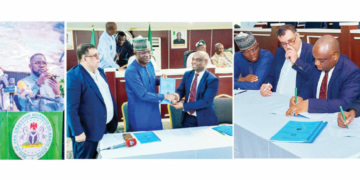
Beyond the Agency, NASENI signed a Memorandum of Understanding (MoU) with the Office of the Secretary to the Government of the Federation (OSGF) to digitalize the operations of the Federal Executive Council (FEC), aiming for a fully paperless process by December 2025. This has so far delivered very profound results.
In partnership with AfriLabs, NASENI has established an Innovation Hub to support Nigerian innovators and startups with infrastructure, funding, mentorship, and resources. Some of the programmes tailored to achieve this include NASENI Reverse Japa Programme, an initiative to encourage Nigerian researchers abroad to return home and commercialize their innovations locally.
There is also, DELT-Her, designed to support and empower women and girls in engineering and innovation through grants and bootcamps. In addition, there is the FutureMakers, which targets young innovators at secondary school and university levels to nurture talent and foster a culture of innovation.
Also, there is NASENI Xceler8, an acceleration programme for startups in science, engineering, and manufacturing sectors, which focused on homegrown digital and technological solutions, such as NASENI laptops, smartphones, and smart meters, to bridge the digital divide and reduce reliance on imports.
The Agency has over the last two years under Halilu, extended the establishment of Agricultural Machinery and Equipment Development Institutes (AMEDI) in each of the six geopolitical zones to boost local agro-machinery production, reduce import reliance, create jobs, and drive mechanized farming.
AMEDI locations and focus areas include Lafia, North-Central, the first to be commissioned, featuring modern labs, production workshops for tractors/implements, and training centre to drive mechanized agriculture.
In the North-West, Agricultural Machinery and Equipment Development Institutes (AMEDI) Birnin-Kebbi, the Kebbi State was selected for its rich agricultural capacity, focusing on rice and other crop machinery, with land allocated and construction ongoing to facilitate growth and development.
In the South -South region, Agricultural Machinery and Equipment Development Institutes (AMEDI) Obudu, Cross River State has a focus on agro-allied technologies. In the South-East, Agricultural Machinery and Equipment Development Institutes (AMEDI) construction is ongoing in Aboh-Mbaise, Imo State while North-East and South West zones also have designated AMEDIs under the federal government’s plan.
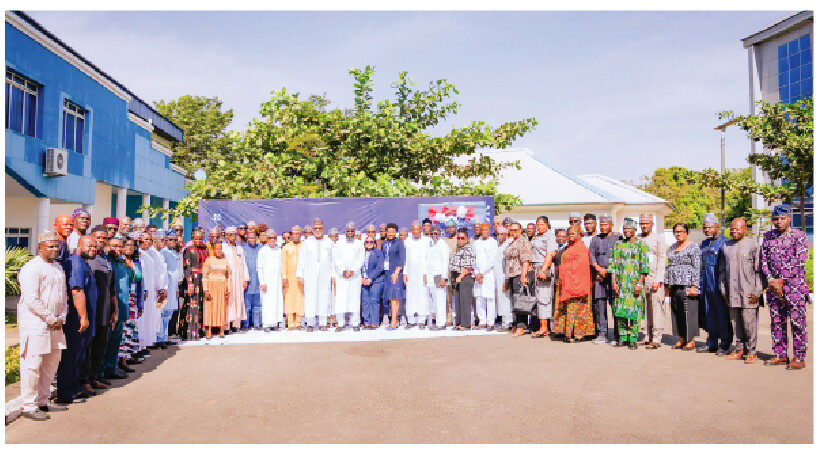
Speaking on the success so far, Halilu reiterated that NASENI as an institution must be built through best practices. In his keynote address during the opening ceremony of a three-day systemwide Executive Management Training on Administrative and Managerial Procedures for NASENI Headquarters and institutes with the theme: “Implementing Best Practices in the Management of NASENI” last week, he stated that the training was important because strong institutions around the world are built on strong systems, not intentions.
Halilu reiterated the mandate of the Agency, which is to drive Nigeria’s industrialisation through indigenous technology development, adaptation, and commercialization, adding that the vision is to be Nigeria’s leading technology transfer agency, while the mission is to turn innovation into practical, market- ready solutions that serve national needs in line with the federal government objectives.
“These objectives align directly with President Tinubu’s Renewed Hope Agenda, which prioritizes industrial growth, local production, efficiency and institutional reform,” Halilu emphasized. The NASENI boss stated that a strong institutional system cannot be built on outdated management structures.
“Over the past two years, we have deliberately focused on administrative reform. We have transitioned key processes to digital platforms, strengthened governance, compliance, and integrity systems, improved coordination across institutes and introduced performance-driven management practices”, he remarked.
He, therefore, stated that these reforms are foundational to the 3Cs operating principles of Creation, Collaboration, and Commercialisation. According to him, “Without efficient administration, innovation cannot scale and impact cannot be sustained. This training is therefore a call to leadership.
“As managers and administrators, you are responsible for embedding best practices, upholding transparency, and ensuring that every process supports NASENI’s mandate and Nigeria’s development goals. Together, we will continue to build a modern, accountable, and results-driven NASENI that delivers value to the Nigerian people.”
Speaking earlier, the Secretary to the Agency (STA), NASENI, Dr. (Mrs.) Olayinka Aduni Komolafe advised all participants to fully participate in the training, adding that it was an opportunity to gain knowledge and more leadership skills.
Earlier, the Director, Administration and Human Resources, NASENI, Mrs. Yetunde Elizabeth Ajayi commended the EVC/CEO for his visionary leadership and also pleaded that everyone should endeavour to fully participate in the three-day programme.
NASENI’s mandate is clear: to drive Nigeria’s industrialization through indigenous technology development, adaptation, and commercialization. The vision is to be Nigeria’s leading technology transfer agency, while the mission is to turn innovation into practical, market-ready solutions that serve national needs.
These objectives align directly with President Tinubu’s Renewed Hope Agenda, which prioritizes industrial growth, local production, efficiency, and institutional reform. This success story has been carefully planned and deliberately focused on administrative reform, based on modern industrial outcomes that can only be delivered through up-to-date management structures.
NASENI in the last two years has transitioned key processes to digital platforms, which has strengthened governance, compliance, and integrity systems, improved coordination across institutes, and introduced performance-driven management practices.
These reforms are foundational to its 3Cs operating principles of, Creation, Collaboration, and Commercialization. Without efficient administration, innovation cannot scale and impact cannot be sustained. It has become imperative to continue to build a modern, accountable, and results-driven NASENI that delivers value to the Nigerian people and the country’s economic develoipment.
We’ve got the edge. Get real-time reports, breaking scoops, and exclusive angles delivered straight to your phone. Don’t settle for stale news. Join LEADERSHIP NEWS on WhatsApp for 24/7 updates →
Join Our WhatsApp Channel