Power sector advocates have welcomed the Federal Government’s plan to raise Nigeria’s electricity transmission capacity from about 5,000 megawatts (MW) to 19,000MW within two years, but say its credibility will rest on execution, not announcements.
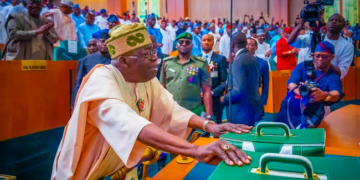
The plan centres on an East and West Super Grid, for which President Bola Ahmed Tinubu has approved the commencement of procurement.
Minister of Power, Joseph Tegbe, disclosed this to State House correspondents in Abuja after the Federal Executive Council (FEC) meeting.
Reacting, Mrs Jamila Umar of the Peering Advocacy and Advancement Centre in Africa (PAACA) described the 19,000MW ambition as commendable.
She said the two-year timeline demands secured financing, transparent procurement, measurable milestones and institutional accountability.
“Importantly, transmission capacity is not electricity delivered. Nigerians must experience improvements in supply reliability, service hours and value for money,” said Umar, who is also the Nigeria Electricity Supply Industry (NESI) Consumer Advocacy Coordinator.
She warned that expanding transmission without matching improvements in generation, gas availability, distribution capacity and market liquidity risks creating another imbalance across the electricity value chain.
Also, the executive director and convener of PowerUp Nigeria, Adetayo Adegbemle, called the plan ambitious and said that, if well executed, it will deliver reliable supply to more people, especially underserved communities and businesses.
He urged the government to create policies and regulatory frameworks capable of attracting domestic and international capital, technology and expertise.
What the Super Grid is:
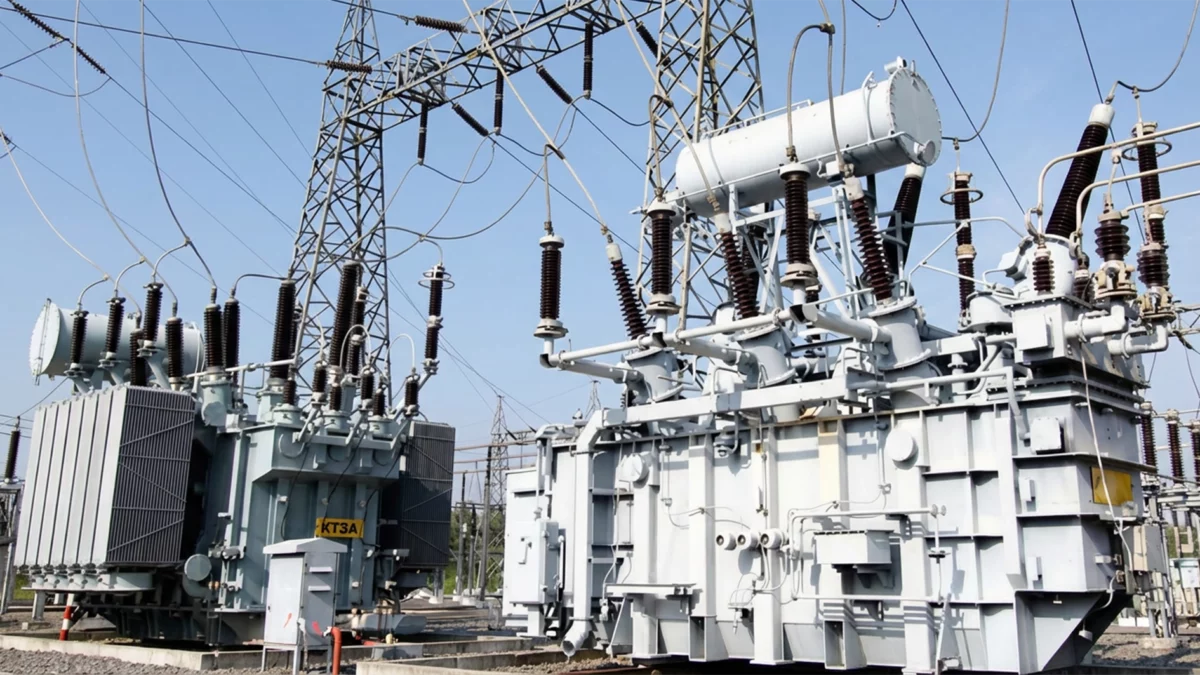
Tegbe said the East and West corridors would cut across the northern and southern parts of the country rather than serve specific regions. The Super Grid is meant to strengthen the existing network, improve its resilience and let it carry available generation, which the government puts at more than 13,000MW. The grid can currently carry only about 5,000MW.
The government has not given the cost, funding source, contractors or stage-by-stage timelines for the project.
LEADERSHIP inquiries were not yet responded to at the time of filing this report.
How it is to be built
The government has so far outlined the following steps:
Procurement: The President has approved the commencement of procurement for the Super Grid.
Technical audit: A four-week audit of power infrastructure is under way in three energy zones: Lagos; Abuja-Kaduna-Kano; and Benin-Enugu-Port Harcourt. Tegbe said it would guide decisions on replacing obsolete equipment and strengthening transmission facilities.
Transmission projects: FEC approved three memoranda for Abuja and Lagos: a double-circuit underground and overhead line around Katampe; the design, manufacture and supply of three 300MVA transformers for Lagos; and the upgrade of the 35.6-kilometre, 132kV Lagos-Sagamu line from single to double circuit.
Grid control: Work has started on a new National Control Centre in Osogbo to replace the existing one, which Tegbe said is 64 years old.
Operations: Tegbe said the Nigerian Independent System Operator (NISO) is responsible for system operations and grid management, while the Transmission Company of Nigeria (TCN) remains responsible for transmission infrastructure. The ministry is working with TCN’s management to improve response times and coordination with NISO.
Existing equipment: Tinubu has directed the clearance of more than 300 containers of power equipment stranded at ports, some for as long as 20 years. Experts will inspect the equipment to determine what is still usable. The ministry is also energising completed substations that have remained unused.
Debt to generators
Tegbe said the government has paid N1.23 trillion of the N3.3 trillion owed to electricity generation companies (GenCos). He said the debt has affected their ability to secure the gas needed to generate power.
Solar projects
On renewable energy, Tegbe said solar mini-grids of one to five megawatts have been built and energised in 14 federal universities. Eleven more university projects are being funded by the Tertiary Education Trust Fund (TETFund), and five teaching hospitals have benefited from mini-grids built with the Ministry of Health. The University of Abuja’s solar facility was inaugurated about three weeks ago.
Benchmark for success
Umar said the plan should be judged by what it delivers to the public. “National development cannot be measured by infrastructure ambitions alone, but by their measurable impact on citizens, businesses and economic productivity. That must remain our benchmark,” she said.
We’ve got the edge. Get real-time reports, breaking scoops, and exclusive angles delivered straight to your phone. Don’t settle for stale news. Join LEADERSHIP NEWS on WhatsApp for 24/7 updates →
Join Our WhatsApp Channel