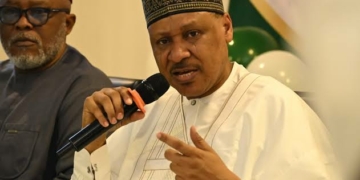

Stakeholders have urged Nigerian youths to take active part in the 2027 general elections by voting for credible candidates and rejecting vote-buying.
They warned that selling their votes would mortgage the country’s future.
They made the call at the Second Stakeholder Roundtable on Voter Education and Youth Participation, held in Abuja, yesterday, with the theme: “Strengthening Youth Participation in Nigeria’s 2027 Election: Voter Education, Participation Barriers and Technology-Enabled Environment.”
The event brought together youth leaders, civil society organisations, election stakeholders, women groups, religious leaders, media practitioners, experts and community representatives to examine ways of strengthening youth participation and addressing barriers to credible elections.
Speaking at the event, Senior Programme Officer of Kimpact Development Initiative (KDI), Kelvin Agabge, said the event was designed to bring election stakeholders together to identify challenges and develop solutions ahead of the 2027 general elections.
Agabge identified voter apathy and declining political participation, particularly among young people, as major concerns requiring urgent attention.
“We want to have a situation where we address this issue and have more young people participating in the electoral process.
“We also want to address new things in the electoral law, things around the PVC, mandatory electronic transmission. People ask, will there be a glitch in 2027? We want a situation where such things are totally avoided. That is why we keep the conversation on the burner for INEC,” he said.
He described elections as an opportunity for Nigerians to correct past political mistakes by electing leaders based on character, competence, capacity and track record rather than ethnic, religious, financial or party considerations.
He said Nigerians must recognise the power of their votes in determining the country’s future.
“Every vote counts. If we want a better Nigeria, we must vote massively for rightful candidates those who will protect lives, create jobs, fix our schools and hospitals, and respect the rule of law,” she said.
Agabge listed inadequate voter education, difficulties in obtaining PVCs, misinformation and disinformation, voter apathy, insecurity, unemployment, vote-buying and declining public confidence in the electoral process as major obstacles to youth participation.
He called for sustained voter education campaigns across schools, communities, motor parks, markets and social media platforms, using languages and communication channels accessible to young people.
A participant said many young Nigerians were willing to participate in elections but lacked adequate information about the voting process and the importance of their participation.
“Many young people want to vote, but they don’t know how, where or why it matters. We must close that education gap before 2027,” the participant said.
Similarly, Deputy Director, Voter Education at the Independent National Electoral Commission (INEC), Mrs Paula Iwenyiora, acknowledged concerns over public confidence in the commission but attributed the failure of its portal during the presidential election to excessive traffic on the platform.
“Everybody blames INEC. It’s okay to blame us. We promised you. But in that presidential election, there was so much load on the website, which people do not understand,” she said.
Iwenyiora said the portal subsequently functioned during the governorship elections, adding that the commission had recorded improvements under its current chairman, who had spent slightly over a year in office.
She said the INEC chairman had intensified engagements, embarked on tours and worked to strengthen the commission’s operations.
According to her, INEC is also working to eliminate unwholesome practices within its system while improving staff welfare to reduce susceptibility to political interference and compromise.
The INEC official said the commission’s Voter Education Department had sustained public sensitisation programmes, including debates in universities, to encourage young people to participate in the electoral process.
She urged youths not to surrender their political future to others through apathy, stressing the importance of joining political parties, expressing their views and demanding representation.
“If you don’t come out as a youth, if you are not interested, you are giving your future to somebody else.
“If you don’t join a political party, don’t ask me which to join. Go and check which one to join. If you don’t speak your mind, nobody will know what is in it and how to represent you,” she said.
Iwenyiora disclosed that INEC had deployed Voter Education Providers at the grassroots to take sensitisation campaigns to churches, mosques, markets and communities in collaboration with civil society organisations.
On complaints surrounding uncollected PVCs, she explained that the cards were being produced and released in batches, urging eligible voters to visit their local government areas or wards to collect them without waiting until the last minute.
“PVCs are coming out in batches. Those who registered years back, their cards are out. The new registrants, theirs are coming batch by batch. You can go to the local government or your ward level and collect it. Don’t wait till the last minute,” she said.
On election security, Iwenyiora said INEC was working with the Inter-Agency Consultative Committee on Election Security, comprising the police, military and Nigeria Security and Civil Defence Corps, to ensure peaceful elections.
She said the security collaboration operated from the national level down to local governments, with security personnel deployed to polling units and community leaders engaged to discourage violence.
“There is always a police officer at every polling unit. We also engage community leaders. We know the people that make trouble in the community. We speak to them before the time comes and tell them not to be violent,” she said.
We’ve got the edge. Get real-time reports, breaking scoops, and exclusive angles delivered straight to your phone. Don’t settle for stale news. Join LEADERSHIP NEWS on WhatsApp for 24/7 updates →
Join Our WhatsApp Channel