
• Hausa Edition
  • Podcast
  • Conferences
  • LeVogue Magazine
  • Business News
  • Print Advert Rates
  • Online Advert Rates
  • Contact Us
Monday, June 22, 2026
Leadership Newspapers
No Result
View All Result
  • Home
  • News
  • Politics
  • Business
  • Sport
    • Football
  • Health
  • Entertainment
  • Education
  • Opinion
    • Editorial
    • Columns
  • Others
    • LeVogue Magazine
    • Conferences
    • National Economy
  • Contact Us
Hausa Edition
  • Home
  • News
  • Politics
  • Business
  • Sport
    • Football
  • Health
  • Entertainment
  • Education
  • Opinion
    • Editorial
    • Columns
  • Others
    • LeVogue Magazine
    • Conferences
    • National Economy
  • Contact Us
No Result
View All Result
Leadership Newspapers
No Result
View All Result

THINGS REMEMBERED: Mud Houses: Once Admired For Durability In Northern Communities

Richard Abu by Richard Abu
1 month ago
in Feature
Mud Houses
Share on WhatsAppShare on FacebookShare on XTelegram

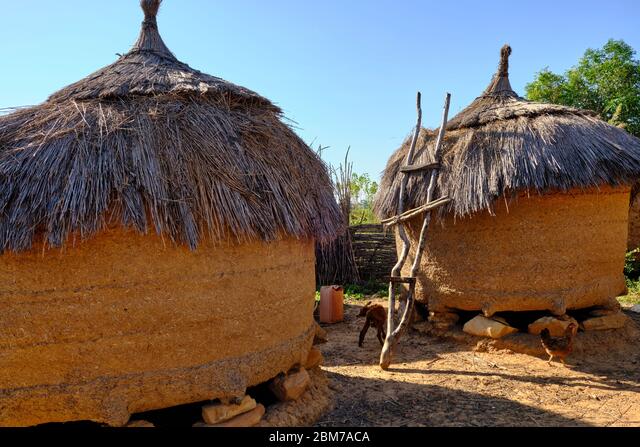
Before cement became the dominant input in housing construction, mud houses were common in various parts of Northern Nigeria. Their designs were architectural masterpieces and very easy and cheap to build.

They were constructed mainly from clay soil mixed with water and sometimes straw. Notwithstanding their simple construction, mud houses were admired for their durability, toughness, and ability to withstand the harsh weather conditions of the Sahel and savannah regions.

The thick walls enabled them to absorb heat during the day and release it slowly at night, thereby keeping the interiors cool despite the intense northern sun.

To date, mud houses remain one of the most enduring symbols of traditional architecture in Northern Nigeria. Some of the buildings still share their aesthetics with modern cement houses and designs.

Also, communities across the region still rely on mud structures for shelter, comfort and cultural identity. In states such as Kano, Katsina, Sokoto, Kebbi, Jigawa and Borno, mud houses still exist with their century-old building styles.

Historians say the traditional Hausa architecture is particularly famous for its artistic mud buildings. Many compounds are designed with high walls, domed roofs and decorative patterns etched into the surfaces. Historic structures such as the ancient city walls of Kano and the Emir’s palaces in Zaria and Katsina showcase the sophistication of mud construction techniques developed over hundreds of years.


In most northern communities, the building of mud houses is a communal activity. Family members and neighbours often work together to mould mud blocks, raise walls and plaster surfaces. Roofs are commonly supported with wooden beams from local trees and covered with earth or thatch. The process reflects a deeply rooted communal lifestyle in northern culture.

RELATED NEWS

Sim Shagaya: Entrepreneur Transforming Commerce, Education In Africa

Salaudeen-Ibrahim: Using Climate-Smart Agribusiness To End Food Insecurity, Create Jobs

Kidnapped, Killed, Extorted: Southwest Cries For Help


Apart from their affordability, mud houses are considered environmentally friendly by stakeholders because they are built from locally available materials. Unlike cement structures, they require little industrial processing and help reduce construction costs for low-income families. Architects and environmental experts increasingly view mud housing as a sustainable alternative amid rising construction costs and climate change.


However, modernisation and urbanisation are threatening the survival of traditional mud architecture. Many young people now prefer concrete houses with roofs of zinc or aluminium sheets, seeing them as symbols of progress and social status. Poor maintenance, flooding and erosion have also contributed to the gradual disappearance of mud structures in some communities.

We’ve got the edge. Get real-time reports, breaking scoops, and exclusive angles delivered straight to your phone. Don’t settle for stale news. Join LEADERSHIP NEWS on WhatsApp for 24/7 updates →

Join Our WhatsApp Channel


Nigerians can invest ₦2.5million on premium domains and earn about ₦17-25Million. Earnings in USD. Rather than wonder, click here to find out how it works
Richard Abu

Richard Abu

Richard Abu is Deputy Editor of Leadership Newspaper, a senior journalist with extensive experience in editorial leadership across multiple titles at Leadership and other major Nigerian newspapers.

OTHER NEWS UPDATES

Sim Shagaya: Entrepreneur Transforming Commerce, Education In Africa
Feature

Sim Shagaya: Entrepreneur Transforming Commerce, Education In Africa

15 minutes ago
Salaudeen-Ibrahim: Using Climate-Smart Agribusiness To End Food Insecurity, Create Jobs
Feature

Salaudeen-Ibrahim: Using Climate-Smart Agribusiness To End Food Insecurity, Create Jobs

17 hours ago
Kidnapped, Killed, Extorted: Southwest Cries For Help
Feature

Kidnapped, Killed, Extorted: Southwest Cries For Help

22 hours ago
Next Post
Lagos Hosts Global Investors, Targets N4trn Capital Inflows

Lagos Hosts Global Investors, Targets N4trn Capital Inflows

Advertisement

LATEST UPDATE

Global Crusade: FCT Monarch Hosts Kumuyi’s Delegation

2 minutes ago

FG Backs Stronger Partnerships, Accountability To Drive Health Sector Reforms

4 minutes ago

Delta Muslim Community Accuses Pilgrim Board Of Marginalisation

5 minutes ago

Egypt End 92-year Wait For World Cup Win As Salah Fires Pharaohs To Historic Victory

7 minutes ago

Political Party De-registration And Judicial Contradictions

7 minutes ago
Load More
Advertisement
Facebook Twitter Instagram Youtube Whatsapp

© 2026 LEADERSHIP Media Group - All Rights Reserved | Hausa | Online Casino.

No Result
View All Result
  • Home
  • News
  • Politics
  • Business
  • Sport
    • Football
  • Health
  • Entertainment
  • Education
  • Opinion
    • Editorial
    • Columns
  • Others
    • LeVogue Magazine
    • Conferences
    • National Economy
  • Contact Us

© 2026 LEADERSHIP Media Group - All Rights Reserved | Hausa | Online Casino.