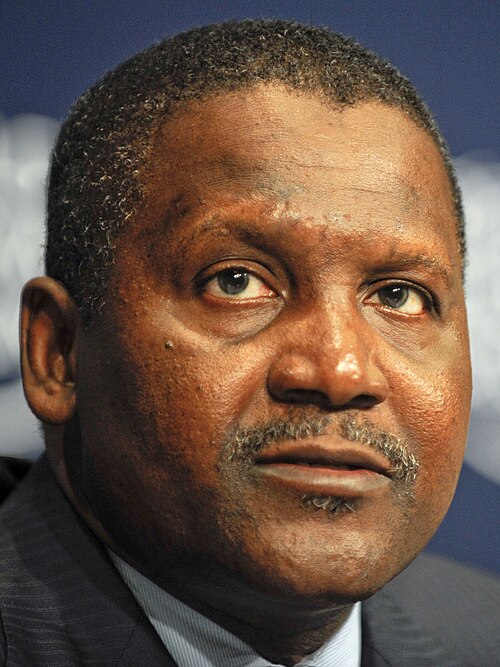
President and chief executive of Dangote Group, Aliko Dangote, has said that the $16 billion Lamu refinery project in Kenya will be completed in three years.
He said the Group was extending its industrialisation drive across the continent, with the proposed refinery in Lamu, Kenya, forming a major part of its Vision 2030 strategy. “We’re actually launching that project on the 30th of this month and spending $16 billion on that project and it will be ready within the next three years,” he said.
The Lamu investment represents another major step in the Group’s strategy to develop industrial capacity around African markets, reduce dependence on imported finished products and deploy African capital into businesses capable of serving regional demand.
Dangote said the scale of investment opportunities across Africa remained enormous, with global investors increasingly interested in credible projects capable of delivering transformational impact. “A lot of people want to invest in Africa, but they are looking for scale and also who is doing that investment,” he said.
According to him, the appetite for investment already exists, but investors require credible projects and clearer pathways for deploying capital. “They are ready. People are ready. They are willing. They want to invest money in the continent, but they don’t know how and where,” he stressed.
President and Chief Executive, Dangote Industries Limited, Aliko Dangote, also called for accelerated industrialisation across Africa, saying the continent must invest more of its capital at home, process its natural resources locally and build industries at sufficient scale to transform its enormous potential into sustainable economic prosperity.
Speaking at the Global Africa Business Initiative’s Unstoppable Africa 2026 gathering in New York on the sidelines of the 81st United Nations General Assembly, Dangote said Africa’s next phase of development must be defined not merely by the resources it possesses, but by its capacity to transform those resources into products, businesses, jobs and wealth.
He cited the 700,000 barrel per day Dangote Petroleum Refinery as evidence of what African enterprise could achieve when ambition was matched by investment and execution at global scale.
“The refinery we’re talking about has never been built before in the world, not in Africa, by anybody,” Dangote said, explaining that the largest single train refinery previously built by major international companies was about 450,000 barrels per day. For Dangote, the experience reinforced a central lesson: Africa must move beyond celebrating its potential and begin building the productive capacity required to realise it.
“For years, we have continued to talk about our potential, our resources, our markets and our opportunities, but now we must move beyond talking about potential to building the industries and systems that will turn that potential into real economic development,” he said. He drew parallels with Asia’s economic transformation, arguing that the region’s rise was driven partly by the willingness of its businesses and investors to commit capital to their own economies. “The Asians believed in their own economy. So they are the ones that made their own economy,” he said. Africa, he argued, had too often done the reverse by moving capital offshore rather than deploying it to strengthen domestic financial systems and productive enterprises. “We are doing it the reverse, where we take our own money to their banks, strengthen their banks, and we don’t really keep our money in our own continent,” Dangote said.
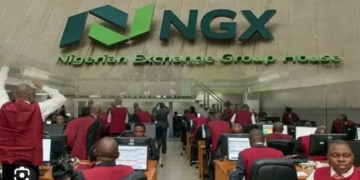
Dangote said industrialisation must also create opportunities for Africans to own the assets generating value across the continent, pointing to the decision to list Dangote Petroleum Refinery and Petrochemicals on the Nigerian Exchange. “Yes, we must list it on the shores of Africa to make it an African company.
We are listing it in Nigeria because we want Africans to have the opportunity to participate in the ownership of this major African industrial asset and to ensure that the value created by the refinery is anchored within the continent,” he said. He said the public offer had generated significant interest following its launch, with the digital infrastructure supporting subscriptions temporarily overwhelmed by the volume of applications.
“The entire system, the apps, everything collapsed because of the avalanche of people rushing to buy the shares. There was a lot of excitement,” Dangote said, adding that investor interest extended beyond Nigeria. He said the Group would continue working to broaden participation and enable smaller investors to acquire stakes as more shares became available.
Dangote said the Group’s Vision 2030 represented the next phase of its industrial expansion, with between $46 billion and $50 billion identified for investments across major projects.
Central to the programme is a plan to double the Nigerian refinery’s capacity from 700,000 barrels per day to 1.4 million barrels per day, alongside significant expansion in petrochemicals and other industrial businesses.
Reflecting on the refinery journey, Dangote described the project as the most challenging undertaking of his life, but said its successful completion demonstrated that African entrepreneurs could overcome formidable barriers and execute projects previously considered beyond the continent’s capabilities. He urged African businesses and investors to deploy more capital within the continent, pursue ambitious projects and refuse to allow existing limitations to define the scale of their aspirations. “We have escaped the bar. They’ve set up a bar for us not to go across, but we have escaped. We’re on the other side now,” Dangote said.
We’ve got the edge. Get real-time reports, breaking scoops, and exclusive angles delivered straight to your phone. Don’t settle for stale news. Join LEADERSHIP NEWS on WhatsApp for 24/7 updates →
Join Our WhatsApp Channel