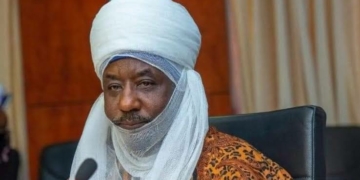
Prof Chidi Odinkalu has, in recent days and weeks, been critical of some officers in the Nigerian judiciary, believing they tend to do the bidding of the powers that be.
Odinkalu, a former chairman of the National Human Rights Commission, traces this subservience to the origins of the Nigerian judiciary as a “wholly-owned surrogate of the Royal Niger Company in the last quarter of the 19th Century.
He has written about specific cases and dates in which this executive arm’s ownership of the judiciary has been demonstrated. He, however, left on 12 June 1993, and now on 5 November 2026.
The characters are different. Instead of Arthur Nzeribe, there is Nafiu Bala Gombe. In place of Dahiru Saleh, Judge Perer Lifu sits in judgement. And rather than 12 June, the date tying everything together is 5 November.
But the playbook appears the same. In 1993, it was intended to bring the entire process to an end in a way that would prevent Moshood Abiola from taking the oath of office. Though heaven didn’t fall, Nigeria almost did.
This time, Judge Peter Lifu’s ruling disqualifying the David Mark-led ADC is not necessarily intended to prevent the party from appearing on the ballot on 16 January 2027.
It is enough to distract the electorate, make them lose hope in the power of their vote, disrupt the opposition campaigns’ momentum, and disorient their candidates.
Bolaji Abdullahi, the publicity secretary of the ADC, believes Judge Lifu’s ruling is a panic response to the launch of the presidential campaign of former Vice President Atiku Abubakar and the crowd it pulled in Sokoto.
The ADC rally in Sokoto has exposed several dynamics about the 2027 general elections. First, it is becoming clear that in the northern part of the country, President Bola Tinubu needs state governors more than they need him to emerge victorious.
And for the first time in Nigeria since 2003, holding the presidential and governorship elections on different days could prove disadvantageous to the ruling party.
ADC had previously accused the ruling party and Nigeria’s secret police of orchestrating protests and public unrest in Sokoto.
Should the APC choose to go down this road of denying Nigerians universal suffrage, the judiciary will not be enough. It has to go full throttle, meaning the denial of other civil rights and freedoms. It would also mean rolling back democratic gains.
And because a large section of the electorate will interpret the Lifu ruling as an indication of fear and vulnerability on the part of the APC, it will increase Nigerians’ resolve to go out and vote against the APC.
Even if the Supreme Court waits until the eve of the election to settle the case, voters will still have consumed all the events and shenanigans leading up to election day and will have their say.
To prevent an unwanted outcome, the APC has to do whatever it takes to prevent Atiku Abubakar’s name from appearing on the ballot. Should that happen, Nigeria’s democracy will never be the same.
At the very least, the consequences will lead to a similar path of regional tensions and suppression of rights and liberties that followed the June 12 ruling.
We’ve got the edge. Get real-time reports, breaking scoops, and exclusive angles delivered straight to your phone. Don’t settle for stale news. Join LEADERSHIP NEWS on WhatsApp for 24/7 updates →
Join Our WhatsApp Channel