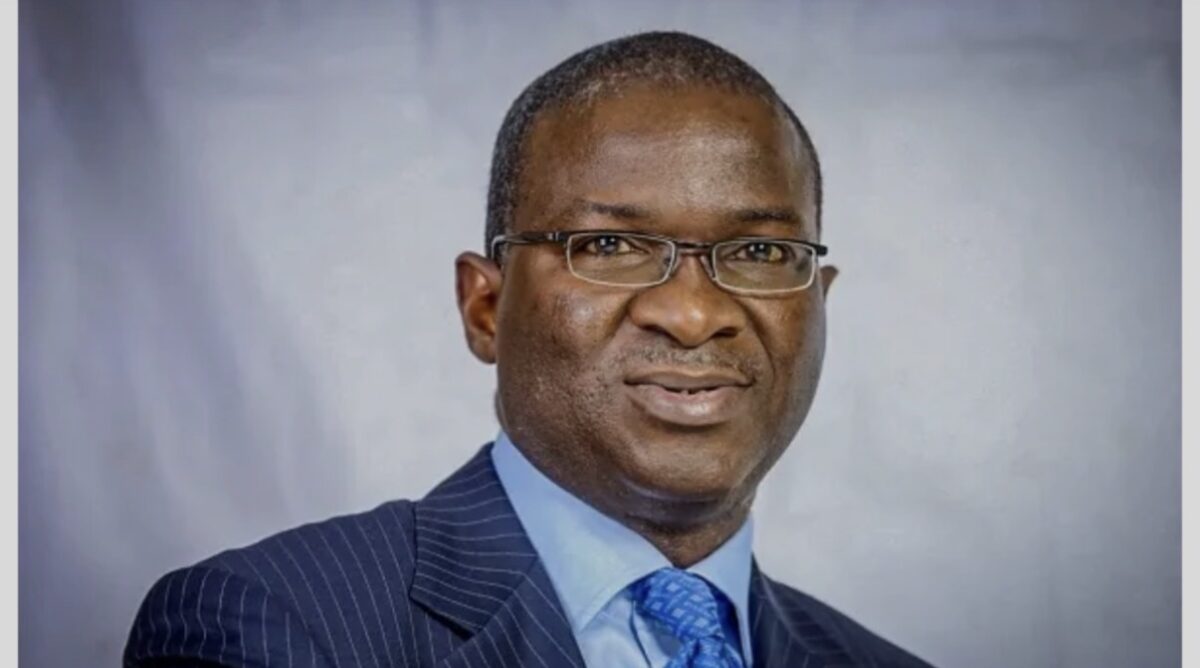
Former Lagos State governor, Babatunde Fashola, has challenged opposition parties to openly declare whether they would scrap the Nigerian Education Loan Fund (NELFUND) if elected into power, insisting that students and families benefiting from the scheme would resist any attempt to discontinue it.
Fashola described the student loan initiative as one of the key interventions introduced by the President Bola Tinubu-led administration to ease the financial burden on Nigerian households, particularly the cost of tertiary education.
He spoke while defending the Federal Government’s response to prevailing economic hardship, arguing that NELFUND had provided relief to families by helping students pay their tuition fees and access upkeep allowances.
“I challenge the opponents to come and say they are going to cancel NELFUND and see how the people and the students who are benefiting from it and the families will vote. I know they won’t dare to,” he said.
According to the former governor, the scheme was designed to reduce pressure on household incomes by ensuring that families do not have to bear the full cost of their children’s education from their disposable income.
He explained that households already had competing financial obligations, including rent, transportation, healthcare and other essential needs, making government support for education necessary.
“Your disposable income goes to rent, transport, healthcare and your children’s education. NELFUND was, ‘we will help families in need to pay school fees. Instead of dipping money out of their pockets to pay, we will give that support,’” Fashola said.
He added that more than one million students had benefited from the initiative, noting that the number of beneficiaries was continuing to increase.
Fashola also defended the Tinubu administration’s handling of the rising cost of living, describing inflationary pressures as a global challenge worsened by the COVID-19 pandemic, the Russia-Ukraine war and conflicts in the Middle East.
He argued that disruptions to global supply chains following the pandemic and ongoing conflicts had contributed significantly to rising prices across countries, including Nigeria.
“There’s no need denying the fact that the cost-of-living challenge is now a global challenge, and anybody who is right-thinking will concede that,” he said.
The former governor listed the review of the national minimum wage, the introduction of NELFUND and ongoing tax reforms among measures adopted by the federal government to cushion the effects of economic hardship.
However, he cautioned against relying solely on increased incomes or cash injections to address the country’s economic challenges, warning that excessive spending without corresponding increases in the supply of goods and services could worsen inflation.
“Every economist worth his salt will tell you that you can’t throw cash at all of the problem all the time. Otherwise, you create hyper-demand inflation,” he said.
We’ve got the edge. Get real-time reports, breaking scoops, and exclusive angles delivered straight to your phone. Don’t settle for stale news. Join LEADERSHIP NEWS on WhatsApp for 24/7 updates →
Join Our WhatsApp Channel