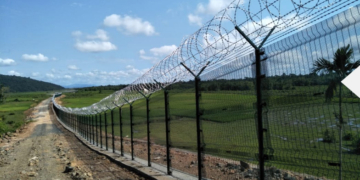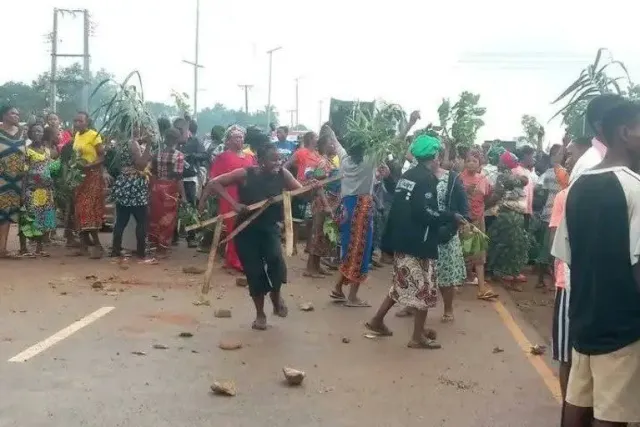
The relentless violence tearing through rural communities in Northern Nigeria is not a distant tragedy; it is a national wound that bleeds daily. In the first weeks of 2026 alone, gunmen on motorcycles stormed Tungan Dutse village in Bukkuyum LGA, Zamfara State, on February 20–21, killing at least 50 people, abducting women and children, and burning houses in an attack that lasted from 5 p.m. until 3:30 a.m. Despite early warnings, security forces reportedly did not respond, according to residents and local lawmaker Hamisu A Faru.
In Kebbi State, suspected Lakurawa militants raided seven villages in Arewa LGA on February 19, killing at least 34 people and abducting several residents, with houses burned and livestock stolen. In Plateau State, suspected bandits attacked Dorowa Babuje village in Barkin Ladi LGA on February 18, killing 10 and injuring 2 in reprisal for earlier. These were copiously reported by the media.
They are, also, not isolated incidents; but part of a pattern that has claimed thousands of lives in recent years, with Amnesty International documenting over 1,200 deaths from similar violence in 2023, a crisis that has not abated but intensified.
The geography of the violence reveals a mosaic of despair across the North-Central and Northwest. In Zamfara and Katsina, bandit groups raid settlements, killing entire households and burning granaries, leaving survivors to bury their dead amid fear of reprisals. In Kebbi and Niger, schoolchildren and worshippers are among the victims, with abductions adding to the trauma of communities already stretched thin. Kwara, once considered relatively calm, has seen mass killings in areas like Baruten LGA, shocking local leaders and residents alike.
The Armed Conflict Location and Event Data Project (ACLED) corroborates these accounts, showing that the victims are overwhelmingly poor farmers, small traders, and their families—people who have no private security, no early-warning systems, no meaningful state presence. When the attackers come, they come with impunity, exploiting the vast, ungoverned spaces that make up 50-60 per cent of Northern Nigeria’s terrain, per a 2024 International Crisis Group analysis.
This is not a failure of intelligence alone; it is a collapse of governance at every level. Rural Nigeria has been systematically abandoned, a legacy of urban-centric policies that prioritise city infrastructure over village viability. Police posts are understaffed or non-existent in many villages—Benue has a rural ratio of approximately 1 officer per 1,000 residents, per a 2023 Nigeria Police Force report. Military deployments are reactive, rarely preventive, often arriving hours after attacks, as survivors in Niger State have recounted.
Community policing initiatives, where they exist, are under-resourced and poorly coordinated, hampered by corruption that diverts funds meant for local vigilantes. Local government councils, constitutionally responsible for primary security under Section 7 of the constitution are either dysfunctional due to funding shortfalls or absent amid political interference. The result is a security vacuum that armed groups—whether bandits, herders with AK-47s, or ethnic militias—exploit with ease, turning the countryside into killing fields.
The economic cost is devastating, striking at Nigeria’s breadbasket. These communities produce the bulk of staple foods—yam, maize, millet, rice—accounting for 60-70 per cent of national agricultural output per the Food and Agriculture Organisation’s (FAO’s)2023 data. When farmers are killed or flee, planting seasons are missed, harvests are looted or burned, markets are disrupted, the ripple effect reaches urban tables and national food inflation figures, with prices rising 40.87 per cent in October 2025 due to supply shortages from conflict zones. Yet successive administrations have treated rural insecurity as a peripheral problem rather than a national emergency. The Renewed Hope Agenda promised change, allocating N2.26 trillion to agriculture in 2026, but the reality on the ground shows that rural Nigeria remains at the bottom of the priority list, with security spending skewed toward urban areas.
Critically, the state’s response has often worsened the situation. Heavy-handed military operations have sometimes resulted in civilian casualties, alienating communities that should be allies in intelligence gathering—a 2024 Amnesty report documented 85 deaths from a drone strike in Kaduna in 2023. Peace deals with bandits, particularly in Zamfara and Katsina, have repeatedly collapsed because they lack credible enforcement, rehabilitation, and development components, as critiqued in a 2024 International Crisis Group study. Impunity fuels the cycle: perpetrators are rarely arrested, prosecuted, or punished. When they are, trials are slow or never concluded with conviction rates around 10-20 per cent for violent crimes according to a 2024 Judiciary report. The message is clear: violence pays, while the rural poor pay the ultimate price.
The way forward requires a paradigm shift, one that reimagines rural Nigeria as the nation’s lifeline. First, declare rural insecurity a national emergency and create a dedicated Rural Security and Development Authority with federal and state funding, integrating military, police, and local vigilantes. Second, expand and professionalise community policing, ensuring local recruits are vetted, trained, and equipped, drawing from successful models like Kaduna’s that reduced incidents by 15-25 per cent in 2024. Third, invest massively in rural infrastructure—roads, electricity, communication—to shrink the operating space of criminals and enable rapid response, allocating at least 20 per cent of national budgets to these areas. Fourth, fast-track justice: deploy mobile courts, special tribunals, and witness protection for rural victims, aiming for higher resolution rates. Fifth, address root causes—land reform to resolve herder-farmer disputes, climate-smart agriculture to combat desertification affecting 20-30 per cent of Northern land per FAO 2023 data, youth employment programmes to deter recruitment into militias, and herder settlement initiatives to end nomadic vulnerabilities.
Above all, Nigeria must stop treating rural citizens as expendable. Their blood is not the price of urban peace. When a farmer in Kebbi or a herder in Zamfara dies, the nation bleeds—economically, socially, and morally. True leadership does not wait for another report; it acts before the next village burns, forging a future where rural Nigeria thrives as the backbone of our prosperity.
We’ve got the edge. Get real-time reports, breaking scoops, and exclusive angles delivered straight to your phone. Don’t settle for stale news. Join LEADERSHIP NEWS on WhatsApp for 24/7 updates →
Join Our WhatsApp Channel