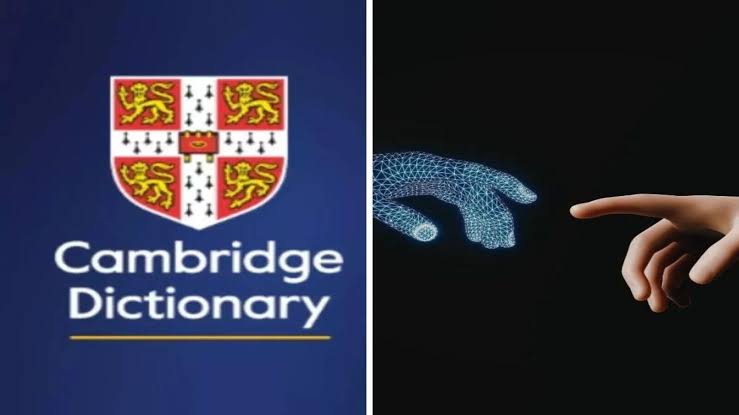
Cambridge Dictionary has named “human” its Word of the Year for 2026, highlighting growing global concerns about the impact of artificial intelligence (AI) on humanity and what distinguishes people from machines.
The dictionary defines “human” as having the “qualities, faults, and feelings that people have, as opposed to gods, animals, or machines”.
Francesca Woodward, a board member of Cambridge University Press, told AFP that the word captured “the 2026 zeitgeist” amid the rapid advancement of AI and growing fears that the technology could threaten human jobs and, potentially, humanity itself.
According to Woodward, people have increasingly reflected on what it means to be human over the past year, particularly as AI continues to transform workplaces and raise questions about the future of employment.
“I think people are trying to remind themselves of … what human means,” she said.
She explained that “human” emerged ahead of other words associated with artificial intelligence and the digital world, reflecting widespread interest in how technological developments are reshaping human life.
Woodward also noted that Cambridge Dictionary lexicographers had recorded increased use of the word in compound expressions such as “human-made” and “human author”.
Tom McClelland, a philosopher of science at the University of Cambridge, described the selection as an interesting reflection of changing perceptions of humanity.
He said the rapid development of artificial intelligence had prompted renewed questions about the differences between human beings and machines.
“We’re trying to understand the difference between a human mind and an artificial mind, between living beings like us and artificial beings that we’re creating. What sets us apart, is it consciousness, creativity or compassion?” he said.
Global Debate Over Humanity And AI
The growing debate over what defines humanity has attracted contributions from prominent personalities, including Pope Leo XIV, Microsoft co-founder Bill Gates, classicist Mary Beard and actress Cate Blanchett.
Their interventions reflect increasing global attention to the ethical, social and philosophical implications of artificial intelligence and its expanding influence on everyday life.
Among the other contenders for Cambridge Dictionary’s 2026 Word of the Year was “agent”, referring to an artificial intelligence system capable of performing complex tasks with limited or no human supervision.
“Wholesome”, defined as something beneficial to a person’s physical, moral or emotional well-being, also featured on the shortlist.
Another contender was “dusking”, the practice of watching daylight fade into darkness as a form of relaxation.
The tradition, which originated in the Netherlands, has gained renewed attention as people seek ways to reconnect with nature and escape the pressures of modern life.
New words added to Cambridge Dictionary
Cambridge Dictionary also expanded its vocabulary in 2026 with the addition of several expressions reflecting emerging online trends and changing social behaviours.
Among them is “aura farming”, which describes deliberately behaving in ways that project an appealing or admirable personality.
Another addition is “looksmaxing”, referring to efforts to improve one’s physical appearance to become as attractive as possible.
The dictionary’s annual Word of the Year selection and new vocabulary additions are determined using several criteria, including the frequency with which words are searched for on its website.
Looking ahead to 2027, Cambridge Dictionary identified “FOBO”, meaning “fear of becoming obsolete”, as one expression to watch.
The term describes anxiety about losing relevance, particularly when technological advancements such as AI threaten to make certain jobs or skills redundant.
“Weather whiplash” was another expression highlighted. It describes a rapid shift from one extreme weather condition to another, reflecting growing concerns about unpredictable weather patterns.
Last year’s Word of the Year was “parasocial”, a term describing the feeling of having a personal connection with a celebrity, public figure or fictional character despite having no direct relationship with them.
We’ve got the edge. Get real-time reports, breaking scoops, and exclusive angles delivered straight to your phone. Don’t settle for stale news. Join LEADERSHIP NEWS on WhatsApp for 24/7 updates →
Join Our WhatsApp Channel