The 21st century is reshaping global labour markets, raising urgent concerns about whether Nigeria’s classrooms are truly preparing learners for a world driven by technology, creativity, and innovation.
Nigeria therefore, faces a critical question about how prepared the country is to producing graduates who can compete and thrive in the 21st-century global workforce.
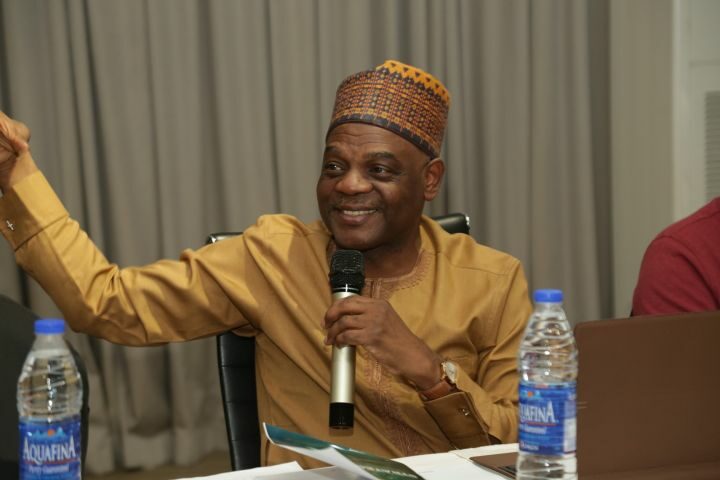
This was the central concern raised at the 13th Convocation Lecture of the Nile University of Nigeria, where the Executive Secretary of the Tertiary Education Trust Fund (TETFund), Arc. Sonny Echono, delivered an evidence-driven analysis of the system’s structural weaknesses and the urgent reforms needed to reposition it for the future.
His lecture, titled “Redefining the Nigerian Education System for the 21st-Century Workforce,” moved the conversation from rhetoric to concrete realities, supported by data and a national urgency to bridge the widening gap between traditional schooling and modern skills.
Echono warned that Nigeria risks being left behind if its classrooms continue to produce graduates who are ill-equipped for industries shaped by automation, artificial intelligence, biotechnology, digital finance, and globalised labour competition.
“The world is changing at a speed we cannot ignore. Nigeria must prepare its children for the realities of today, not the theories of yesterday,” he said.
For him, the debate is not about whether reforms are necessary, but how swiftly the country can overhaul outdated curricula, inadequate digital infrastructure, and a theoretical teaching culture before population growth transforms from an asset into a liability.
He described the invitation by Nile University not as routine, but as an opportunity to reflect on what he called the nation’s most powerful tool for development: education.
Echono commended the university’s steady rise as one of Nigeria’s most dynamic private institutions, praising its commitment to academic excellence, global partnerships, and a learning environment designed to stimulate creativity, flexibility, and competitiveness.
He argued that Nile University’s progress offers a glimpse of what Nigerian higher education could become if institutions were well-governed, adequately funded, and aligned with the realities of the modern workforce.
“To be realistic, education has to be geared towards self-realisation, cordial human relationships, individual and national efficiency, effective citizenship, national consciousness, national unity, as well as social, cultural, economic, political, and technological progress.
“Thus, education should be focused on the three fundamental pillars of access, quality, and outcomes. Without quality education through effective teaching and learning, all efforts at nation-building are unlikely to yield the desired outcome,” he said.
Tracing Nigeria’s educational history, he revisited the foundations laid by missionary efforts, colonial administration, and post-independence reforms, emphasising the enduring relevance of the 1977 National Policy on Education.
That landmark framework, he noted, envisioned a system built on national cohesion, self-reliance, and technological advancement. Yet, more than four decades later, these aspirations remain unrealised for millions of learners due to underfunding, policy inconsistency, infrastructural decay, teacher shortages, and weak implementation mechanisms.
Echono argued that these longstanding weaknesses now pose even greater risks in a century where innovation and skills define national competitiveness.
He analysed the three-tier structure of Nigeria’s education system.primary, secondary, and tertiary and the widening gaps across each level.
Foundational learning, he observed, remains weak, with many pupils unable to meet basic literacy and numeracy benchmarks. Secondary schools offer limited exposure to vocational or digital skills, while many students arrive at tertiary institutions underprepared and graduate without the competencies demanded by employers.
“Students memorise content to pass examinations, but they graduate lacking the skills to solve problems. This disconnect is at the heart of our employability crisis,” he said.
Echono stressed that education remains a proven catalyst for economic transformation, citing global trends showing strong links between tertiary education and national productivity.
According to him, an education sector that should be producing innovators, researchers, and globally competitive professionals is instead grappling with rising unemployment, worsening skills mismatches, and deepening social frustration. He warned that the consequences from brain drain to insecurity are already visible and could worsen without decisive reforms.
He noted that the COVID-19 pandemic exposed stark inequalities in access to technology, leaving millions unable to transition to remote learning, saying that many schools lack reliable electricity, internet connectivity, smart devices, and teachers trained in digital instruction.
“Our digital divide is not just a technological gap, it is a development gap. If we fail to bridge it, we risk excluding entire generations from the global knowledge economy,” he warned.
He added that rural learners remain disproportionately disadvantaged, noting that Nigeria’s digital readiness will determine its relevance in future industries.
One of the strongest aspects of Echono’s address was his breakdown of the National Employability Benchmarking Exercise conducted by TETFund in partnership with the International Finance Corporation.
The assessment, which covered 26 universities, evaluated institutional performance across employer engagement, learning relevance, career services, alumni tracking, and strategic outcomes.
He argued that solutions lie in stronger industry collaboration, regular curriculum reviews, technology-driven career services, robust tracer studies, updated SIWES programmes, and enhanced training for lecturers in digital teaching methods.
Echono insisted that regulators must take the lead in enforcing employability standards and encouraging institutions to become more responsive to modern labour realities. The reforms, he emphasised, must be systemic rather than cosmetic.
He called for a national consensus on the future of education, stressing that transforming Nigeria’s classrooms requires commitment not only from policymakers and institutions but also from industries, parents, and students themselves.
“Education is the bedrock of nation-building. If we transform our classrooms today, Nigeria will transform tomorrow,” he said.
We’ve got the edge. Get real-time reports, breaking scoops, and exclusive angles delivered straight to your phone. Don’t settle for stale news. Join LEADERSHIP NEWS on WhatsApp for 24/7 updates →
Join Our WhatsApp Channel