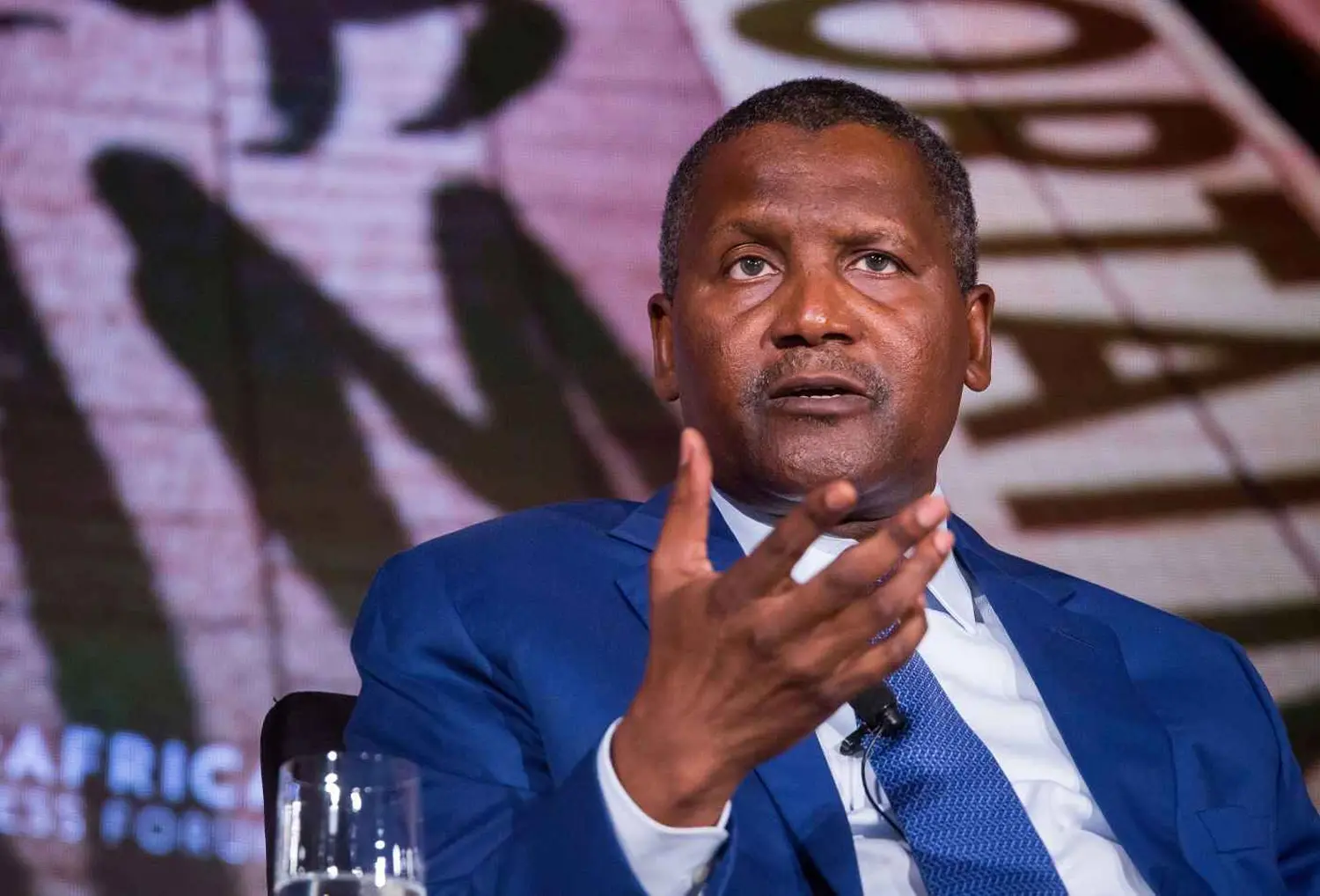
The president and chief executive of Dangote Industries Limited, Aliko Dangote, said the federal government’s economic reforms are reshaping the operating environment for large-scale manufacturers and industrial enterprises across Nigeria.
Dangote said the fiscal, monetary and regulatory changes have improved policy predictability for businesses involved in production, diversification and job creation.
He linked the changes to ongoing operations at key industrial assets, including the Dangote Petroleum Refinery and Petrochemicals complex.
“The reforms have created a more enabling operating environment for businesses, particularly large-scale manufacturing and industrial enterprises that are critical to economic diversification, job creation, foreign exchange generation, and national competitiveness,” Dangote stated.
According to him, government initiatives focused on improving efficiency, promoting investment, enhancing transparency and supporting domestic production are providing a framework that manufacturers can plan around.
He noted that the policy direction has direct implications for capacity utilisation, supply chain development and the ability of local firms to compete with imports.
Dangote said the Dangote Petroleum Refinery and Petrochemicals complex, described as Africa’s largest integrated refining and petrochemical facility, has recorded progress that reflects the impact of policies aimed at strengthening local refining capacity, reducing import dependence and encouraging value addition.
“The progress being recorded at the Dangote Petroleum Refinery and Petrochemicals complex is closely linked to a policy environment that encourages investment, supports domestic industrialisation, and promotes self-sufficiency,” he said.
He explained that measures targeted at energy security and domestic production have allowed the refinery to increase output and expand its export footprint.
He added that the facility is contributing to foreign exchange earnings, employment and the strengthening of local supply chains for downstream industries.
On the broader manufacturing sector, Dangote noted that industrial growth remains tied to consistent policy implementation, stating that manufacturers require long-term clarity on FX, taxation, power and logistics to scale operations and absorb more labour.
“With policy consistency and private-sector participation, Nigerian businesses can plan with greater certainty, invest and compete effectively on the global stage,” Dangote said.
He added that the combination of government policy and industrial investment will determine how fast manufacturing can increase its contribution to GDP in the coming years, as the economy adjusts to the new reform direction.
We’ve got the edge. Get real-time reports, breaking scoops, and exclusive angles delivered straight to your phone. Don’t settle for stale news. Join LEADERSHIP NEWS on WhatsApp for 24/7 updates →
Join Our WhatsApp Channel