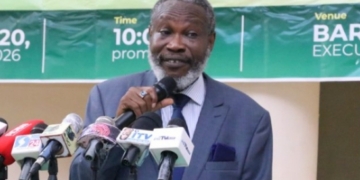
Google may be required to pay South African news media between R300 million and R500 million per year for up to five years, amounting to a potential R2.5 billion, under a new proposal by the country’s Competition Commission.
The commission’s provisional report, released after a 16-month inquiry into media and digital platforms, calls for Google to compensate South African news publishers with between R300 million and R500 million annually for at least three to five years. This could see the tech giant pay up to R2.5 billion over five years.
The proposal is part of broader recommendations aimed at addressing imbalances in digital advertising revenue, search engine prioritisation, and referral traffic for local journalism. The report highlights how major tech platforms have disrupted traditional media revenue models and hindered news publishers’ ability to monetize content effectively.
In addition to financial compensation, the Competition Commission has outlined several key recommendations for Google, which includes increasing referral traffic to local news websites by adjusting its search algorithms to remove bias favoring foreign media and YouTube content; promoting South African vernacular and community media to ensure broader representation in search results.
Meta and X (formerly Twitter) also face strict recommendations. The commission has demanded that Facebook restore news referral traffic to its previous peak levels, with at least a 100 percent increase in traffic to local news websites and that Meta and X should stop deprioritizing news content and links in their algorithms, ensuring news articles appear more prominently in users’ feeds.
If these companies do not comply, the watchdog warned that it could impose a levy of 5-10 per cent on their South African revenue to support local journalism.
The commission also targeted YouTube, recommending that revenue sharing for news content be increased to 70 per cent, up from current levels. The platform actively promotes higher-value direct ad sales by media companies to boost their earnings.
Furthermore, the report calls for stronger data-sharing policies, requiring search and social media platforms to provide richer, anonymised user data to help news organisations better understand and monetise their audiences.
Another major focus of the inquiry is misinformation and AI-generated content.
The commission has proposed amending the Electronic Communications and Transactions Act to introduce platform liability for harmful content and misinformation spread on social media; requiring tech platforms to partner with and compensate fact-checking organizations, particularly within the local media sector and allowing South African media companies to collectively negotiate with AI firms over content licensing for AI training datasets. “If this is not implemented, AI models must be prevented from favoring global news sources over local outlets when generating responses,” it stated.
These recommendations set the stage for a major confrontation between South African regulators and some of the world’s most powerful tech companies. Similar measures have been met with resistance in other countries, such as Australia and Canada, where platforms like Meta and Google threatened to block news content rather than comply with revenue-sharing requirements.
The Competition Commission, however, remains firm in its position, emphasising the vital role of journalism in a functioning democracy and arguing that Big Tech’s current practices are undermining fair competition in digital advertising and news distribution.
“This includes the removal of search bias in favor of foreign media and YouTube, and the promotion of vernacular and community media,” the commission said in a statement.
The report’s findings remain provisional, and the Competition Commission has invited public and industry feedback until April 7 before finalising its recommendations.
If adopted, these measures could have a profound impact on the relationship between global tech platforms and the South African news industry, potentially setting a precedent for other emerging markets grappling with similar challenges.
We’ve got the edge. Get real-time reports, breaking scoops, and exclusive angles delivered straight to your phone. Don’t settle for stale news. Join LEADERSHIP NEWS on WhatsApp for 24/7 updates →
Join Our WhatsApp Channel