President Bola Tinubu has said banditry and terrorism are not part of our culture. On that, he is correct. No ethnic group in Nigeria wakes up and says, “Let’s add kidnapping and mass murder to our traditions.” No religion here preaches ransom videos as rites of passage. These crimes are learned, funded, enabled and sometimes excused. And that is where the problem begins.
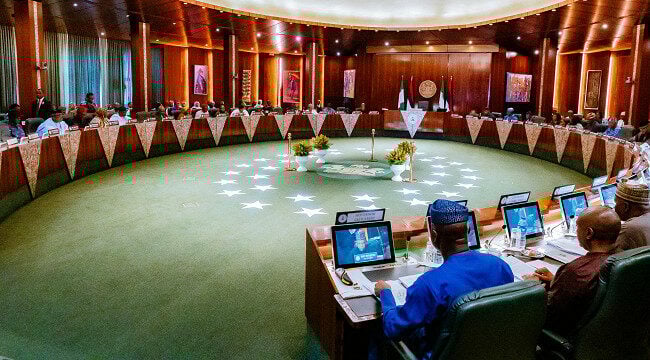
At the second edition of the National Economic Council conference in Abuja, the President described insecurity as an economic threat that keeps Nigerians “sleepless at night.” He promised determination and resilience. He pledged to strengthen the security architecture. Strong words. Necessary words. But Nigeria has never suffered from a shortage of strong words. We have suffered from weak follow-through.
The communiqués, speeches, and photo-ops from that NEC gathering, captured in the reports before us , paint a picture of a government that understands the link between security and prosperity. That link is obvious. No investor brings capital into a war zone. No farmer plants confidently when bandits roam forests with better rifles than the local police. No small business expands in a town where the sound of gunfire replaces church bells and mosque calls.
Security is the foundation. Crack that foundation and every economic statistic becomes cosmetic.
The President is right to frame insecurity as an economic hindrance. But let’s ask the more complicated question: why has insecurity persisted despite years of promises, budgets, and operations with impressive code names? Is it funding? Perhaps partly. Is it equipment? Also partly. Is it coordination between federal and state actors? Certainly.
But I suspect the issue runs deeper. Incentives. We have created a system where failure is rarely punished, and success is rarely rewarded. Governors blame Abuja. Abuja blames governors. Security agencies compete instead of cooperating. Committees are set up. Panels sit. White papers gather dust thick enough to write another white paper on top of them.
And in the forests, the criminals adapt faster than the bureaucracy.
I have said it before on this page leadership is the missing ingredient. Structures matter, yes. Laws matter. Budgets matter. But leadership determines whether those tools gather rust or gather results.
The NEC conference theme was about inclusive growth and sustainable development under the Renewed Hope Agenda. Lofty aspirations. The President spoke of moving from recovery to growth that touches ordinary citizens. Vice President Kashim Shettima argued that growth means nothing if Nigerians don’t feel it in Lafia, Makurdi, Aba, and Sokoto. Minister Abubakar Bagudu praised tough economic choices. All good.
But here’s the uncomfortable truth: Nigerians don’t feel the effects of macroeconomic stabilisation. They feel petrol prices. They feel food inflation. They feel whether their children can walk to school without fear.
Let me acknowledge something: the Tinubu administration inherited a fragile economy and a complex security landscape. Insurgency in the North East. Banditry in the North West. Farmer-herder conflicts in the North Central. Separatist tensions in the South East. Oil theft in the South South. Kidnapping rings that operate like franchised businesses. This is not a tidy spreadsheet problem.
Yet, governance is not a sympathy contest. Citizens judge outcomes, not inheritance stories.
The NEC communique urged states to align with the national security framework and adopt non-kinetic approaches to curb unemployment and poverty. That is sensible. You can’t bomb your way out of youth unemployment. You can’t arrest your way out of structural poverty.
But wait, before we congratulate ourselves for saying “non-kinetic,” let me back up. How many states have credible data on their unemployed youth? How many have clear vocational pipelines tied to real industries? How many have measured whether their intervention schemes actually reduced crime?
We talk about diversification and mechanised agriculture. Good. We talk about dairy farming and livestock investments. Necessary. We talk about a trillion-dollar economy by 2030. Ambitious. And yet, in some rural communities, the immediate concern is whether tonight will pass without an attack. Growth targets are meaningless if grassroots security collapses.
President Tinubu said banditry is foreign to our culture. I agree. But criminality thrives where institutions are weak. It thrives where justice is slow. It thrives where young men see violence as a career path.
Let’s be honest, many of these criminal enterprises operate with local collaborators. Informants. Enablers. Buyers of stolen goods. Money launderers in urban centres who pretend not to ask questions.
So when we say banditry is alien, we must also say complicity is domestic.
The President commended the governors of Borno and Kaduna for their support for security operations. Fair enough. But the security challenge is not a medal ceremony. It requires uniform standards across all states, not isolated praise.
And here is a steelman for the sceptics: some Nigerians argue that federal control over security limits what governors can do. They say the state police are overdue. They warn that without devolution, coordination remains clumsy. They are not wrong to raise that concern.
But even within existing structures, some states perform better than others. Leadership still matters. You can’t blame constitutional architecture for every lapse in vigilance.
The conference also called for moving from “haphazard financing” to growth-driven investment. That phrase struck me. Haphazard financing has been our national hobby for decades. Borrow today. Spend without tracking outcomes. Borrow again. Celebrate ribbon cuttings. Repeat.
Growth-driven investment requires discipline. Data. Accountability. And here’s where I get slightly impatient with our political class. We love big plans: Vision 2010. Vision 2020. Agenda 2050. National Development Plans. Renewed Hope. Names change; the execution culture barely shifts.
Some reforms under this administration have improved federal allocations to states. Revenue flows are reportedly more predictable. The exchange rate policy has been adjusted. Inflation, we are told, is easing.
But until a trader in Kano sees stable food prices, until a teacher in Enugu receives a salary on time, until a farmer in Katsina or Niger harvests without paying protection money to armed gangs, these macro signals remain abstract.
And Nigerians are tired of abstraction.
The President said reform is a process that requires courage and patience. He is right. Reform is not an event. Yet patience has a shelf life.
Citizens who endure subsidy removal, currency adjustment, and tax reform will expect dividends. Jobs. Infrastructure that works. Safety. Otherwise, reform becomes a slogan people endure rather than believe in.
Let me return to the central claim: banditry and terrorism are not part of our culture. Yes. But culture is shaped by what we tolerate.
If high-profile criminals negotiate for amnesty without consequences, what message does that send down the chain? If investigations drag for years, what signal does that send? If communities feel abandoned, what stories do young people tell themselves about the state?
We need speed in justice. Transparency in prosecution. Clear metrics for security operations.
And please, let us stop romanticising “repentant” criminals without a credible verification framework. Forgiveness has its place. But justice has its place too. The families of victims deserve more than press statements.
Vice President Shettima said growth must filter down to everyday lives. That line should be printed on every policy memo. Because here’s the danger: a government can achieve respectable macro indicators while social frustration simmers underneath. And simmering frustration, left unattended, does not remain simmering. It boils.
Bagudu asked how Nigeria can reach a one-trillion-dollar economy by 2030. Fine target. But GDP size is not a medal if inequality widens and insecurity persists. A trillion-dollar economy with fragile communities is a house built on sand. So what must change?
First, security coordination must become ruthlessly efficient. No turf wars. No duplicated mandates. A unified database of incidents and suspects across states. Public quarterly reporting is not propaganda, but numbers citizens can scrutinise.
Second, states must treat youth employment as a security policy, not a welfare afterthought. Tie vocational programmes to actual industries, agriculture processing zones, digital services hubs, and local manufacturing clusters.
Third, accountability must be visible. When funds are allocated for security votes or intervention schemes, publish summaries of spending categories. Sunshine does not weaken governance; it strengthens trust.
And let me add something uncomfortable: political leaders must tone down divisive rhetoric. Insecurity feeds on grievance narratives. When politicians inflame identity tensions for short-term gain, they sow the seeds of long-term instability.
Nigeria does not lack resilience. Communities rebuild after attacks. Traders reopen shops. Children return to school. That resilience is admirable. But resilience should not be exploited as a substitute for reform.
The President concluded his remarks by assuring Nigerians that sacrifices will lead to a stronger, fairer nation. That is the promise . Citizens will measure that promise against their lived reality.
If insecurity declines visibly, if jobs expand tangibly, if local governments function effectively rather than serve as extensions of governors’ offices, confidence will grow.If not, frustration will grow. Banditry is not our culture. Neither is failure.
We have produced world-class professionals in every sector. We have built industries from scratch. We have weathered military rule and economic collapse and still stand.
What we need now is alignment between rhetoric and results.No more theatre.No more ceremonial consensus without operational discipline. Security must become boringly practical. Growth must become visibly inclusive. Institutions must outlast personalities.
And if we want different outcomes, we must reward leaders who deliver them and retire those who don’t.
We’ve got the edge. Get real-time reports, breaking scoops, and exclusive angles delivered straight to your phone. Don’t settle for stale news. Join LEADERSHIP NEWS on WhatsApp for 24/7 updates →
Join Our WhatsApp Channel