
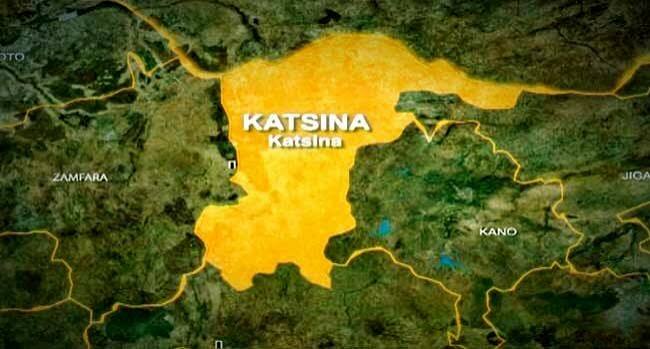
A non-governmental organisation (NGO), Mercy Corps, has called for stronger coordination among government institutions, communities and development partners to tackle natural resource conflicts and improve governance in Katsina State.
A representative of organisation, Lynda Nkechi Emmanuel, made the call in a presentation during a two-day Community-based Natural Resource Management (CBNRM) training for government officials under the Conflict Prevention, Crisis Response and Resilience (CPCRR) Programme in Katsina.
She said effective coordination is essential because environmental, social and development challenges are shared responsibilities that cannot be handled by a single ministry, department or agency.
According to her, issues such as water resource management, environmental protection and community development require collaboration among institutions at the community, local government, state and national levels.
“Everyone has a role to play. Development challenges are interconnected, and decisions made by one institution can affect many others if there is no proper coordination,” she said.
Emmanuel explained that failure to involve relevant stakeholders in planning and decision-making often leads to poor project implementation, duplication of efforts and unnecessary conflicts.
She identified poor communication, bureaucratic bottlenecks, overlapping responsibilities, inadequate commitment, weak information sharing and selfish institutional interests as some of the major obstacles to effective coordination.
The Mercy Corps official stressed the need for regular communication and joint planning among government agencies, traditional institutions, civil society organisations, non-governmental organisations, development partners, women and youth groups to ensure that interventions complement one another.
She also urged officials to adopt inclusive approaches that promote transparency, accountability and community participation in decision-making.
Emmanuel further advised participants to identify all relevant stakeholders before implementing any project, clearly define their respective roles and responsibilities, develop actionable plans and assign timelines for implementation.
According to her, every coordination meeting should produce concrete action points, identify responsible institutions and establish follow-up mechanisms to ensure implementation.
She further noted that coordination should be viewed as a continuous process rather than a one-off activity, saying sustained collaboration builds trust, improves service delivery and strengthens conflict prevention efforts.
The training formed part of the European Union-funded CPCRR Programme, implemented by the International Organization for Migration (IOM) in partnership with Mercy Corps and the Centre for Democracy and Development (CDD), to strengthen resilience and promote community-based natural resource management in Katsina and Zamfara states.
We’ve got the edge. Get real-time reports, breaking scoops, and exclusive angles delivered straight to your phone. Don’t settle for stale news. Join LEADERSHIP NEWS on WhatsApp for 24/7 updates →
Join Our WhatsApp Channel