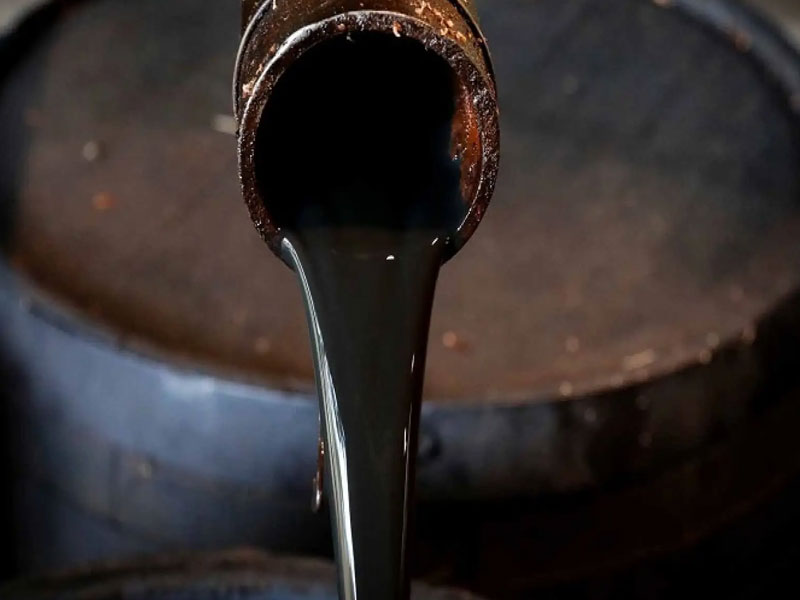
Nigeria could gain from higher crude prices but face pressure at the pump as Saudi Aramco’s chief executive warns that global oil stocks may take up to two years to rebuild after the Strait of Hormuz reopens.
Aramco’s president and CEO, Amin H. Nasser, said this at the Energy Intelligence Forum in London, Reuters reports
He said the war in the Middle East has disrupted oil flows through the Strait, which handled about 20 million barrels per day in 2024, or about 20 percent of global petroleum liquids consumption, according to the US Energy Information Administration.
“Until Hormuz fully re-opens and confidence returns, the crude reality is that pressure at both ends of the barrel will intensify,” Nasser said. “Even then, replenishing inventories while meeting demand could take up to two years.”
For Nigeria, Africa’s largest crude producer, a tight global market tends to support prices and raises export earnings. That matters for a federal budget that depends heavily on oil revenue. The benefit is limited, however, by Nigeria’s own output, which has to be high enough to take advantage of the price.
The risk is on the downstream side. Prices of petrol, diesel and aviation fuel move with global crude and freight costs, and a prolonged supply squeeze could keep pump prices high for Nigerian motorists, transporters and businesses, even with the Dangote refinery now processing crude locally. The refinery buys crude at market prices, so it is not insulated from a global rise.
Nasser said Aramco’s resilience comes from several layers working together: strategic storage, spare production capacity, multiple crude grades, domestic gas storage, a tanker fleet operated through Bahri, and the company’s balance sheet. He added that Aramco is studying more crude-export routes and more overseas storage, and that it relied on its East-West pipeline during the crisis.
He also said more than 90 percent of the materials used to restore damaged Aramco assets came from its local supply chain. That figure is a pointed comparison for Nigeria, where the Nigerian Content Development and Monitoring Board has long pushed operators to use more local goods and services in the oil and gas industry.
Nasser said oil and gas remain “the lifeblood of modern civilization” despite the shift to alternative energy, and argued that solar, wind and electric vehicles are also exposed to shortages of aluminum, sulfur, helium and petrochemicals. He noted that half the world’s proven oil reserves are in the Middle East, along with most of the world’s spare production capacity.
He called for closer cooperation between producers and consumers on emergency response, supply planning, joint stockpiling, refinery and petrochemical flexibility, supply chains and cybersecurity. “The international community must stand together to safeguard the free flow of energy and goods,” he said.
We’ve got the edge. Get real-time reports, breaking scoops, and exclusive angles delivered straight to your phone. Don’t settle for stale news. Join LEADERSHIP NEWS on WhatsApp for 24/7 updates →
Join Our WhatsApp Channel