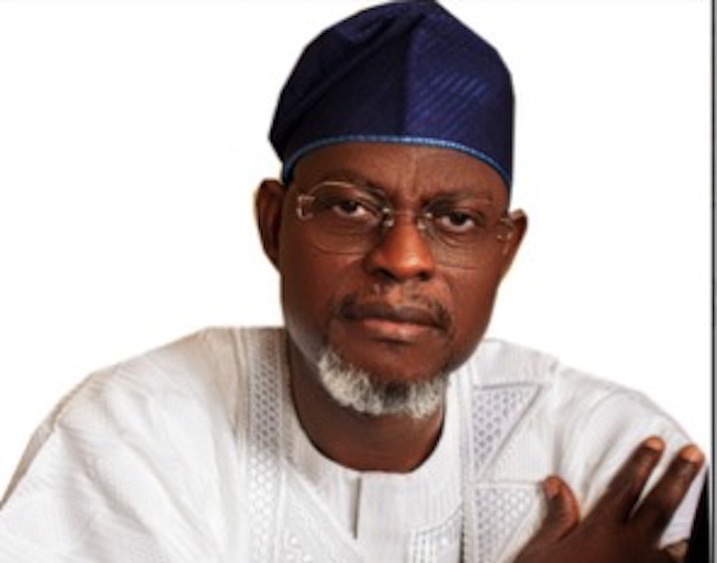
On most mornings at Nigeria’s ports, the choreography is familiar: steel containers stacked like monuments, forklifts humming, ships easing into berth. What is less visible—but no less present—is the quiet imprint of Dr Taiwo Olayinka Afolabi, the lawyer-turned-logistics magnate whose career has helped redraw the map of Nigeria’s trade and transport economy.
Known widely by his moniker, SIFAX, Afolabi’s story is not the loud tale of overnight wealth. It is a patient narrative of faith, calculation and endurance—one that began far from boardrooms and balance sheets.
Born in Ondo State and raised in Ibadan, Oyo State, Afolabi trained as a lawyer at the University of Lagos, was armed with an instinct for structure and order. That instinct found early expression at Nigerian Express Agencies Limited (NEAL), where a young Afolabi cut his teeth in shipping operations and port management. Further studies in shipping management abroad sharpened his edge. When he returned, he rose swiftly to Head of Operations, already marked as one to watch.
In 1988, he stepped out on his own, founding SIFAX Nigeria Limited as a modest freight forwarding company in Lagos. It was a small start—haulage, warehousing, clearing—but Afolabi understood something many overlook: logistics is not just about movement, but about systems. Over time, those systems multiplied. SIFAX expanded into maritime services, aviation, oil and gas, hospitality, and financial services, evolving into a multimodal conglomerate with operations spanning from Nigeria to Ghana, South Africa, the United Kingdom, Belgium, and the United States, with new frontiers opening in Djibouti and Equatorial Guinea.
Perhaps the boldest chapter in that expansion came through privatisation. When the Bureau of Public Enterprises opened Skyway Aviation Handling Company Plc (SAHCO) to private investors, Afolabi moved decisively. The acquisition marked SIFAX’s entry into the aviation sector. Rebranded, restructured and retooled, SAHCO became a case study in what patient capital and operational discipline can achieve. Today, Afolabi’s 60.76 per cent stake—over 822 million shares—is valued at about $48 million, up from under $18 million at the start of 2025. Revenues have surged, profits more than doubled, and a once-struggling aviation handler now stands among the sector’s strongest players.
Yet numbers alone do not explain Afolabi’s stature. Parallel to his corporate rise has been a quieter, more human enterprise—one measured not in containers or aircraft movements, but in classrooms, clinics and community spaces.
In Ogun State and beyond, SIFAX has commissioned mosques, built ICT hubs, donated market stalls, repaired roads and funded free medical outreach programmes. Children learn coding in a 100-seat digital hub. Traders sell their goods under proper roofs. Worshippers pray in renovated mosques where once there were patched ceilings. These are not grandiose monuments. They are practical interventions, stitched carefully into local life.
Through the Ajoke Ayisat Afolabi Foundation, established in memory of his late mother, Afolabi has further extended that impact—offering scholarships, medical assistance, and empowerment programmes for women and youths. At the University of Lagos, the Taiwo Afolabi Annual Maritime Conference continues to inspire students toward careers in shipping and logistics, closing the gap between theory and practice.
Recognition has followed. National honours—Member and Commander of the Order of the Niger—acknowledge his contributions. Industry peers have celebrated his leadership, most recently naming him Outstanding Company CEO of the Decade. As the Honorary Consul-General of Djibouti in Nigeria and Chancellor of Gerar University of Medical Sciences, his influence now extends to both diplomacy and education.
Still, those close to him suggest titles that drive Afolabi more by continuity. That philosophy is increasingly visible in the next generation of leadership at SIFAX, where his son, Tobi Afolabi—educated in Canada and the UK—now helps steer the group’s hospitality, logistics and expansion strategies, blending legacy with modern global insight.
In a business environment often obsessed with speed and spectacle, Taiwo Afolabi represents a different archetype: the builder who thinks in decades, not quarters. As ships continue to dock and planes lift off under the systems he helped build, Afolabi’s actual achievement comes into focus. He has found a way to lace commerce with conscience—and in doing so, has turned logistics into an architecture of legacy.
We’ve got the edge. Get real-time reports, breaking scoops, and exclusive angles delivered straight to your phone. Don’t settle for stale news. Join LEADERSHIP NEWS on WhatsApp for 24/7 updates →
Join Our WhatsApp Channel