
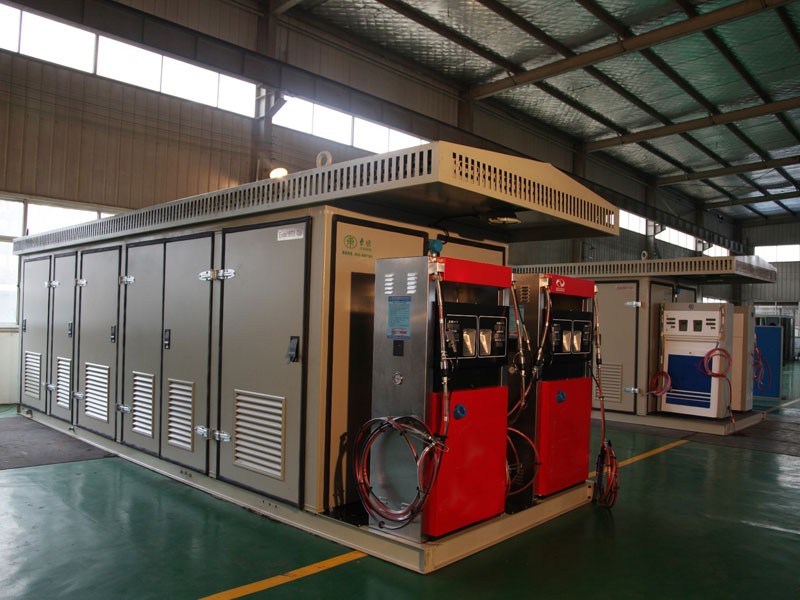
The federal government has said plans are on to mport mobile refuelling units to expand access to compressed natural gas (CNG) and help curb rising transport costs.
The minister of State for Petroleum Resources (Gas), Ekperikpe Ekpo, made this known during a media parley in Abuja on Friday
October 1 Target: CNG, EV Push Has Started Reducing Transport Fares, Claims Federal Govt
Ekpo said President Bola Tinubu has directed the importation of the units, which he said are not manufactured in Nigeria.
Nigeria Records $3.5bn Gas Investment Commitments, Targets $30bn By 2030—Ekpo
“Mr. President has given a directive for importation of the mobile fueling units because of his zeal to make sure that these sufferings get off,” he said.
He said that once the units arrive, they will be distributed across the country, a move he said would help check the rise in transport costs. He did not give the number of units, their cost, who will operate them or when they will arrive.
Ekpo said the expansion of CNG is driven by the private sector, with government limiting its role to regulation.
“The role of the government is to make sure we put regulation in place so that they don’t bring impacts that will cause fatality within the country,” he said.
On fixed refuelling stations, he said work is progressing gradually. He explained that the programme relies on mother stations, which are sited close to gas pipelines, and on smaller stations supplied from them. He said the approach is new to Nigeria and is being driven by the President’s wish to bring down transport costs.
The minister said the government is backing some investors through the Midstream and Downstream Gas Infrastructure Fund (MDGIF), which de-risks them to build the stations. He said fuel prices at the pump should fall sharply once the stations are operating.
He cited one project that was approved funding six to seven months ago, saying its equipment arrived only in recent days. It still has to be installed and technically tested before it can start operating. “It is a matter of time,” he said.
Ekpo said CNG plants have also been developed at some universities, funded through the de-risking facility. At one, he said, the plant is complete but awaits a gas supply, which will be moved virtually, meaning by road rather than pipeline.
“Before now, gas was not given the consideration that it is being given today,” he said. He added that turning CNG into a commercially viable business requires substantial technical work, technology and money, but said, “We will get there.”
CNG vehicle conversions have risen from about 11,000 in 2023 to more than 120,000, according to the minister’s speech. The government’s target is at least one million CNG-powered vehicles and up to 1,000 refuelling stations nationwide.
Ekpo said motorists who have switched report a clear difference in cost between buying CNG and buying petrol. He said the shift towards CNG followed the removal of the fuel subsidy and supports a cleaner environment, with electric vehicles also beginning to arrive.
We’ve got the edge. Get real-time reports, breaking scoops, and exclusive angles delivered straight to your phone. Don’t settle for stale news. Join LEADERSHIP NEWS on WhatsApp for 24/7 updates →
Join Our WhatsApp Channel