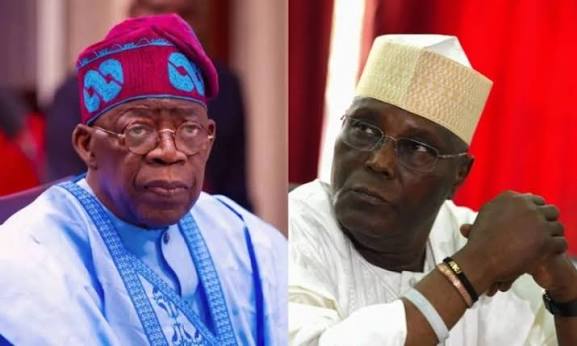
The Presidency has defended President Bola Tinubu’s fuel price intervention, describing it as a logical response to global energy market volatility, while accusing former Vice President Atiku Abubakar of engaging in political demagoguery over the policy.
Special Adviser to the President on Media and Public Communications, Sunday Dare, stated this in a statement issued on Sunday in response to Atiku’s criticism of the Nigerian National Petroleum Company Limited (NNPC) Retail’s 30-day petrol discount and the government’s price modulation framework.
Dare argued that the administration’s intervention was designed to cushion the impact of rising global crude oil prices on Nigerians without returning the country to the former fuel subsidy regime.
He described Atiku’s criticism as politically motivated, accusing the former vice president of exploiting Nigerians’ economic difficulties for political gain.
READ ALSO: Atiku Questions NNPC’s ₦66 Fuel Discount, Demands Accountability
According to Dare, several countries are adopting various measures to mitigate the effects of fluctuations in international energy prices, and Nigeria should not be an exception.
He cited measures in the United Kingdom, the United States and other countries as examples of governments responding to pressures in the global energy market.
The presidential aide maintained that Atiku’s proposal for a production subsidy was economically impractical, arguing that Nigeria does not have sufficient unencumbered crude oil volumes to support a blanket subsidy without undermining government revenue and existing contractual obligations.
Dare said Nigeria’s crude oil production of about 1.8 million barrels per day does not mean the Federal Government has unrestricted control over the entire volume.
He explained that production costs, royalties and contractual arrangements under joint ventures and production-sharing contracts reduce the quantity of crude available to the government.
According to him, the government’s available crude oil entitlement is therefore insufficient to support the kind of broad-based production subsidy proposed by Atiku without significant fiscal consequences.
Dare warned that such a policy could recreate the opacity, fraudulent practices and financial pressures associated with Nigeria’s previous fuel subsidy system.
On the NNPC Retail discount, the presidential aide said the decision to forgo its profit margin for an additional 30 days should not be interpreted as a restoration of fuel subsidy.
He explained that the arrangement was intended to moderate short-term price fluctuations and provide temporary relief to consumers amid rising international crude oil prices.
Dare also defended the reported interim N1,350-per-litre ceiling on ex-gantry costs, describing it as a mechanism for cushioning sudden price increases rather than a return to comprehensive price controls.
He said the framework was designed to promote greater stability in fuel prices and prevent sudden increases from translating into higher transport fares for commuters.
The presidential aide added that the administration was pursuing other measures to address energy costs, including expanding compressed natural gas infrastructure, supporting domestic refining and strengthening strategic fuel reserves.
He said compressed natural gas, which he put at 60 to 70 per cent cheaper than petrol, could provide a more affordable alternative for commercial transport operators.
Dare further defended the administration’s decision to remove the petrol subsidy in 2023 and unify the foreign exchange market, arguing that the measures were necessary to address longstanding economic distortions.
He maintained that the reforms had increased the resources available to state and local governments through federal allocations and helped eliminate persistent fuel queues that had accompanied previous supply disruptions.
He also cited direct cash transfers, support for small businesses, wage assistance and infrastructure projects as part of the government’s broader economic response.
Dare argued that Nigerians should assess the administration’s policies against the structural challenges facing the economy rather than rely on what he described as short-term political promises.
He said the Tinubu administration was combining market-based pricing with targeted interventions intended to cushion the effects of global energy shocks.
The presidential aide maintained that the government’s approach aimed to balance price stability with fiscal sustainability, insisting that a return to an expansive fuel subsidy regime could place additional pressure on public finances.
He urged Nigerians to look beyond partisan arguments when assessing the government’s economic policies, saying that sustainable solutions require attention to the realities of crude oil production, public revenue, and global energy markets.
We’ve got the edge. Get real-time reports, breaking scoops, and exclusive angles delivered straight to your phone. Don’t settle for stale news. Join LEADERSHIP NEWS on WhatsApp for 24/7 updates →
Join Our WhatsApp Channel