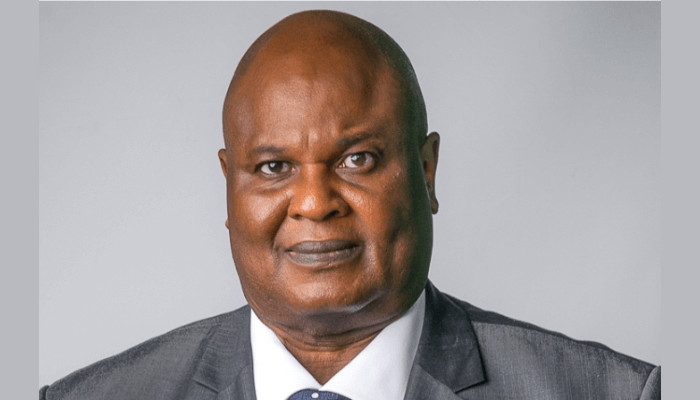
Renowned economist and chief executive officer of Economic Associates, Dr Ayo Teriba, has said that dormant government assets valued at over N43 trillion could be unlocked to bridge the funding gap in Nigeria’s 2026 budget.
Teriba made the call while speaking at the Nigerian Economic Review and Recommendations for 2026, organised by the Chartered Institute of Stockbrokers (CIS). He cautioned, however, that excessive borrowing to finance the budget could place additional strain on the country’s fiscal stability.
He urged stockbrokers to take the lead in assisting the federal government to generate funding for capital projects outlined in the 2026 budget, noting that the capital market offers sustainable alternatives to debt financing.
LEADERSHIP reports that Nigeria’s 2026 budget is projected at N58.18 trillion, with capital expenditure estimated at N26.08 trillion, representing about 44 per cent of total spending.
According to Teriba, stockbrokers are well positioned to structure investment instruments capable of creating liquidity from government-owned assets. He cited examples from Saudi Arabia, Brazil and India, where governments have successfully funded infrastructure by selling or securitising state assets through the capital market.
He further called on the Ministry of Finance Incorporated (MOFI) to publish a comprehensive register of public assets, which would enable private investors to identify, securitise and list viable government assets on the stock exchange.
“Capital projects should not be tied solely to current revenue. They should be structured to fund themselves,” Teriba said.
On fiscal policy, the economist advised caution on personal income taxation, noting that while transaction-based taxes may be appropriate, the economy is still in recovery mode and requires supportive measures.
Also speaking at the event, chief economist at United Capital, Ayodele Akinwunmi, identified manufacturing, trade, logistics, real estate, telecommunications, banking, mining and solid minerals as sectors with strong growth prospects in 2026.
He said Nigeria’s debt-to-GDP ratio of 39 per cent was not alarming but agreed that deeper private sector participation in government assets was necessary.
President and chairman of CIS, Oluropo Dada, said the forum was organised to enhance accountability, showcase institutional achievements, align CIS strategies with national economic objectives and set a clear direction for 2026.
According to Dada, throughout 2025, CIS hosted a series of high-impact economic, professional and policy-focused engagements aimed at strengthening Nigeria’s capital market ecosystem.
We’ve got the edge. Get real-time reports, breaking scoops, and exclusive angles delivered straight to your phone. Don’t settle for stale news. Join LEADERSHIP NEWS on WhatsApp for 24/7 updates →
Join Our WhatsApp Channel