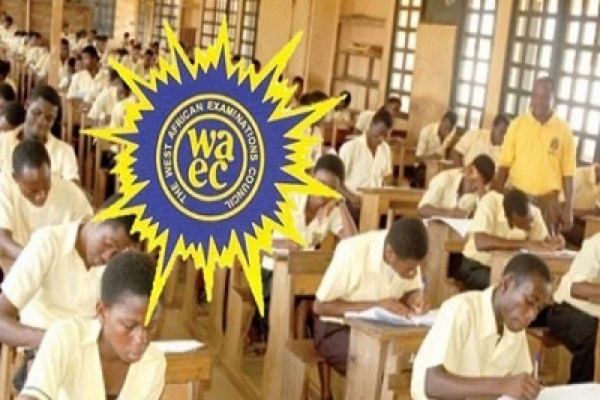
In a significant policy shift that is likely to hinder the realisation of young Nigerians’ academic aspirations, the Minister of Education, Professor Tahir Mamman, declared that from 2025, no Nigerian child below the age of 18 will be allowed to write the West African Secondary School Certificate Examination (WASSCE).
The ministry had earlier set 18 as the minimum age for admission to tertiary institutions. However, it exempted candidates for admission in the 2024 cycle, during which period candidates as young as 16 will still be eligible for enrolment by the tertiary institutions.
Explaining this policy, Mamman said it was in line with the already existing 6-3-3-4 education system, where a child is enrolled at age six for six years of primary and six years of secondary education. By this system and at the end of secondary school, the child is expected to be 18 years old and presumed mature enough for the rigours of tertiary education system.
As a newspaper, we are appalled that any government would deliberately hinder the career paths of its young people through a policy that is not likely to address the main issues that have continued to hamstring the education sector in the country.
It is on record that the government, at all levels, has ceded the sector to private operators whose motives are primarily profit-oriented. They did this by inexplicably abandoning the schools and underfunding them, a policy that has led to outrageous dilapidation of infrastructure and dehumanisation of personnel, especially the teaching staff. It is common knowledge that teachers’ salaries are considered a favour to the recipients, who must wait until every other public servant has been paid. And that can last for so long.
To survive, these teachers turn their classrooms into shops for all kinds of commercial items, barely paying attention to the academic needs of the children, who are often forced to pay extortion fees for lessons that satisfy the organisers’ pecuniary needs.
A visit to any public school will convince the most ardent government protagonist that the age limit for schoolchildren is not one of the problems facing the education sector. The education sector is so bastardised that it has become a dumping ground for failures and never-do-wells in other sectors. It has become so politicised that politicians use it to settle their hangers-on. It is often said that if everything else fails, go and teach, whether or not the prospective teacher has the requisite training and qualification. Those are not in consideration at all.
As a newspaper, we are concerned that this ill-advised, not well-thought-through policy will further hamper the educational advancement of children of the less privileged in society. This is obvious because no child of these policymakers attends the country’s public primary or secondary schools. Most of them are in elitist schools in Europe and America, where the age of a child is not a factor, and young, brilliant children are encouraged and celebrated.
A review of the Central Bank of Nigeria’s (CBN) data suggests Nigeria’s educational sector has suffered massive capital flight in the last 10 years. Specifically, using the CBN’s balance of payment statistics, Nigeria spent a hefty $28.65 billion on foreign education in the past 10 years (2010 to 2020) alone.
The apex bank believes this is taking its toll on the exchange rate regime. This is also the major reason for multiple exchange rates and a widening disparity between the parallel market rate and the official rates. It has, undoubtedly, become the focal point for the economy, especially its drain on the foreign reserve, its multiplier effect on the cost of goods and services, and its direct negative impact on human development indices.
The World Bank, on its part, avers that human capital development is integral to any country’s sustainable development and poverty reduction goals. Education and knowledge capacity building are critical drivers of human capital development.
To this extent, it believes that investment in education is one of society’s bedrocks and helps determine the level of development recorded in an economy. The value of education in an economy cannot be overemphasised, as it helps shape both individuals and the broader society and forms a huge source of economic value.
For Nigeria, data shows that whilst Nigeria has remitted over $28 billion to foreign academic institutions, there does not appear to be significant reciprocation in the form of inflows from foreign sources towards Nigeria’s education sector. And that is the crux of the matter.
Setting an age limit and delaying the academic pursuit of the young and cerebral does nothing to develop the comatose sector. It is an easy way out that is decidedly detrimental to the nation’s quest for knowledge acquisition in a world that has come to thrive on ideas.
If the nation had invested half of $28 billion in the education sector over the same period, it would have distracted attention from the age of the schoolchild, making the present policy unnecessary. We urge the minister to focus his attention on the real issues of out-of-school children, falling standards, non-existent infrastructure and on how to secure the schools so that parents do not have to worry about the safety of their wards while in school. We do not see anything to worry about if a child graduates from a tertiary institution at 15 years.
We’ve got the edge. Get real-time reports, breaking scoops, and exclusive angles delivered straight to your phone. Don’t settle for stale news. Join LEADERSHIP NEWS on WhatsApp for 24/7 updates →
Join Our WhatsApp Channel