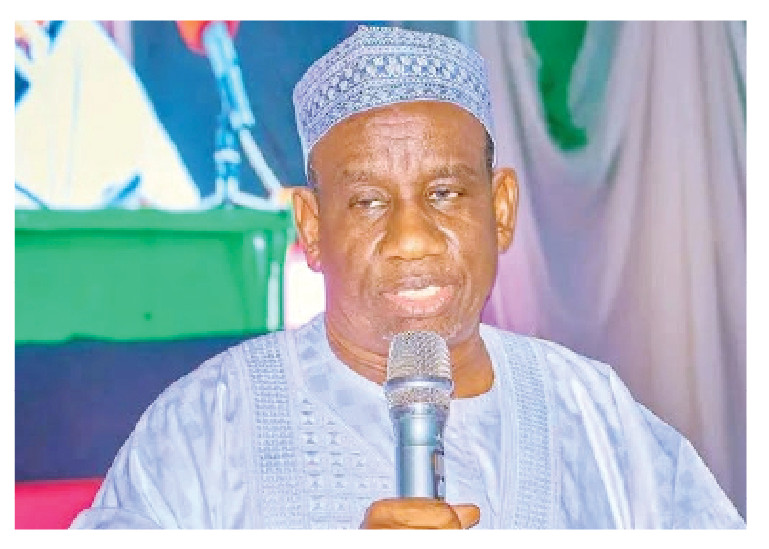
Katsina Investment Promotion Agency (KIPA) is the official government body responsible for promoting, attracting, and facilitating investments into Katsina State. KIPA streamlines business approvals, licenses, and permits for investors, focusing on sectors like agriculture and mining. In this interview with LEADERSHIP’s GODWIN ENA, the Director-General of the agency, IBRAHIM JIKAMSHI, discusses the agency’s purpose, investment opportunities, reforms, and ongoing projects in Katsina State. Excerpts.
Can you explain the main purpose of the Katsina Investment Promotion Agency?
The Katsina State Investment Promotion Agency (KIPA) follows global best practices while considering the Nigerian and Katsina State contexts. Our purpose focuses on several key functions.
First, we attract investment. This means identifying priority sectors, packaging opportunities, and making information clear for investors. We actively market the state both locally and internationally through roadshows, investment forums, and missions. This includes an investment summit similar to the one we had at the end of last year. We also create detailed investment profiles and specific opportunity portfolios.
Second, we facilitate investment through a one-stop shop system. This is a fundamental role of investment promotion agencies worldwide. It provides a single point where investors can access business registration, licenses, permits, and land acquisition. We coordinate with all relevant ministries, departments, and agencies (MDAs) to ensure smooth approvals. Our goal is to remove bureaucratic hurdles so investors can complete everything in one location.
Third, we focus on investment retention and support for existing investors. We help them address operational challenges and enhance their business experience. We conduct investor satisfaction surveys and encourage reinvestment. For example, if investors face issues with utilities or regulatory agencies, we step in to help find solutions.
Another important role is policy advocacy and reform. We identify regulatory obstacles and provide guidance to improve understanding and implementation of policies. Sometimes, the lack of clarity is the issue, which we help clarify for investors and entrepreneurs.
We also gather investment data and conduct research by studying market trends and developing targeted investment strategies. We maintain a solid investor database and regularly engage with stakeholders through forums to review performance and collect feedback.
Additionally, we focus on project development through public-private partnerships (PPPs). We identify viable projects, conduct feasibility studies, engage transaction advisors, and structure investments to attract private sector involvement. This approach allows the government to use private capital, technology, and expertise to build essential infrastructure.
Finally, we work on building the state’s image and communicating our opportunities, stability, and success stories through media and digital platforms to boost investor confidence.
How would you rate the investment climate in Katsina State?
The investment climate in Katsina State is very attractive. We often clarify misunderstandings about the state to keep business activities running smoothly and ensure investments remain active.
For example, industries in Funtua have operated for over 30 years without interruption. The Funtua Textile and WACOTT have maintained consistent operations. We share such experiences with global investing communities to highlight the stability of our environment.
Moreover, in the state capital, companies like Mangal Rice, Gobarau Fertilizer, Everglades, and Aldussar have continued their operations seamlessly. From an investment standpoint, Katsina remains stable and promising.
What other factors influence the investment climate in the state?
Key factors include government commitment, consistency in policies, effective institutions, and smooth administrative processes, especially for obtaining licenses and permits.
Katsina has made significant strides in digitisation. For instance, the Katsina Geographic Information System (KATGIS) has improved land administration. The process for obtaining a Certificate of Occupancy has been digitalised, simplified, and made accessible online. Building permits are also in the process of being digitalised to boost efficiency.
Our tax system is fully automated, allowing for online, mobile, and Automated Teller Machine, ATM payments. Utility payments, including water bills, can also be made electronically. Contractors can complete registration and compliance procedures online.
Furthermore, key federal agencies like the Standard Organisation of Nigeria (SON), National Agency for Food and Drug Administration and Control, NAFDAC, Nigerian Export Promotion Council, NEPC, and the Nigerian Investment Promotion Commission, NIPC are integrated into our one-stop shop system. We operate an Ease of Doing Business Council, headed by the Deputy Governor, which brings together agencies like Customs, Immigration, Police, Corporate Affairs Commission, CAC, FIRS, SON, NAFDAC, and the Small and Medium Enterprises Development Agency of Nigeria, SMEDAN to tackle challenges beyond the one-stop shop.
As a border state, we ensure that security measures do not hinder trade and business activities. These efforts create a more efficient and investor-friendly environment.
What infrastructure developments are being established to support investment in Katsina State?
Infrastructure development is a major priority, especially in energy. The state is developing a hybrid power system combining wind and solar energy, aiming for roughly 10 megawatts, in collaboration with the federal government and international partners.
We are also creating industrial clusters with integrated infrastructure, including electricity, water, sewage systems, and regulatory support, to help manufacturing and export activities.
Key initiatives include the development of a cotton value chain, operationalising the Funtua Inland Dry Port as both an origin and destination port, and planning a Green Economic Zone along with specialised agro-processing zones. These projects aim to enhance value, create jobs, and boost incomes.
What role does private sector collaboration play in achieving these goals?
Private sector partnership is essential. The government alone cannot drive development. The private sector provides capital, technology, innovation, and expertise. When combined with government support and enabling policies, it creates a strong foundation for sustainable development.
Can you highlight some notable investments and development partnerships facilitated by KIPA?
KIPA has helped secure several important investments. For example, a South Korean organisation invested $5 million in agricultural development at no cost to the state, improving farming practices in rural areas.
Other noteworthy investments include Mangal Rice, Gobarau Fertilizer, the Funtua Inland Dry Port, BUTANE Energy, a CNG distribution centre, a sesame processing hub, and a N5 billion poultry project by Torq Agro Allied. Other investors include Green Ville, Axxon Link, Dar Alhalal Group, and more.
What other sectors is the state exploring to drive development?
The state is branching out into mineral resources, digital infrastructure, tourism, and sports. For instance, Katsina United has secured a N500 million partnership with Constrix Nigeria Limited. There is also a large deployment of fibre optic infrastructure supported by our zero right-of-way charges. We maintain a strong focus on the health sector and developing human capital.
What legacy do you hope to leave, and what is your message to the people?
Our aim is to create a more prosperous and resilient Katsina State. We need to believe in our country and support local businesses. With collective effort, we can achieve lasting growth and development.
We’ve got the edge. Get real-time reports, breaking scoops, and exclusive angles delivered straight to your phone. Don’t settle for stale news. Join LEADERSHIP NEWS on WhatsApp for 24/7 updates →
Join Our WhatsApp Channel