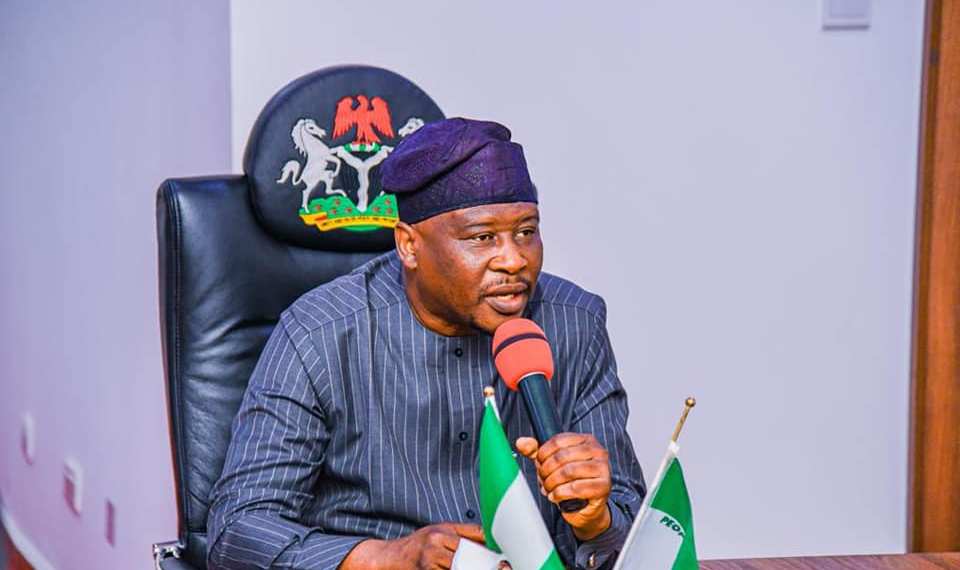
There are periods in the life of a society when governance stops being a distant abstraction and becomes a living presence in the daily experience of ordinary people. In Adamawa State, the past six and a half years under Rt. Hon. Ahmadu Umaru Fintiri have quietly – almost without ceremony – rewritten the relationship between citizen and state. Not through noise. Not through personality theatre. But through the persistent application of a simple principle: government exists to make life better.
This has been a profoundly welfarist era – not in rhetoric, but in practice. It has been technocratic – not in elitism, but in competence. And above all, it has rejected the poisonous habit of reducing leadership to tribe, religion, or sectional loyalty. The Fintiri project has been one of inclusion – not as a slogan, but as a working reality.
Roads have not been built for “our people,” but for the people. Schools have not been improved to satisfy a constituency, but to shape a generation. Public welfare has not been deployed as political charity, but as social justice. This is what genuine reform looks like when stripped of political theatre.
And because Adamawa has known the long, wearying silence of abandoned projects and transactional politics, this change has felt almost disruptive. It has altered expectations. It has made competence seem normal – and that may be the single most revolutionary act of all. For once a people learn that government can work, they struggle ever again to accept excuses. But beneath the gratitude and relief lies a quieter unease – the fear of what comes next.
History, especially in Nigeria, teaches us that reform is fragile. One leader builds with vision; another unravels with indifference. Institutions strengthened today can be weakened tomorrow. A culture of service, so painstakingly nurtured, can be replaced overnight with the old politics of division, patronage, and identity bargaining. We have seen states rise – and we have seen them fall back into the shadows they once escaped.
So the question before Adamawa is neither sentimental nor alarmist. It is sober and necessary: Can we sustain this philosophy of people-centred governance after Fintiri? This is not hero worship – it is ideological clarity.
What has defined this era is not merely the construction of infrastructure, nor the expansion of social programmes, nor the measured discipline of public finance. It is the insistence that public office is a trust. That competence matters. That human dignity matters. That progress must be shared rather than hoarded. That unity must be built not on slogans about religion or ethnicity, but on fairness – real, measurable fairness.
This is politics that refuses to exploit identity. It does not ask whether a citizen prays facing Mecca or kneels before a cross. It does not privilege a surname. It does not weigh humanity on the scale of geography. It sees a citizen first – and that is both rare and precious in a political climate where identity is often weaponised to excuse failure.
A welfarist state worthy of the name must remain committed to the vulnerable – to retirees long denied dignity, to young people seeking opportunity, to women building lives at the margins, to communities once written off as peripheral. Reform, if it is real, must survive transitions. It must grow roots deeper than political cycles. It must become expectation, not exception. That is the true test now before Adamawa.
Because the tragedy of governance in Nigeria has never been the shortage of bright moments – it has been the inability to protect those moments from erosion. We have seen leaders raise the standard only for the system to later collapse into the comfort of mediocrity. We have watched institutions built – and then emptied. We have seen public purpose replaced with private harvest.
Adamawa cannot afford that history.
The next leadership must not simply inherit projects; it must inherit conviction. It must possess the discipline to govern with data, competence, empathy, and fiscal responsibility. It must continue to treat development as a social equaliser – not as political theatre. It must deepen reform rather than perform it. And it must resist every temptation to revive the cynical politics of tribe and creed that fractures the moral foundation of the state.
For governance, at its highest expression, is not power – it is stewardship. And stewardship demands continuity of purpose.
A society that has tasted fairness must defend it. A people who have seen what reform looks like must insist upon it. The mantle of responsibility now rests not only on future leaders, but on citizens who must refuse to be dragged backwards into the old traditions of low expectations and narrow loyalties.
Fintiri’s legacy – if it is to mean anything – must outlive his tenure. It must become a culture. A reflex. A standard that every aspirant to public office must be measured against. Because in the end, progress is not secure until it becomes irreversible.
Adamawa stands at a quiet but decisive threshold. It has experienced a politics grounded in welfare, anchored in technocratic competence, stripped of sectarian bias, and oriented toward reform. The question now is whether it will allow this moment to harden into a tradition – or allow it to evaporate into memory.
History is patient. But people cannot afford to be.
And so the demand must remain simple and unwavering: let governance continue to serve the human being – not the tribe, not the creed, not the ego of power, but the citizen whose dignity is the only true justification for the existence of the state.
Only then will this era not simply be remembered – but honoured.
We’ve got the edge. Get real-time reports, breaking scoops, and exclusive angles delivered straight to your phone. Don’t settle for stale news. Join LEADERSHIP NEWS on WhatsApp for 24/7 updates →
Join Our WhatsApp Channel