The entry of new investors into Kano and Jos electricity distribution companies (DisCos) offers a fresh opportunity to improve network infrastructure, reduce electricity losses and strengthen market performance, following years of underinvestment and operational challenges.
Historically, the three northern DisCos — Kano, Jos and Kaduna — have struggled with poor market performance and inadequate investment since the privatisation of the electricity sector.
However, recent performance figures indicate a growing divide between Kano and Jos, where new investors are making progress, and Kaduna, where the existing operator has come under regulatory scrutiny over mounting debts and poor performance.
Data from the Nigerian Electricity Regulatory Commission (NERC) for the second quarter of 2026 show that seven DisCos paid their invoices to the Nigerian Bulk Electricity Trading Plc (NBET) in full, while Kano paid 66.51 per cent, Jos 62.39 per cent and Kaduna 50.10 per cent.
In customer collections, Kano Electricity Distribution Company (KEDCO) recorded the lowest performance nationwide at 47.74 per cent, compared with the industry average of 81.06 per cent.
The weak quarterly performance in Kano has been attributed to disruptions on the national grid, although no specific outage in the second quarter has been publicly linked to the reported figures.
KEDCO is located at the end of the transmission network in the North-West, leaving it particularly exposed to disruptions originating upstream.
In 2024, the company lost its entire bulk electricity supply for 19 days following the vandalisation of the Shiroro-Mando transmission line. NERC also recorded a total grid collapse on January 23, 2026.
The challenges confronting northern DisCos are partly structural, reflecting decades of unequal investment in electricity generation and transmission infrastructure across the country.
Available data show that, as of 2021, no state in the North-East or North-West had more than 100 megawatts of installed generation capacity.
Coverage by the 330-kilovolt and 132-kilovolt transmission lines supplying the northern DisCos is also weak in both zones.
The limited availability of local generation leaves the northern electricity market with few alternatives when the national grid experiences disruptions, contributing to the poor network infrastructure that the DisCos inherited at privatisation.
Kano Records Gains Under New Investor
KEDCO’s performance has improved across several operational indicators since Future Energies Africa took over as its core investor on November 2, 2023.
The company’s billing efficiency increased from 75 per cent in January 2024 to 80 per cent by June of the same year, while its losses declined by almost 20 percentage points to 42 per cent.
NERC data further show that Kano’s billing efficiency reached 98.05 per cent in October 2025 and 99.04 per cent in February 2026, placing it among the best-performing DisCos on that measure.
The company paid 94.34 per cent of its market obligations in the fourth quarter of 2024, while BusinessDay reported that it made full payment to NBET in the first quarter of 2025.
In the first quarter of 2026, KEDCO’s collection efficiency rose by 3.37 percentage points to 62.76 per cent, while its market remittance performance reached 85.07 per cent.
Metering coverage has also improved, rising from about 30 per cent of customers in 2023 to 35.38 per cent.
Infrastructure development is another part of the company’s ongoing efforts to improve electricity supply. Projects include the newly completed 40-kilometre Bichi-Dauwa line and several new substations, which are bringing an additional 40 megawatts of electricity to customers in Jogana.
These developments point to progress in billing, collections, market remittances and network investment, although the company’s second-quarter collection performance indicates that significant challenges remain.
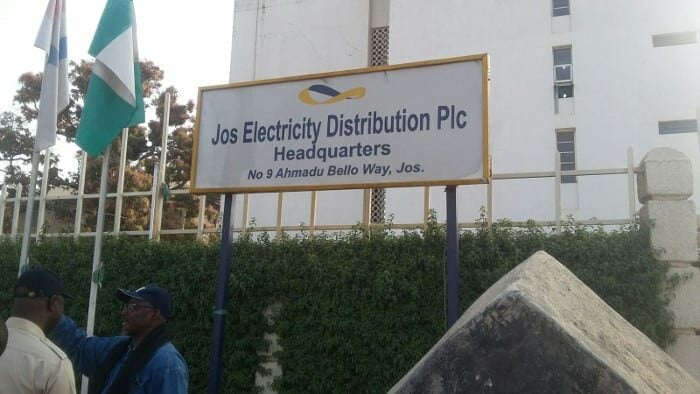
Jos DisCo records improvement under new backing
Jos Electricity Distribution Company is also receiving new investment support, with its new backers reportedly committing to finance further reductions in electricity losses.
The commitment was discussed at a high-level meeting involving NERC and the Bureau of Public Enterprises (BPE).
NERC’s first-quarter 2026 data show improvements across key performance indicators for the company.
Jos’ collection efficiency increased by 13.49 percentage points to 58.41 per cent, while its payment to NBET rose by 17.30 percentage points to 67.10 per cent.
Its aggregate technical, commercial and collection (ATC&C) losses also declined by 6.84 percentage points to 58 per cent.
Although the figures remain below regulatory targets, the improvements represented the strongest positive movement among the three northern DisCos during the period.
The performance suggests that additional capital and sustained investment could help address the operational and financial challenges confronting the company.
Kaduna emerges as outlier
Kaduna Electric presents a contrasting picture, with its mounting market debts and weak operational performance prompting regulatory intervention.
On August 10, 2026, NERC dissolved the company’s board over market debts of N456.5 billion, stating that its operator, ASI Engineering, had added N118.6 billion to the debt since taking over in June 2024.
The commission also rejected a request for a 24-month extension to stabilise the company’s cash flow.
NERC’s first-quarter data showed that Kaduna recorded ATC&C losses of 69.66 per cent, against a target of 18.18 per cent, while its collection efficiency stood at 45.81 per cent.
In 2024, the company paid only 30.7 per cent of its market obligations, compared with 84.08 per cent for Kano after excluding months affected by force majeure.
When NERC installed an interim board, its chairman, Dr Musiliu Oseni, recalled that an earlier intervention in 2024 had produced significant improvements before the previous investors resumed control.
The experience has strengthened the argument for reprivatising Kaduna Electric and transferring it to an investor with the financial capacity and operational expertise required to implement the turnaround that the regulator considers necessary.
Investors need support to sustain gains
The contrasting experiences of Kano, Jos and Kaduna highlight the importance of investment, operational management and financial discipline in improving electricity distribution in northern Nigeria.
While Kano and Jos have recorded improvements in several performance indicators under new investment arrangements, Kaduna’s mounting debts and weak operational results demonstrate the consequences of persistent financial and operational difficulties.
The second-quarter figures nevertheless show that challenges remain, particularly in customer collections, and that improvements in some indicators have yet to translate into consistently strong performance across the northern market.
However, penalising investors in Kano and Jos on the strength of a single quarter’s results, particularly where grid disruptions and other structural constraints affect performance, could undermine progress made over several years.
The argument for supporting the new investors is that northern DisCos entered privatisation with weak networks, limited infrastructure and substantial operational challenges. Addressing these problems requires sustained capital investment, improved management and time to deliver measurable results.
With Kano and Jos showing signs of improvement, continued regulatory engagement and support for credible investors could help strengthen electricity distribution in the region.
For Kaduna, a change in ownership may be necessary to secure the investment and management capacity required for a sustainable recovery.
The current investment cycle therefore represents a significant opportunity to improve the performance of northern DisCos since privatisation, provided investors are held accountable for results without undermining genuine efforts to rebuild the networks.
We’ve got the edge. Get real-time reports, breaking scoops, and exclusive angles delivered straight to your phone. Don’t settle for stale news. Join LEADERSHIP NEWS on WhatsApp for 24/7 updates →
Join Our WhatsApp Channel