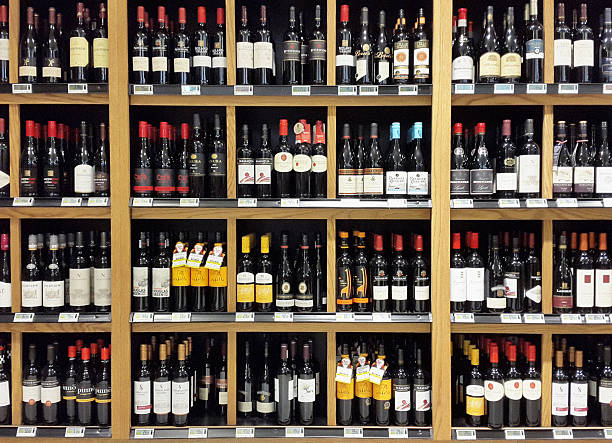
In Onitsha, Anambra State, buying a bottle of wine is increasingly becoming an exercise in caution, even for traders who have spent years dealing in alcoholic beverages.
Behind the colourful displays of imported wines, spirits and locally distributed alcoholic drinks in the commercial city lies a growing concern over counterfeit products, adulterated beverages and the difficulty of distinguishing genuine drinks from their fake counterparts.
For some traders, the fear is no longer limited to losing money to counterfeit products. It is also about the possibility of selling a dangerous drink to a customer, damaging their reputation and attracting the consequences of a product they may not even know is fake.
The distrust runs deep.
Some traders are wary of purchasing drinks from fellow wholesalers, while others insist that the appearance of a bottle, its label or even its seal can no longer be relied upon as sufficient proof of authenticity.
The situation has created an unusual atmosphere in a market where business traditionally depends on trust, established relationships and wholesale networks.
A trader who has spent years selling wines and spirits may now think twice before accepting supplies from another dealer.
One trader, who spoke about the situation, said the circulation of fake drinks had made it increasingly difficult to trust suppliers.
“These days, you have to be very careful about where you buy your drinks. Somebody can bring a carton of wine that looks exactly like the original, but you don’t know what is inside. Even the bottles and labels can deceive you.
“I cannot afford to buy something today and discover tomorrow that it is fake. If I sell it to somebody and the person has a problem, I will be the one to suffer the consequences,” the trader said.
For another trader, the problem has changed the way business relationships work.
According to the trader, some dealers now prefer to patronise suppliers they have known for years rather than take chances with unfamiliar wholesalers offering cheaper products.
“You cannot just trust everybody because they are selling wine. Some people are only interested in making money. They don’t care whether what they are selling is genuine or not.
“Even when somebody brings a drink at a very attractive price, you have to ask questions. Sometimes, it is better to lose a business opportunity than to buy something that will bring trouble,” the trader said.
The Search For Genuine Wines
Despite the concerns, traders say business must continue. However, some claim they have had to change their purchasing arrangements by seeking supplies from other markets and established distributors they consider more reliable.
One of the traders said there were alternative markets where buyers could obtain better-quality wines, although the cost of purchasing from trusted sources could be higher.
“We have another market where we can get better wines. Some of us prefer to go there because we want to be sure of what we are buying.
“You may see a wine here that is cheaper, but what is the guarantee that it is original? I would rather buy from somewhere I know than take the risk of buying fake drinks and losing my customers,” the trader said.
Another dealer said the increasing sophistication of counterfeiters had made it difficult for ordinary traders to identify fake products.
According to the trader, some counterfeiters allegedly reuse original bottles, reproduce labels and make their products appear almost identical to genuine brands.
“Sometimes, you will look at the bottle and everything appears correct. The label is there, the cork is there and the packaging looks fine.
“But how do you know what they put inside? That is the problem. Unless you know the supplier very well, you cannot be completely sure,” the trader said.
NAFDAC’s Crackdown And The Onitsha Connection
The concerns among traders are not without basis. Previous enforcement operations have exposed the scale of counterfeit alcoholic beverage production and distribution in parts of South-East Nigeria.
In December 2022, the National Agency for Food and Drug Administration and Control (NAFDAC) confiscated counterfeit alcoholic drinks worth more than ₦1 million during separate operations in Onitsha and Aba markets.
The operation followed a petition by the Mowet-Hennessy Group, whose brands were allegedly being counterfeited.
NAFDAC’s Deputy Director in the Directorate of Investigation and Enforcement, Dr Christiana Esenwah, disclosed that the agency discovered the use of recycled bottles bearing the trademarks of original manufacturers.
She explained that counterfeiters allegedly replaced labels, refilled the bottles with other substances and used super glue to reseal the corks.
The agency recovered counterfeit Mowet and Hennessy drinks, alongside empty bottles, corks and other packaging materials.
Esenwah warned consumers against purchasing alcoholic beverages from questionable sources, advising them to patronise reputable stores and supermarkets.
The problem resurfaced in October 2024 when a joint task force of Operation Clean and Healthy Anambra Brigade and the Presidential Task Force Against Economic Sabotage and Oil Vandalism raided an illegal alcoholic beverage production facility in Onitsha.
The operation, which followed intelligence gathering, led to the discovery of a facility on Onowu Street, off the Enugu-Onitsha Expressway.
According to the Managing Director of OCHA Brigade, Celestine Anere, more than 2,000 cartons of suspected counterfeit wines and packaged drinks were recovered.
Seven suspects were arrested during the operation.
Investigators also discovered that several warehouses and stores had allegedly been converted into makeshift factories for producing, packaging and distributing counterfeit alcoholic beverages.
Anere said the operation uncovered mixing tanks, improvised filters, packaging materials and bags of empty bottles.
The discovery raised concerns about the extent to which counterfeit alcoholic beverages could have entered legitimate distribution channels.
In March 2024, NAFDAC also reported uncovering illegal alcoholic beverage production facilities in Enugu and Imo states.
Its South-East Zonal Director, Martins Iluyomade, disclosed that a facility in Ibagwa-Aka, Enugu State, was producing unapproved dry gin, while another operation in Ezinihitte, Mbaise, Imo State, was allegedly counterfeiting popular wine and spirit brands.
The agency recovered large quantities of suspected counterfeit beverages, bottles, corks, labels and substances yet to be identified.
More recently, in June 2026, the Anambra State Police Command announced the arrest of two suspects allegedly involved in the production and distribution of adulterated alcoholic beverages.
Police spokesperson Tochukwu Ikenga said operatives recovered suspected adulterated spirits bearing registered brand names and dangerous chemicals allegedly used in their production.
The suspects reportedly led investigators to a mini-factory.
These incidents suggest that the problem is not restricted to isolated shops or individual traders but involves organised production and distribution networks.
NAFDAC’s Wider War Against Fake Drinks
Beyond the South-East, NAFDAC has intensified enforcement against counterfeit alcoholic beverages across the country.
In December 2023, the agency shut down Aba’s Eziukwu Market, popularly known as Cemetery Market, following the discovery of shops allegedly converted into factories producing fake wines, spirits, soft drinks and other consumables.
The agency said products and materials worth more than ₦750 million were confiscated and destroyed, while 10 people were arrested.
NAFDAC Director-General, Professor Mojisola Adeyeye, disclosed that operatives raided more than 240 shops during the operation.
She said counterfeiters were allegedly operating like a cartel and producing adulterated products under unhygienic conditions.
The products included imitations of popular alcoholic beverage brands, with some operators also allegedly involved in revalidating expired consumables.
In April 2026, the agency announced the discovery of two illegal alcohol production syndicates in Lagos State, with counterfeit and adulterated products valued at approximately ₦350 million recovered.
The operation uncovered makeshift production facilities containing mixing tanks, empty branded bottles, corks and packaging materials.
In October 2026, NAFDAC also intensified its operations at the Lagos International Trade Fair Complex, where it uncovered suspected counterfeit alcoholic beverage operations.
According to reports, the agency seized suspected fake and illegally repackaged drinks and related materials valued at more than ₦2 billion.
The operations demonstrate the continuing challenge facing regulators as counterfeiters exploit distribution networks, recycled packaging and consumer familiarity with established brands.
NAFDAC’s Spirit Drinks Regulations 2019 prohibit the manufacture, importation, distribution and sale of spirit drinks that have not been registered with the agency.
The regulations also prescribe labelling requirements, including the declaration of the actual alcohol content.
The Health Risks Behind The Attractive Bottles
While traders worry about financial losses and damaged business relationships, health practitioners warn that the greater danger lies with consumers who unknowingly drink adulterated alcoholic beverages.
Unlike genuine products manufactured under regulated conditions, counterfeit drinks may contain substances that are unsafe for human consumption.
One major concern is the possible use of industrial-grade alcohol or contaminated ingredients in the production of fake alcoholic beverages.
Methanol, an industrial chemical that must not be consumed as an alcoholic beverage, is particularly dangerous.
Medical experts warn that methanol poisoning can cause severe metabolic disturbances, damage to the optic nerve, blindness, kidney complications and death.
Symptoms may include headache, dizziness, nausea, vomiting, abdominal pain, blurred vision and difficulty breathing.
A medical practitioner familiar with the dangers of alcohol poisoning explained that consumers should not assume that a drink is safe simply because it comes in an attractive bottle or carries the label of a popular brand.
“The danger with counterfeit alcoholic beverages is that consumers may not know what they are taking into their bodies.
“Some of these products may contain substances that are not meant for human consumption. Depending on the chemical involved and the quantity consumed, the consequences can range from serious poisoning to permanent organ damage and death,” the practitioner said.
Another health practitioner warned against the assumption that the taste, smell or appearance of alcoholic beverages could reliably establish their safety.
“You cannot determine the chemical composition of an alcoholic drink by tasting or smelling it. A counterfeit product may look and taste similar to the original but contain dangerous substances.
“Anyone who develops symptoms such as vomiting, severe headache, dizziness or visual disturbances after consuming a suspicious alcoholic beverage should seek urgent medical attention. They should not attempt to treat themselves at home,” the practitioner said.
A public health specialist also identified the circulation of fake alcoholic beverages as a consumer protection issue requiring stronger enforcement and public education.
According to the specialist, regulators must go beyond occasional raids by identifying production centres, distribution networks and retailers involved in the circulation of counterfeit products.
“Destroying fake products is important, but the authorities must also trace how these products enter the market and who supplies them.
“There should be continuous surveillance, effective prosecution and public awareness. Consumers must also understand that a cheap alcoholic drink is not necessarily a bargain if its contents are unknown,” the specialist said.
A Market In Need Of Restored Confidence
For traders in Onitsha, the challenge is not simply about identifying counterfeit wines. It is also about restoring confidence in a business environment where the actions of unscrupulous operators can damage the reputation of legitimate dealers.
The fear of purchasing fake products has made some traders more selective about their suppliers, while consumers are increasingly being advised to exercise caution when buying alcoholic beverages.
However, experts say responsibility cannot rest solely on consumers, particularly when counterfeiters are capable of reproducing packaging that closely resembles genuine products.
NAFDAC and other enforcement agencies must sustain surveillance, strengthen market inspections and ensure that those responsible for producing and distributing adulterated beverages are prosecuted.
Market associations, wholesalers and retailers also have a role to play in identifying suspicious suppliers and reporting illegal production activities.
Until these measures become more effective, the ordinary act of buying a bottle of wine could remain a gamble for unsuspecting consumers.
In a market where traders increasingly question the authenticity of products supplied by their colleagues, one thing is becoming clear: the battle against fake wines is no longer just about protecting brands or businesses. It is about protecting lives.
We’ve got the edge. Get real-time reports, breaking scoops, and exclusive angles delivered straight to your phone. Don’t settle for stale news. Join LEADERSHIP NEWS on WhatsApp for 24/7 updates →
Join Our WhatsApp Channel