The menace of corruption has penetrated all sectors of the country and the education sector is not left out.
Corruption in education manifests in different ways such as recruitment of unqualified or unfit persons to teach at primary, secondary or tertiary levels; admission racketeering; examination malpractice, diversion of revenue for and within the sector, operation of illegal academic institutions, amongst others.
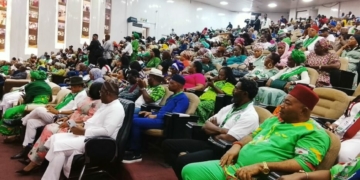
To curb the ugly trend, the Independent Corrupt Practices and Other Related Offences Commission (ICPC) has, in the last four years, continued to organise national summit on diminishing corruption in the public sector and this year, the focus is on education sector.
Speaking at the 2022 4th national summit on diminishing corruption in the public sector, the chairman of the ICPC, Professor Bolaji Owasanoye said some of the actions taken by the Commission to tackle corruption in schools, include response to the recent epidemic of sexual harassment in the education sector.
He noted that it has constituted a special team on investigation and prosecution of sexual harassment in secondary and tertiary institutions.
“In collaboration with civil society we are in the process of introducing a model policy on sexual harassment for academic institutions to adopt we have also secured some major convictions including of a professor.
“For the education sector we collaborated with other institutions including NUC and NBTE and much
more recently with JAMB. With JAMB and DSS, we conducted last year a series of undercover operations across the country on corruption in the university admissions processes leading to the busting of syndicates and arrest of its leaders responsible for compromising IJMB and JUPEB.”
He also noted that the “ICPC reviews of special funds meant to improve education delivery such as UBEC and TETFUND reveals continued abuses and breach of procurement standards and compromise of statutory mandates while a System Study and review on SUBEB in six states for 2019-2020 revealed that the intention of Universal Basic Education (UBE) law to support states to improve basic education is frustrated by lack of commitment by state governments in not providing matching grants amongst other defaults.
“The capacity and commitment of states and tertiary institutions to access UBE fund and TETFUND respectively as anticipated by law remains highly questionable.”
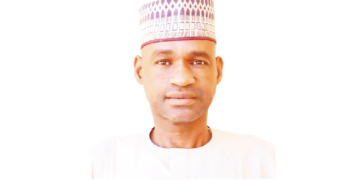
Also speaking, Professor Attahiru Jega, a former chairman of the Independent National Electoral Commission (INEC) said “To have a proper appreciation of the extent and magnitude of corruption in the public sector, it is worthwhile to review the specific components of the education sector.
“In the Nigerian context, as in many other comparative contexts, with only slight variations, the components of the education sector are: the primary; secondary; and post-secondary / tertiary education institutions, the latter consisting of colleges of education, polytechnics and universities.
“The Nigerian education sector, especially the tertiary education component and in particular the universities, have grown phenomenally, especially since the early 2000s, when it was widely opened up for private sector investment/participation.
“Ironically, it was a case of rapid expansion and growth without adequate planning, financing and careful, effective regulation. With the result that, there has not been a remarkable expansion of enrolment, in spite of the almost exponential increase in the
number of institutions. And, as the sector expanded, seemingly uncontrolled, so has the effect and impact corruption.
“From the primary to the tertiary education institutions, types and evidence of incidences of corrupt practices have increased. These include but are not limited to: Bribery, Theft, Diversion of funds and equipment, Nepotism and favouritism in appointments and promotion of teachers/staff.
“The type of corruption most pervasive and prevalent at the primary and secondary school levels is what Transparency International calls ‘petty corruption’, and the World Bank calls ‘quiet corruption’, notably bribery and maladaptive practices, such as absenteeism, gift-giving.
Extortion of money from students/parents for admission also takes place.
“In addition, in the Nigerian case, the development of public primary and secondary schools and quality educational provisioning by them, are significantly negatively affected by brazen misapplication, misappropriation and embezzlement of funds by officials of sub-national units, i.e. officials of the state and the local governments.”
Jega further said there is also corruption in the wider public sector, which affects the education sector, noting that “there are examples of how reform policies, formulated with good intentions are often circumscribed by endemic corruption in the public sector, and in their application in the education sector, create their own dynamics of corrupt practices.
“This can be illustrated with examples of how three reform policies by the federal government compel many vice chancellors of federal universities to become somewhat ‘compulsorily’, even if in some cases reluctantly, involved in or with endemic corrupt practices in the wider public sector.
We’ve got the edge. Get real-time reports, breaking scoops, and exclusive angles delivered straight to your phone. Don’t settle for stale news. Join LEADERSHIP NEWS on WhatsApp for 24/7 updates →
Join Our WhatsApp Channel