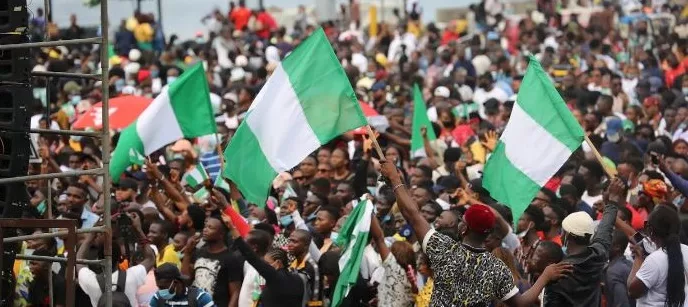
Sixty-five years of independence. That’s long enough for a child to have grown old and wise and for a country to have settled into its own skin. Yet Nigeria, on her 65th anniversary today, still feels like a nation suspended between promise and disappointment.
The record is uneven—brutally so. From the ceremonial First Republic under Nnamdi Azikiwe to the violent ruptures of military coups, from the civil war that tore the country apart to the tentative steps back to democracy in 1979, and then again in 1999—Nigeria’s history is littered with starts and stops. The Fourth Republic has lasted the longest, but stability on paper hasn’t automatically translated into progress on the streets.
Consider power supply. Six and a half decades after independence, Nigeria still cannot consistently generate and distribute beyond 5,000 megawatts—barely enough for a medium-sized city, let alone Africa’s most populous nation. Billions of naira have been poured into the sector, yet generators remain the unofficial sustainable power source.
Even worse is insecurity. Between 2006 and 2021, over 169,000 Nigerians lost their lives to violence, whether from Boko Haram, banditry, farmer–herder clashes, or state-sanctioned abuses. To put it starkly, more people have died from insecurity in the past two decades than the total death toll of the Nigerian Civil War. That’s not just a statistic—it’s a scar.
And then the elections. For all the talk of reforms and technology, free and fair polls remain more of an aspiration than a reality. Every cycle brings renewed hope and ends with familiar stories: vote-buying, intimidation, and endless court battles.
But nothing has eroded Nigeria’s potential more than corruption. By 2012, it was estimated that the country had lost over $400 billion to graft since independence. That’s money that could have built railways, schools, hospitals, and factories—gone into private pockets instead. Every other problem—power, insecurity, poverty—feeds off this one.
Yet this anniversary occurs when reasons for cautious optimism coexist with legitimate concerns. Nigeria’s creative industries have achieved global recognition, with Nollywood films and Afrobeats music reaching international audiences previously unimaginable. From Davido, Wizkid, Burna Boy selling out stadiums in Europe to Nollywood titles landing on global streaming platforms, culture has become one of Nigeria’s strongest exports.
The technology sector tells a similar story. Nigeria has produced unicorn companies that dominate Africa’s financial technology landscape. Young entrepreneurs in Lagos and Abuja are creating payments, lending, and logistics tools that rival what Silicon Valley churns out.
Nigerians in diaspora—the doctors in the UK, the engineers in the US, the academics shaping policy worldwide—it’s clear the problem has never been Nigerian talent. The problem is the failure of systems at home to nurture, reward, and retain that talent.
The demographic dividend of a young, increasingly educated population represents Nigeria’s greatest asset and potentially its most significant liability. With over 60 per cent of the population under 25, Nigeria has the human resources to drive rapid development.
But youth unemployment and underemployment have left millions restless, with crime, fraud, and emigration offering tempting escape routes. The same energy that fuels tech start-ups and creative brilliance can also destabilise the nation if left untapped.
Opportunities exist beyond our borders. Regional integration through institutions like the Economic Community of West African States (ECOWAS) and the African Continental Free Trade Agreement (AfCFTA) provides Nigeria with platforms to lead.
The country’s sheer market size, cultural weight, and diplomatic clout mean that if Africa integrates effectively, Nigeria stands to benefit more than most. But once again, the bottleneck is internal—poor governance, weak infrastructure, and an unstable security environment that keep the country from maximising these opportunities.
So we arrive at 65 years with a mix of hard truths and stubborn hope. Hard truths, because there’s no denying the failures—corruption that has hollowed out the state, insecurity that keeps children out of school, power shortages that strangle business growth, elections that test the patience of citizens. Hope, because Nigeria’s cultural energy, youthful population, and entrepreneurial spark prove that the raw materials for greatness are still intact.
This newspaper refuses to write Nigeria off because the people’s spirit remains unbroken despite it all. Nigerians excel when they leave, innovate under pressure, and find ways to thrive even in hostile conditions. That energy is proof enough that the country has what it takes to finally live up to its potential.
Sixty-five years is long enough to learn lessons. The question facing every leader and citizen is whether we’ll finally apply them. All that is required is the political will on the part of the leadership to implement the desired policies and actions, and the citizens’ audacity to put the leaders’ feet on the fire. It is a prospect that is not deniable.
We’ve got the edge. Get real-time reports, breaking scoops, and exclusive angles delivered straight to your phone. Don’t settle for stale news. Join LEADERSHIP NEWS on WhatsApp for 24/7 updates →
Join Our WhatsApp Channel