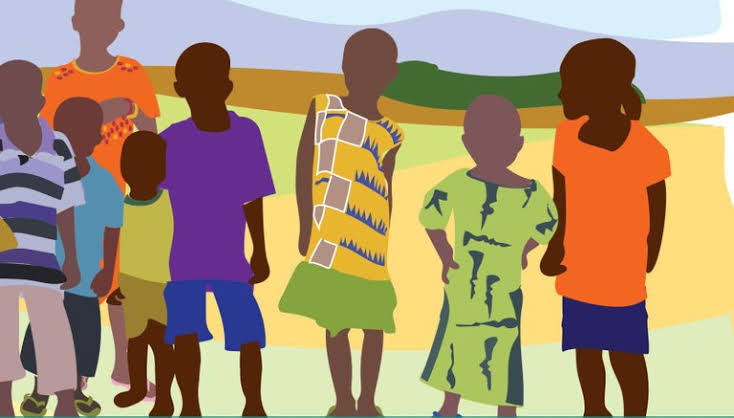
A recent media report revealed that, in Nigeria, there is a phenomenal rise in the propensity on the part of families to exploit children they engage as house maids. The report also exposed a disturbing plight of children given away by their parents into what could easily pass for child slavery. This practice, which has been on for quite a while, reflects all that is wrong with certain aspects of the social system.
The report recounted tales of young Nigerian children aged between 10 and 13 years who were subjected to some of the most demeaning conditions and treatments even as they provide indispensable domestic services to their perceptibly ungrateful employers, in some cases, at laughable pecuniary terms.
According to this report, some of these maids, children in their own rights who need taking care of, but engaged ostensibly as housemaids, are soon turned into sex toys by the male members of the family. In a particular instance, a maid was rendered blind in one eye by her supposed employers for failing to meet set standards in washing a kettle.
There are instances of such cruelty some of which are not reported. However, in what could easily pass for child slavery, parents of the young children collected money from persons in exchange for the services of their children as domestic help. The parents hinge their action on poverty and inability to cater for the family. And so, they sell their children into slavery, without knowing it, and turn a blind eye to the criminal acts of those who soon begin to act in a manner that suggest that they bought the children.
Meanwhile, according to statistics from the International Labour Organisation (ILO), 15 million children are engaged in child labour in Nigeria, a situation which deprives them of their childhood and interferes with their ability to attend regular school. ILO insists that this morally harmful practice renders the affected children incapable of being useful to themselves mentally, physically and socially.
Even worse, today’s realities indicate that a girl child is 80 percent more likely to be assaulted and sold into child labour than a boy child. But beyond these statistics is the need to harmonise the legal framework over child labour. While the Child Rights Act sets the minimum age of employment at 18, the Labour Act sets the minimum age at 12.
Furthermore, the UNICEF Nigeria MICS (2021) report reveals that the percentage of girls aged 5 – 17 engaged in child labour is 11. This contravenes laws which prohibit these practices such as the Child Rights Act (2003) and the Violence Against Persons Prohibition (VAPP) Act (2015).
According to the National Agency for the Prohibition of Trafficking in Persons (NAPTIP) in 2018, the NAPTIP Act of 2015 unequivocally states that employing, recruiting, or harbouring a child under 12 as a domestic worker is a criminal offence punishable by imprisonment. This legal provision underscores the importance of the age limit being set at 12 years.
But beyond the thorny legal issues, the prevailing reality is that Nigeria seems not to pay sustainable attention to its young. The socio-cultural framework which puts young ones at the centre of future planning seems to have broken, if it ever existed in the country.
This shows in the way administrations and political leaders have handled the number of out of school children in Nigeria which is the highest in the world. While the child labour challenge might seem prevalent in the southern part of the country, the increasing number of children unleashed on the streets in the North to beg around for food when they should be learning in school tells a sad tale.
Out of the 244 million children aged 6 to 18, not in school, more than 40 per cent, or 98 million of them, live in sub-Saharan Africa, including Nigeria (20.2 million), Ethiopia (10.5), the Democratic Republic of Congo (5.9) and Kenya (1.8), according to the United Nations Educational, Scientific and Cultural Organization.
That the economic situation in the country is a contributing factor to the rise in this menace is not in doubt. But beyond the economic situation, we believe there is a need for a lot of sensitisation for parents to desist from sending their children into such traumatising paid labour. This should be put side by side with strong punitive measures.
A clear population control plan needs to be instituted to ensure that couples produce offspring they can cater for. This should factor into a clear economic plan which will include provisions for mopping up children from the streets. Nigeria cannot afford to continue to treat its young ones with such disregard. Otherwise, it will render the claim that the future belongs to the young meaningless.
We’ve got the edge. Get real-time reports, breaking scoops, and exclusive angles delivered straight to your phone. Don’t settle for stale news. Join LEADERSHIP NEWS on WhatsApp for 24/7 updates →
Join Our WhatsApp Channel