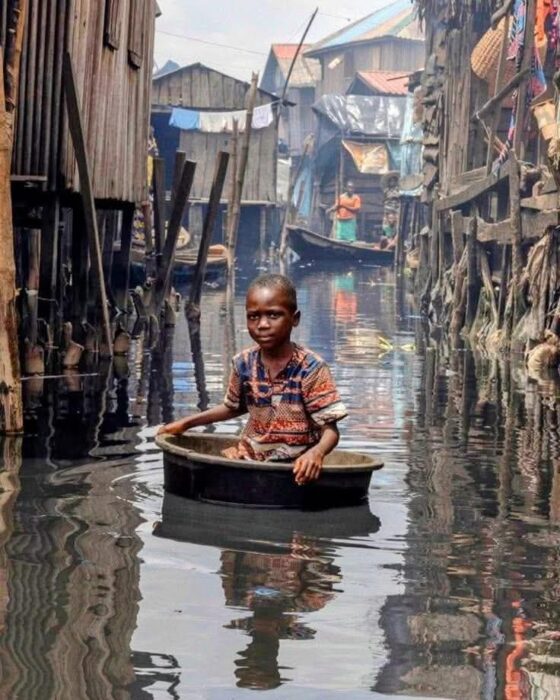
Nigeria recorded the sharpest increase in multidimensional poverty of any country in the world between 2021 and 2024, with 17.9 million more people falling into poverty, according to the 2026 Global Multidimensional Poverty Index (MPI).
The report, released Monday by the United Nations Development Programme (UNDP) and the Oxford Poverty and Human Development Initiative (OPHI), said Nigeria’s earlier gains were reversed. Poverty fell between 2018 and 2021, then rose in the following three years. Afghanistan had the next-largest increase, at 5.3 million people.
Nigeria is one of five countries where poverty rose during their assessment periods, alongside Afghanistan, the Central African Republic, Guinea and Kyrgyzstan.
On the report’s harmonised comparison, Nigeria’s multidimensional poverty rate rose from 33 per cent in 2021 to 38.7 per cent in 2024. The number of poor people grew from 72.21 million to 90.07 million, and the country’s MPI value worsened from 0.175 to 0.208.
A separate national estimate for 2024, based on the latest survey without the harmonisation adjustments, puts the figure at 113.32 million people, or 48.7 per cent of the population. The report stresses that the two estimates use different approaches and are not interchangeable. It also found that 28.7 per cent of Nigerians live in severe multidimensional poverty, while 18.1 per cent are vulnerable to it.
What the index measures
Unlike income-based measures, the MPI looks at overlapping deprivations in health, education and living standards. Indicators include nutrition, child mortality, years of schooling, school attendance, electricity, drinking water, sanitation, housing and household assets. A person is counted as poor if deprived in at least one-third of the weighted indicators.
North carries heaviest burden
Kebbi, Yobe and Sokoto had among the highest poverty burdens, while Lagos had the lowest MPI value. The causes differ by state: nutrition and child mortality drive deprivation in Yobe, while lack of water and electricity weigh more heavily in Sokoto. The report says such differences call for targeted interventions rather than a uniform approach.
Global picture
Worldwide, 1.2 billion people, or 18.9 per cent of those covered, live in acute multidimensional poverty. Of these, 534 million face severe poverty, and 952 million more are vulnerable. Sub-Saharan Africa accounts for 616 million, over half the global total. Children are hit hardest: 617 million under-18s are poor, roughly one in three children compared with one in seven adults.
The findings raise concerns about Nigeria’s progress toward the UN target of significantly cutting poverty by 2030, as rising living costs, food insecurity and weak access to basic services squeeze households.
We’ve got the edge. Get real-time reports, breaking scoops, and exclusive angles delivered straight to your phone. Don’t settle for stale news. Join LEADERSHIP NEWS on WhatsApp for 24/7 updates →
Join Our WhatsApp Channel