
BANKGKOK, THAILAND: The Central Bank of Nigeria (CBN) Governor, Olayemi Cardoso, has said improved economic conditions and stronger coordination between fiscal and monetary authorities gave the apex bank the confidence to cut interest rates by 350 basis points in September, despite the risk of unsettling financial markets.
Cardoso said Nigeria’s external reserves had risen to their highest level in 18 years, inflation was consistently declining and economic growth remained at a reasonable pace, creating room for the Monetary Policy Committee (MPC) to correct an imbalance in monetary policy transmission.
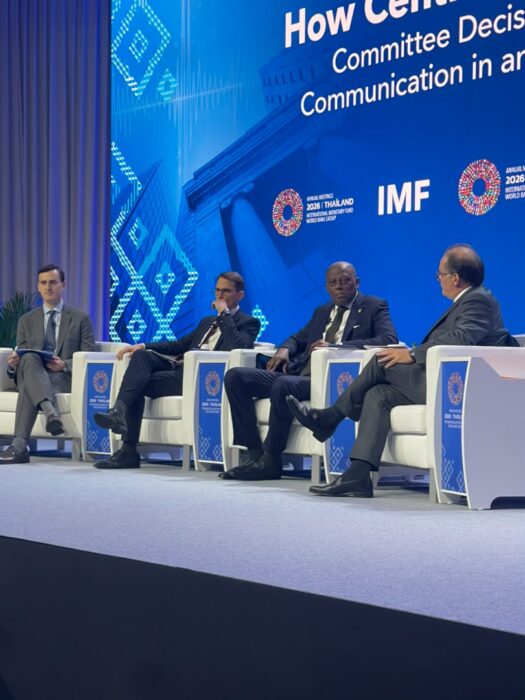
Speaking at a panel session on “How Central Banks Decide: Committee Decision Making and Communication in an Era of Uncertainty” at the ongoing IMF and World Bank meetings in Bangkok, Thailand, the CBN governor said policy coordination and improvements in the monetary policy framework had helped strengthen the basis for the decision.
He disclosed that the fiscal and monetary authorities had signed a memorandum of understanding (MoU) to improve coordination and ensure both sides were aligned on policy direction, a move he said had been well received.
“We had significantly changed a lot of the things that were not working, particularly around coordination between fiscal and monetary policy. We had signed an MOU between the fiscal and monetary authorities to ensure that we were all on the same page, and that was very well received,” Cardoso said.
The September MPC meeting saw the CBN reduce the Monetary Policy Rate (MPR) from 26.5 per cent to 23 per cent, a 350 basis point cut that took markets by surprise. Cardoso said the decision was informed by a combination of improved macroeconomic indicators, stronger policy coordination and the need to address weaknesses in the transmission of monetary policy.
“In terms of the macroeconomic situation, Nigeria was in a very good place. Our external reserves were at their highest level in 18 years. Inflation was consistently coming down, despite rising in many parts of the world. Growth was also continuing at a reasonable pace,” he said.
He added that these developments created the conditions for the central bank to act on an imbalance in the monetary policy transmission mechanism that had become increasingly difficult to ignore.
“All these factors created a situation in which we felt we were in a relatively good position to do something we could have done earlier,” he said.
The governor also disclosed that the CBN had introduced an overnight financing rate to provide greater clarity on actual interest rates in the financial system, describing it as an improvement on the previous arrangement.
He said the rate cut was aimed at correcting a faulty transmission mechanism, adding that the central bank had sufficient economic buffers to make the adjustment.
“We are in a very good position to correct an imbalance in a transmission mechanism that has been crying out to be corrected. Whatever the case, we have the buffers, we’re in a good place, and the macroeconomic indicators are looking good,” Cardoso said.
The CBN governor said the decision was preceded by careful consideration of how it would be communicated, given the possibility that an unexpected policy shift could unsettle market participants.
He explained that, rather than announcing the decision without context, he spent more time than usual explaining the economic conditions that informed the MPC’s action during his post meeting engagement with the press.
According to him, the approach helped market participants understand the rationale behind the decision after the initial surprise. Cardoso maintained that credibility remained central to the effectiveness of monetary policy, arguing that market confidence was built through consistent actions over time.
We’ve got the edge. Get real-time reports, breaking scoops, and exclusive angles delivered straight to your phone. Don’t settle for stale news. Join LEADERSHIP NEWS on WhatsApp for 24/7 updates →
Join Our WhatsApp Channel