
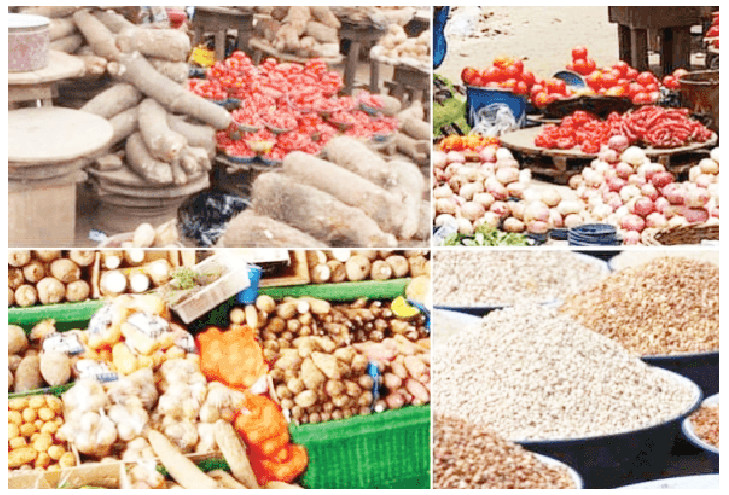
The All Farmers Association of Nigeria (AFAN) has called for more investment in storage, processing, transportation and market access to reduce Nigeria’s dependence on imported food.
The group spoke yesterday as Nigeria joined the rest of the world to mark the 2026 World Food Day, themed “Innovate Today. Nourish Tomorrow.”
AFAN’s deputy national president, Daniel Okafor, said governments, investors and other stakeholders should rethink their approach and prioritise the entire agricultural value chain, not just production.
Citing Africa’s reported annual food import bill of more than $100 billion, Okafor argued that higher farm output alone would not guarantee food security if farmers lacked the facilities and market links to preserve, process and sell their produce profitably.
“For too long, farmers have faced challenges with inadequate storage facilities, limited processing capacity, poor logistics, restricted access to finance and weak connections to profitable markets,” he said.
He said these gaps often force farmers to sell at low prices, while consumers continue to pay high prices for food and the continent spends huge sums importing it.
Mounting pressure on food system from insecurity, high agricultural production costs, economic shocks and dependence on imported food still push millions into acute hunger and threatens food security.
The challenges persist despite the federal government’s declaration of a state of emergency on food security in 2023 and subsequent interventions aimed at increasing domestic production, improving food availability and stabilising prices.
In places like the north-east, north-central and other places where prolonged conflict, displacement and disruptions to farming and trading activities have weakened livelihoods, households’ ability to produce or purchase adequate food have declined.
The latest Cadre Harmonisé food security analysis estimated that 36.3 million Nigerians have faced acute food insecurity at crisis level or worse between June and August 2026 due to insecurity, economic shocks, high food prices and climate-related disruptions.
Speaking on the occasion of World Food Day, the minister of state for agriculture and food security, Aliyu Sabi Abdullahi, said the government was pursuing a comprehensive strategy to increase production, reduce post-harvest losses and strengthen agricultural value chains.
The minister said additional personnel from the military, Nigeria Security and Civil Defence Corps and agro-rangers were being deployed to protect farmlands, alongside enhanced cooperation between security agencies and farming communities.
According to him, agriculture also recorded 4.39 per cent growth in the second quarter of 2026, while crop production expanded by 3.66 per cent, citing National Bureau of Statistics figures.
Abdullahi said the National Agricultural Growth Scheme and Agro-Pocket programme had supported smallholder farmers to produce 2.5 million metric tonnes of staple foods over four farming seasons.
He also put Nigeria’s annual domestic wheat production at approximately 420,000 metric tonnes, compared with a previous baseline of 120,000 tonnes.
“We are implementing a comprehensive approach to transform Nigeria’s agricultural sector into a productive, resilient, competitive and investment-driven sector capable of feeding our population and contributing substantially to economic growth”, the minister said.
In contrast, Nigeria’s dependence on imported food has added another dimension to the challenge.
According to report from the United States Department of Agriculture and World Grains, Nigeria imported 10.1 million tonnes of grain in the 2025/2026 marketing year.
Wheat imports accounted for 6.7 million tonnes, up from 6.25 million tonnes in the previous year, while rice imports stood at 3.2 million tonnes. Maize imports also rose to 260,000 tonnes from between 125,000 and 135,000 tonnes in previous periods.
Central Bank of Nigeria data also showed that the country spent $2.34 billion on food imports in 2025. Meanwhile, National Bureau of Statistics figures showed that Nigeria’s imports of food and beverages increased from N6.58 trillion in 2024 to N7.65 trillion in 2025, representing an increase of N1.07 trillion, or 16.34 per cent.
FAO, farmers call for practical innovation
The Food and Agriculture Organization of the United Nations (FAO) has called for increased investment in agricultural innovation and climate-resilient farming to boost food production, reduce rural poverty and improve Nigerians’ access to safe, nutritious and affordable food.
FAO said transforming Nigeria’s agrifood systems would require scaling up proven agricultural solutions, strengthening partnerships and ensuring that farmers and other food producers have access to the technologies, financing and resources needed to improve productivity.
FAO maintained that achieving sustainable food systems would depend not only on developing new solutions but also on ensuring that existing and emerging innovations reached the people responsible for producing, processing and distributing food.
FAO Representative in Nigeria and to the Economic Community of West African States (ECOWAS), Dr Hussein Gadain, said innovation must deliver tangible improvements in livelihoods, food production and nutrition, particularly for vulnerable communities.
Gadain said: “Every innovation begins with knowledge, and every harvest begins with a hand. By investing in people, fostering innovation and strengthening partnerships, we can build resilient agrifood systems, improve nutrition and ensure that no Nigerian is left behind.”
He added: “Life-changing innovation delivers its greatest impact when it reaches the people who need it most. Partnerships and investment must therefore help move proven solutions from ideas into the hands of producers and communities.”
Representing the FAO representative in Nigeria and ECOWAS, Jimmy Owani, said the challenge was not simply to produce more food but to ensure that food was accessible, affordable, nutritious and sustainably produced.
He called for stronger partnerships among governments, researchers, farmers, financial institutions, the private sector and development partners to translate agricultural innovations into measurable improvements in household food security.
“For ordinary Nigerians, food security means something simple and practical: having sufficient, safe and nutritious food on the table every day at a price they can afford.
For a mother in Abuja, Kano, Maiduguri, Port Harcourt, Lagos, Enugu, Jos or any other community across the country, innovation means reducing the cost of producing, transporting, processing and marketing food so that healthy diets become more affordable and accessible for her family.
The central message of World Food Day 2026 is that innovation delivers its greatest impact when it reaches the people who need it most.The benefits of innovation must not remain confined to laboratories, research institutions or policy discussions.
Meanwhile, the All Farmers Association of Nigeria (AFAN) has called for increased investment in agricultural processing, storage, transportation and market access to reduce dependence on imported food and strengthen local food systems.
Speaking on the import bill, the deputy national president of AFAN, Daniel Okafor said governments, investors and other agricultural stakeholders should rethink their approach to food production and prioritise the entire agricultural value chain.
Citing Africa’s reported annual food import bill of more than $100 billion, the farmers leader argued that increasing farm output alone would not guarantee food security if farmers lacked the facilities and market connections needed to preserve, process and sell their produce profitably.
He said, “For too long, farmers have faced challenges with inadequate storage facilities, limited processing capacity, poor logistics, restricted access to finance and weak connections to profitable markets.
These challenges often force farmers to sell their produce at low prices, while consumers continue to face high food prices and the continent spends huge resources importing food”.
According to Okafor, inadequate storage, limited processing capacity, poor logistics, restricted access to finance and weak links to profitable markets often force farmers to sell their produce at low prices, even as consumers continue to pay high prices for food.
We’ve got the edge. Get real-time reports, breaking scoops, and exclusive angles delivered straight to your phone. Don’t settle for stale news. Join LEADERSHIP NEWS on WhatsApp for 24/7 updates →
Join Our WhatsApp Channel