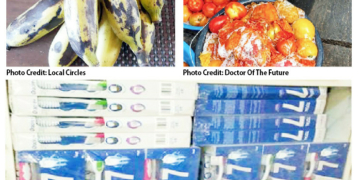
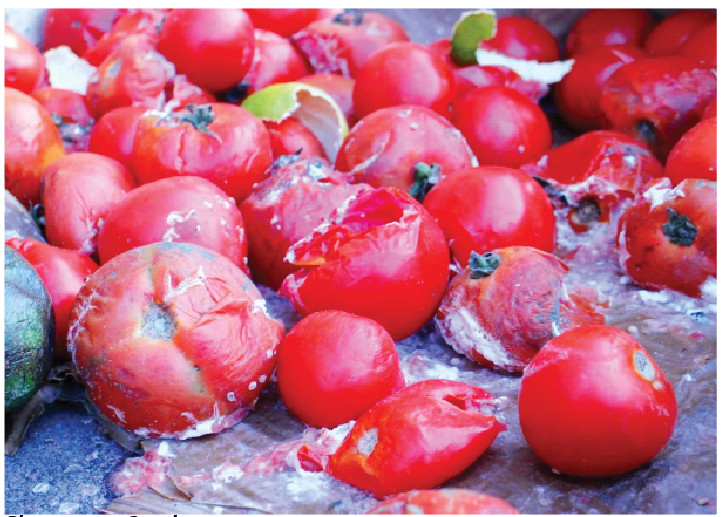
As food prices continue to soar across Nigerian markets, worsening hardship for millions, a disturbing survival trend is emerging: consumption of rotten tomatoes. Once discarded as waste, these spoiled produce are now finding their way onto dining tables as desperate households struggle to cope with rising costs. In this report, ABIODUN SIVOWAKU examines the growing phenomenon, its causes, and the health risks it poses.
In many markets, traders say damaged and overripe tomatoes popularly known as ‘Baje’, that would normally be thrown away are now being picked up at cheaper rates by struggling buyers.
For households already stretched by inflation, the choice is often between going hungry or making do with whatever is available, no matter the condition. Health workers, however, warn that this coping strategy could lead to outbreaks of food poisoning and other food-borne diseases if the trend continues unchecked.
As inflation continues to soar in Nigeria, the prices of essential commodities and foodstuff have risen sharply, leaving many consumers and families with little choice but to return from the markets with fewer provisions.
A market survey carried out by LEADERSHIP Weekend at the popular Ilepo Market in Lagos revealed that a basket of damaged tomatoes sells for N35,000, while a basket of fresh, unbroken tomatoes goes for as high as N70,000.
According to sellers, prices fluctuate between N50,000 and N70,000, with baskets containing partially rotten tomatoes sold at discounted rates, depending on the time of purchase.
LEADERSHIP Weekend findings further showed that demand for damaged tomatoes has risen sharply, as more buyers now opt for them due to their lower cost.
A mother of two, Mrs. Alaba Muinot, said many people buy the broken tomatoes simply because that is what they can afford. “I believe that is what their money can buy.
Doris Collins said she bargained and bought two portions for N3,000 instead of N5,000. When asked why she opted for the broken tomatoes, popularly known as ‘esa’, she replied, “That is what I want and that is what I bought. Tomatoes are expensive. I bought two portions because there will be plenty when I cook. If I had the money, I would have bought the one selling for N7,000. So I am happy with what I paid. If it were the strong ones, they wouldn’t sell at the price I bought it.”
Ironically, many consumers appear undeterred by the potential health risks associated with using rotten tomatoes for cooking, despite warnings and past accounts from individuals who say such consumption nearly cost them their lives. For many buyers, affordability continues to outweigh caution, even as concerns about food safety and possible food poisoning persist.
A survivor of food poisoning caused by rotten tomatoes, Ngozi Jennifer Aghakwu, said, “Rotten tomatoes consumption almost took my life. It took over a year before it was diagnosed. From that time, I stopped eating outside. If you see the things some food sellers buy at the market to save costs, you’ll never eat out again. Look at these tomatoes someone actually bought to cook for people. May we not eat what will end us in the hospital.”
On the other hand, some residents have questioned why the adverse effects of consuming rotten tomatoes are only gaining attention now, despite what they describe as years of common usage.
Jamiu Ojo said he and his siblings were raised in a home where rotten tomatoes were often used for cooking, yet they experienced no known health complications.
“Tomatoes are now expensive. A basket sells for N70,000,” said Afusat Shehu, a pepper seller at Ikeja. “As a seller, I no longer buy in large quantities because it will spoil. When I go to the market, I only buy what my money can afford, and I pick the firm ones so I can sell everything.
“Those who buy ‘esa’ or spoiled pepper do so by choice. Nobody forces them. You will always find ‘esa’ pepper in big markets because of the long distances it travels.” Ojo added.
Maryam Nafiu, who has been selling in the market for three years, explained that even when tomatoes appear spoiled, many buyers still purchase and use them. “That’s why we call it ‘esa’,” she said. “Once you get home, you wash it properly, blend it with ginger and garlic, and it is still good for cooking.”
She added that many households and food vendors rely on these cheaper mixed crates despite concerns over quality.
Maryam also noted that northern tomatoes are often preferred to those from the southwest. “Southwest tomatoes release too much water, but northern ones are firmer,” she explained.
According to her, “Because they travel long distances without refrigeration, some spoil along the way. Sellers then sort them out and offer them to buyers who don’t mind.”
A trader at Ilepo Market, Haruna Aliyu, said customers regularly buy the ‘esa’ tomatoes from him. According to him, the spoiled ones he was selling went for about N15,000, whereas fresh ones would cost more. “If you don’t want the N15,000 basket, I can mix the strong and broken ones so you can get it for N5,000 instead of N15,000, and it will still be plenty,” he said.
He added: “These are northern tomatoes; people rush them, and they don’t release as much water as the southwest varieties.
“The main reason we have broken tomatoes is logistics. Arewa is very far from here; it is not like Abeokuta. With a small vehicle, it can take up to 24 hours to transport tomatoes to Lagos, and with a trailer, about 48 hours. Because we know they don’t stay long, we select only the strong tomatoes before loading, but along the journey some get damaged. Tomatoes are not as sturdy as onions—you can stand on onions and they won’t bruise or spoil the way tomatoes do.”
The chief executive officer of Green Republic Farms, Salaudeen-Ibrahim Baliqees, said produce transported over long distances is likely to arrive broken or partially decomposed, but stressed that not all damaged produce is necessarily unsafe for consumption.
He drew a distinction between recently damaged tomatoes that may still be usable and those left too long under poor storage conditions, where maggots and severe contamination set in.
He said, “For me, it is always good to get pepper and tomatoes from a reliable source. For example, we sell broken peppers, but when I show you our broken peppers, you will wonder how they are broken because they are still healthy and can be consumed. We sell them at a lower price than the unbroken ones; they do not have maggots.
“The reason those ones are like that is because they have been kept for too long during transportation and there is no proper storage facility. When they go bad and turn to ‘esa’, they become cheaper for people to pick up for meals. Some roadside cooks, restaurants, and even households end up using them.”
LEADERSHIP Weekend writes that as the consumption of spoiled tomatoes increases, government agencies, health professionals, and consumer experts have raised concerns over the growing trade in ‘esa’, broken or decomposing tomatoes and peppers sold cheaply in markets—warning that the practice poses serious health risks.
The Lagos State Government, through the Lagos State Consumer Protection Agency (LASCOPA), warned residents against consuming spoiled or fungus-infested tomatoes, popularly known as “Ata Esha,” citing severe health implications.
The general manager of the agency, Afolabi Solebo, urged consumers to avoid tomatoes showing visible white, green, or black fungal growth.
According to him, fungi in spoiled tomatoes may produce harmful toxins, including aflatoxins, which can cause serious health conditions such as liver damage and other related diseases.
He added that a healthy individual is largely determined by what they consume regularly, stressing that cooking, boiling, or frying contaminated tomatoes does not necessarily eliminate the toxins, making them unsafe for consumption.
Solebo further cautioned against buying spoiled tomatoes simply because they are cheaper, stressing that health and safety must take priority over cost.
Also speaking on the health risks, a consultant family physician, Dr. Sodipo Oluwajimi, told LEADERSHIP Weekend that rotten tomatoes have significant medical implications.
He explained that tomatoes can deteriorate due to fungal infections, which may be transmitted to humans, especially those with weakened immune systems, including diabetic patients, cancer patients undergoing treatment, and individuals living with sickle cell disease.
“Anybody with a compromised immune system has an increased chance of fungal infections, which, if widespread, can be very difficult to treat. Consuming such tomatoes increases that risk,” he said.
He added that fungi may produce toxins that, when consumed in large quantities, can damage organs such as the liver and kidneys. He also warned that unhygienic handling increases the risk of bacterial and viral infections.
“Because of the unhygienic way they are handled, broken tomatoes can increase the risk of gastrointestinal infections, including bacterial infections such as E. coli, amoebic infections, and even cholera in some cases. Viral infections like rotavirus are also possible. Once the skin integrity is lost, contaminants are not easily removed by washing,” he explained.
Dr. Oluwajimi called for stricter monitoring of food vendors and improved storage systems, noting that while economic hardship drives demand, unsafe produce should ideally be discarded.
A resident media consultant with the National Agency for Food and Drug Administration and Control (NAFDAC), Dr. Sayo Akintola, also warned that ‘esa’ is already contaminated waste often sold to avoid losses.
“The danger is that the ‘esa’ is already contaminated with bacteria and fungi. Some of these are carcinogenic and could cause cancer or damage internal organs when consumed,” he said.
“We should not blame everything on the economy and endanger lives through what we eat. If a N2,000 alternative can prepare a safe meal, then it is better to choose that over a cheaper but risky option. We do not advise anyone to consume ‘esa’ in any form.”
Nutrition advocate, Eberechukwu Okey-Onyema, also noted that decomposed produce is unsafe regardless of price, describing any perceived savings as a false economy.
“The truth is that when tomatoes are decomposing, they are not healthy for anyone, even if they are cheap. By the time you treat the resulting infections, you would have spent far more than what you saved,” she said.
She added that food-related illnesses have wider social and economic consequences, affecting not just individuals but entire families.
“When one person is sick, it affects income, time, and emotional well-being of the family. These ripple effects must be considered. While enforcement is important, daily choices by consumers are equally critical,” she said.
Experts warn that while the rising consumption of rotten tomatoes is largely driven by economic hardship, the health risks far outweigh any short-term savings. Consumers are urged to prioritise food safety, as contaminated produce can expose individuals to dangerous bacteria, fungi, and toxins capable of causing severe illnesses, organ damage, or even long-term health complications.
Authorities and health professionals continue to emphasise that no cost advantage is worth risking life and well-being, calling for stricter market monitoring, improved storage systems, and more informed consumer choices to prevent a growing public health crisis.
We’ve got the edge. Get real-time reports, breaking scoops, and exclusive angles delivered straight to your phone. Don’t settle for stale news. Join LEADERSHIP NEWS on WhatsApp for 24/7 updates →
Join Our WhatsApp Channel