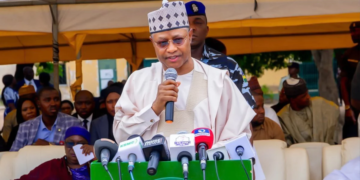
President Bola Tinubu’s directive ordering the withdrawal of police officers from Very Important Personality(VIP) protection duties lands with a familiar thud.
For anyone tracking Nigeria’s security pronouncements over the past two decades, this announcement reads less like bold reform and more like a well-worn script being dusted off for another performance.
The presidency frames it as urgent necessity – remote police stations sit nearly empty while thousands of officers ferry politicians and businessmen around town. Fair point. Nigeria’s police-to-citizen ratio remains dismal, and the concentration of armed personnel around a privileged few while communities go unprotected defies basic security logic.
But here’s what the statement carefully omits: this exact directive has been issued, with comparable fanfare, at least thirteen times since 2003.
August 2003. January 2004. August 2009. Late 2010. The pattern persists through administrations and police leadership changes. IGP Ogbonnaya Onovo in 2009 discovered over 100,000 policemen deployed as escorts, many carrying VIPs’ handbags and opening car doors – a revelation that apparently shocked no one in authority.
President Muhammadu Buhari issued the same order in August 2015, warning against resistance. IGP Mohammed Adamu tried again in October 2020, during the EndSARS crisis. IGP Kayode Egbetokun – the current police chief – has now issued this directive twice in two years.
Each time, the stated reasons sound reasonable. Community policing suffers. Remote areas remain vulnerable. Police resources get misallocated. Each time, authorities promise strict enforcement and sanctions for non-compliance. And each time, within months, the VIPs’ convoys reappear, police escorts intact, through what sources describe as “exceptions” and political pressure that quietly reverses the official policy. What makes this iteration different?
Tinubu’s administration points to the ongoing recruitment of 30,000 additional officers and suggests VIPs needing protection should now request personnel from the Nigeria Security and Civil Defence Corps instead.
Pointedly, the directive emerges against a backdrop of genuine security crisis. Terrorist attacks have intensified in several states. Schools in remote areas face persistent threats. The argument that police manpower is desperately needed for community protection holds water.
However in our view, issuing orders that have repeatedly failed implementation doesn’t constitute policy – it’s political theatre designed to create the appearance of action while systemic problems persist unchanged.
Why do these directives consistently fail? Because VIP police protection in Nigeria functions as political currency and status marker, not just security arrangement. Powerful individuals view armed escorts as visible evidence of their importance.
For politicians, police convoys signal clout and deter rivals. For businessmen with government connections, police details advertise their access to power. Stripping these symbols threatens egos and political hierarchies in ways that transcend written directives.
The enforcement mechanism also remains weak. Past IGPs threatened sanctions against commanders who failed to comply. Some created monitoring units. None fundamentally altered the incentive structure that makes defying these orders relatively consequence-free for well-connected individuals.
A senator or wealthy businessman whose police detail gets withdrawn can simply call the right person, invoke security concerns, and have officers reassigned within days. This cycle has repeated so many times it qualifies as pattern rather than aberration.
President Tinubu’s administration deserves credit for acknowledging the manpower shortage and authorising significant police recruitment. The 50,000-officer expansion, if properly executed, represents meaningful capacity building. But recruitment addresses quantity, not deployment dysfunction. Adding personnel while maintaining the same broken allocation system just means more officers available for VIP escort duty once political pressure reasserts itself.
The government should also consider why VIPs feel they need armed escorts in the first place. In a country where terrorism, banditry,kidnapping, armed robbery, and targeted attacks remain genuine threats, security concerns aren’t always about status display. Some individuals face real danger. The problem isn’t that people want protection – it’s that police resources get allocated based on political connections rather than actual threat assessment.
In the opinion of this newspaper, Nigeria’s security challenges won’t be solved by recycling failed directives. Remote schools need protection, yes. Communities deserve adequate policing, absolutely. But achieving those goals requires more than presidential statements and police circulars that get ignored as soon as the news cycle moves on.
It demands enforcement mechanisms with teeth, consequences for non-compliance that actually stick, and fundamental restructuring of how security resources get allocated.
The pattern suggests this directive will follow its predecessors into ineffective implementation. Within months, most VIPs who lost police escorts will have regained them through political channels. The Nigerian Security and Civil Defence Corps will prove inadequate or unwilling to fill the gap. Police commanders will find creative ways to maintain VIP details while technically complying with the order.
And in two or three years, the next president or IGP will issue essentially the same directive, expressing the same concerns, promising the same enforcement.
Until Nigerian authorities confront the political economy of VIP police protection – the status dynamics, the patronage networks, the institutional incentives that perpetuate this system – orders like Tinubu’s remain performative gestures.
The country doesn’t need another withdrawal directive. It needs an administration willing to sustain enforcement past the initial announcement, withstand political pressure from aggrieved VIPs, and fundamentally redesign how police resources get distributed.
President Tinubu should examine why thirteen previous attempts at this reform failed. He should ask whether his administration possesses the political will to maintain this directive when senators start complaining, when governors push back, when wealthy businessmen with party connections demand exceptions. The answer to those questions will determine whether this becomes reform or just another entry in Nigeria’s long catalogue of unimplemented security announcements.
We’ve got the edge. Get real-time reports, breaking scoops, and exclusive angles delivered straight to your phone. Don’t settle for stale news. Join LEADERSHIP NEWS on WhatsApp for 24/7 updates →
Join Our WhatsApp Channel