
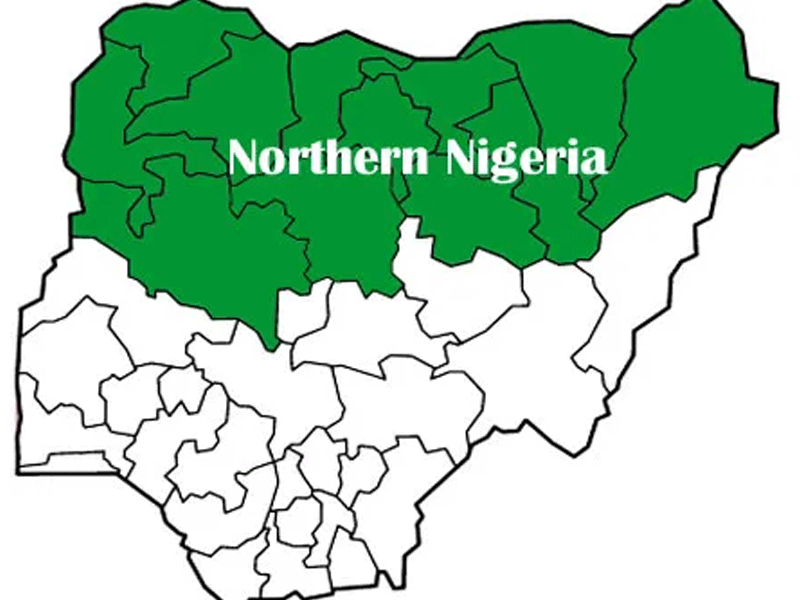
A new report from the United Nations Development Programme (UNDP) has revealed that eight northern states—Kebbi, Yobe, Sokoto, Jigawa, Zamfara, Gombe, Borno and Bauchi—have the highest multidimensional poverty rates in Nigeria, as hardship remains increasingly concentrated in the country’s North.
The 2026 Global Multidimensional Poverty Index (MPI), published by the UNDP and the Oxford Poverty and Human Development Initiative (OPHI), said that Kebbi, Yobe, and Sokoto recorded the highest levels of poverty, followed by Jigawa, Zamfara, Gombe, Borno, and Bauchi.
In contrast, Lagos recorded the lowest poverty value, with Edo and Rivers also among the states closest to the bottom of the ranking.
Across Nigeria’s states, the MPI value ranged from 0.014 to 0.557, while the proportion of people living in poverty ranged from 3.7 per cent to 88.3 per cent.
The report warned that Nigeria’s poverty crisis cannot be tackled with a single national formula, noting that deprivation now differs sharply from state to state and requires tailor-made policies.
About 90 million Nigerians are now multidimensionally poor, deprived of basic needs such as nutrition, education, electricity, clean water and decent housing.
Nigeria recorded the world’s largest absolute increase in multidimensional poverty between 2021 and 2024, with 17.9 million more people falling into poverty. Afghanistan followed with 5.3 million.
Under the report’s harmonised comparison, Nigeria’s poverty rate rose from 33 per cent in 2021 to 38.7 per cent in 2024, while the number of poor people increased from 72.21 million to 90.07 million. The MPI value also rose from 0.175 to 0.208, indicating that deprivation intensified.
Nigeria had recorded progress between 2018 and 2021 before the reversal. It is one of five countries where poverty rose in the latest period, alongside Afghanistan, the Central African Republic, Guinea and Kyrgyzstan.
A separate 2024 estimate, based on the latest survey without adjustments for historical comparison, puts the figure at 113.32 million people, or 48.7 per cent of the population. The two estimates use different methods and are not interchangeable.
Under that estimate, 28.7 per cent of Nigerians live in severe multidimensional poverty, while 18.1 per cent are vulnerable to poverty.
Living standards account for 40.6 per cent of Nigeria’s overall poverty value, ahead of education at 30.6 per cent and health at 28.8 per cent. About 37.6 per cent of Nigerians lack clean cooking fuel, 31.3 per cent lack electricity, and 28.5 per cent lack adequate housing.
Local deprivation patterns
The report said identifying where specific deprivations are concentrated is “essential” for turning poverty statistics into effective local action.
It noted that states with similar poverty levels may face different challenges. In Yobe, poor nutrition and child mortality contribute more to poverty, while in Sokoto, lack of access to water and electricity weighs more heavily.
Poverty patterns also vary across and within countries, making subnational data vital for designing interventions that respond to local realities.
Unlike income-based measures, the MPI tracks overlapping deprivations in health, education and living standards using 10 indicators, including nutrition, child mortality, schooling, electricity, water, sanitation and housing. A person is classified as poor if deprived in at least one-third of the weighted indicators.
Global picture
Globally, 1.2 billion people—18.9 per cent of those covered across 108 countries—live in acute multidimensional poverty. Sub-Saharan Africa accounts for 616 million, more than half of the total, while children make up 617 million of the world’s poor.
The report notes that 33 countries have halved their MPI values in under 15 years, including six in Sub-Saharan Africa, showing that rapid progress remains possible with targeted policies.
We’ve got the edge. Get real-time reports, breaking scoops, and exclusive angles delivered straight to your phone. Don’t settle for stale news. Join LEADERSHIP NEWS on WhatsApp for 24/7 updates →
Join Our WhatsApp Channel