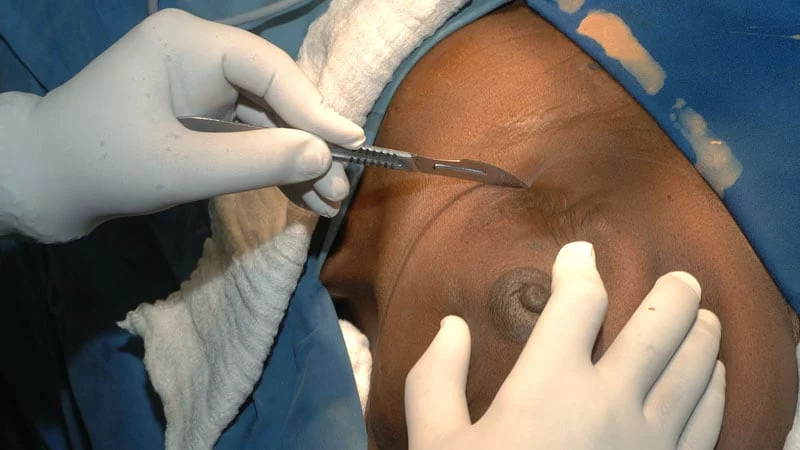
Every October, the world marks Breast Cancer Awareness Month, an opportunity to draw attention to one of the leading causes of cancer-related deaths among women and renew calls for early detection, timely diagnosis and equitable access to quality treatment.
However, for Nigeria, the occasion must go beyond awareness campaigns to confront the systemic failures that continue to cost thousands of women their lives.
This year’s theme, “Every Story Is Unique, Every Journey Matters”, underscores the need to recognise the experiences of people affected by breast cancer and ensure that they receive appropriate care, support and treatment with dignity.
As the World Health Organisation (WHO) emphasises, everyone, regardless of where they live, should have access to the healthcare they need.
Breast cancer occurs in every country and can affect women of any age after puberty, although its incidence increases with age.
The WHO estimated that 2.4 million women were diagnosed with the disease worldwide in 2024, while approximately 694,000 died from it. An estimated 8.2 million women were living with breast cancer at the end of that year.
Significantly, about 80 per cent of breast cancers occur in women without specific risk factors apart from being female and growing older. This underscores the importance of awareness, prompt medical assessment and effective healthcare services, rather than relying solely on identifying women considered to be at high risk.
Although advances in cancer prevention, diagnosis and treatment have improved survival in many countries, enormous inequalities persist.
According to the WHO, the proportion of women expected to survive at least five years after diagnosis stands at approximately 41 per cent in low-income countries, compared with 87 per cent in high-income countries.
About 70 per cent of breast cancer deaths occur in low- and middle-income countries, where access to early detection and comprehensive treatment remains limited.
Nigeria exemplifies this troubling disparity. Breast cancer is the most commonly diagnosed cancer among Nigerian women, with estimates from the Global Cancer Observatory indicating approximately 32,000 new cases and more than 16,000 deaths annually.
Behind these figures are families devastated by a disease whose outcomes can improve considerably when it is detected and treated promptly.
One of the country’s most persistent challenges is late presentation. Many women seek medical attention only when the disease has advanced, reducing their chances of successful treatment and increasing the complexity and cost of care.
Fear, misinformation, cultural beliefs and the misconception that cancer is invariably a death sentence contribute to delays in seeking professional medical assistance.
In some communities, breast cancer is attributed to spiritual causes, prompting patients to consult traditional or religious healers before visiting a hospital.
While cultural and religious institutions can play important roles in supporting patients, they must also encourage timely medical intervention.
This newspaper believes that sustained public education is essential to dismantling these misconceptions.
Women and men should understand the warning signs of breast cancer, including a new breast lump, changes in breast shape or size, skin dimpling, nipple changes and unusual discharge. Any suspicious change should prompt a medical assessment.
Although not every breast lump is cancerous, dismissing an abnormality or delaying a hospital visit can have serious consequences.
Equally troubling is the limited and uneven distribution of diagnostic and treatment facilities.
While major cities have some specialist centres, many rural communities lack convenient access to mammography, ultrasound, biopsy and other essential diagnostic services.
The shortage of adequately equipped facilities, trained specialists and functional radiotherapy machines further undermines the country’s capacity to provide timely, comprehensive care.
The financial burden is another formidable obstacle. Cancer diagnosis and treatment can cost millions of naira over the course of care, placing them beyond the reach of many households.
Chemotherapy, surgery, radiotherapy, medicines and repeated hospital visits can plunge families into financial distress. Some patients consequently interrupt treatment or abandon it altogether.
This situation is unacceptable. A diagnosis should not become a financial catastrophe, nor should a patient’s prospects of survival depend primarily on income or geographical location.
We acknowledge efforts to reduce this burden, including the Cancer Health Fund, which supports eligible patients who cannot afford certain cancer-related services, and initiatives by the National Health Insurance Authority (NHIA) to expand financial protection and improve access to care.
These interventions are important, but their effectiveness depends on adequate funding, efficient administration, wider coverage and public awareness of eligibility and enrolment procedures.
The federal government must therefore move beyond periodic campaigns and make cancer control a sustained national priority. Investment in diagnostic equipment, functional radiotherapy centres, affordable essential medicines and specialist training is imperative.
The availability of equipment must also be matched by regular maintenance, reliable power supply and sufficient personnel to operate it.
Furthermore, cancer screening and early-detection services should be strengthened through primary healthcare facilities, with clear referral pathways to specialist centres.
Public education should be continuous and tailored to local communities, involving healthcare workers, the media, civil society, religious institutions and community leaders.
Health insurance coverage for cancer care must also be expanded, while public hospitals should be adequately funded to reduce out-of-pocket expenditure.
The three tiers of government should ensure that existing support programmes reach eligible patients promptly and transparently, particularly those from low-income households.
As we mark Breast Cancer Awareness Month, we stress that awareness without access to action is inadequate. Nigeria cannot continue to lose women to a disease whose outcomes can improve significantly through timely diagnosis and appropriate treatment.
Nigeria should be a healthcare environment where early detection is not a privilege, but a standard of care.
The ultimate measure of this year’s campaign should not be the number of awareness events organised, but the number of women who gain access to diagnosis, begin treatment promptly and survive.
Government at all levels must demonstrate the political will to bridge the gaps in knowledge, affordability and healthcare delivery.
Breast cancer must no longer be a battle in which poverty, distance and misinformation are as deadly as the disease itself. Every woman deserves a fair chance to survive, regardless of where she lives or what she earns. Turning that principle into reality is an obligation that Nigeria can no longer afford to postpone.
We’ve got the edge. Get real-time reports, breaking scoops, and exclusive angles delivered straight to your phone. Don’t settle for stale news. Join LEADERSHIP NEWS on WhatsApp for 24/7 updates →
Join Our WhatsApp Channel