
BY YUSUF BABALOLA, ABIODUN SIVOWAKU AND ANDREW OJIEZEL, Lagos
Experts have warned that a mandatory switch to compressed natural gas (CNG) for commercial vehicles could push up inflation and transport fares if the Federal Government adopts the policy proposed by the Chairman of the Presidential Initiative on CNG and Electric Vehicles (PI-CNG&EV), Barr. Ismael Ahmed.
Ahmed said in an interview on Arise News TV that he would “try and convince the government to make a policy that all commercial vehicles should convert to natural gas or electric vehicles so that people would move cleaner.”
Ahmed, while discussing the government’s alternative-fuel programme, said the focus had moved from proving that the technology works to achieving nationwide scale.
He argued that commercial vehicles should be mandated to move away from Premium Motor Spirit (PMS) and diesel and adopt alternative fuels as part of the government’s broader energy transition programme.
He said the move would be “certainly cheaper” and “affordable.”
But analysts who commented on the development, warned that a premature implementation could worsen inflation, drive up transport fares and create a severe supply crisis, as experts and transport operators question the country’s readiness for a nationwide transition.
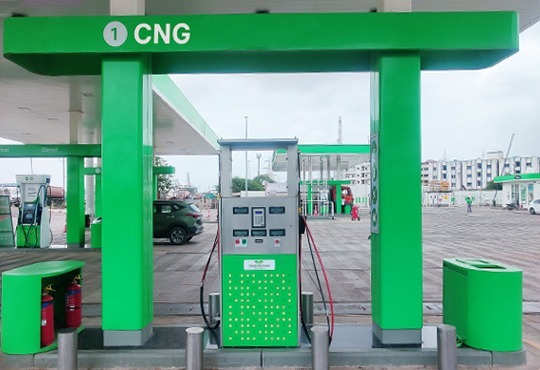
The concerns centred on the shortage of CNG-powered vehicles, inadequate refuelling infrastructure, long queues at existing stations and the high cost of converting petrol- and diesel-powered vehicles.
While the government argues that shifting commercial transport to CNG could lower energy and transportation costs and ultimately help tame inflation, critics said forcing the transition before expanding supply could produce the opposite effect by creating scarcity and giving operators with converted vehicles greater pricing power.
Transport experts have expressed divergent views, saying before the CNG mandate could be achieved, the infrastructure, vehicle supply and financing needed for the transition must expand quickly enough to prevent a fuel-switch policy designed to lower transport costs from creating new shortages, higher fares and additional inflationary pressure.
Speaking, a transportation expert, George Banjo, warned that enforcing the proposal without first ensuring adequate CNG vehicles and infrastructure could leave millions of Nigerians without reliable public transportation.
Banjo, who spoke with LEADERSHIP, said restricting conventional public transport vehicles before sufficient CNG-powered alternatives were available could create a severe shortage and allow operators with converted vehicles to dominate the market.
He warned that such a situation could give the few available CNG operators the power to set fares at will, leaving commuters with little choice but to pay higher fares or stay home.
“No, you don’t propose what you can’t enforce. If you can’t enforce it, if you can’t actually make it happen, why propose it?” Banjo said.
He said the government must first determine whether the number of CNG-powered public transport vehicles currently available could meet passenger demand before imposing restrictions on conventional vehicles.
“If they say that only those who have converted or who will be converted can operate, what happens? That is not going to be enough to meet the demand,” he said.
“So, what happens? People sit at home? I think the question people proposing it should ask is: can they enforce it? Is it enforceable?”
Banjo also warned that an inadequate supply could create a monopolistic transport environment for operators who have already converted their vehicles.
“If the present level of conversion, availability of infrastructure and so on, the number of vehicles available, do they meet demand?” he asked.
“If they’re not meeting demand, then what you’re telling people to do is to stay at home, or you’re providing a monopolistic environment for those who have converted. They can charge anything they want.”
He therefore urged the government to concentrate first on expanding CNG infrastructure, vehicle conversion centres and maintenance capacity before making the transition compulsory.
“I think it would be better for the government to concentrate on expanding the network, the infrastructure network, the conversions and the maintenance and everything else,” he said.
Banjo said a gradual expansion of CNG-powered vehicles would allow the transition to occur without disrupting public transportation.
“Build, increase the number of vehicles that are operating with CNG, and things will happen naturally,” he said.
“I don’t think government needs to make a law for saying that, if you don’t have a CNG, you will not be able to operate as a public vehicle, public transport vehicle,” he added.
Also raising concerns over the proposed mandate, Opeyemi Aminu questioned the legal basis for enforcing compulsory CNG adoption and asked which government agency would be responsible for implementation.
“The first question is whether the proposal is legal? If it is not backed by an Act of Parliament, under what law can it be enforced?” he asked.
“Who will enforce it? Can the police operate or enforce a government order without legal backing?”
Rather than imposing an immediate mandate, Aminu called for incentives that would make conversion more affordable for commercial drivers and transport operators.
“In my opinion, the conversation should come with incentives,” he said, proposing instalment-payment arrangements, government subsidies and cheaper conversion options.
“Buy now, pay later. Buy now, pay in instalments. Government subsidy. Cheaper options,” Aminu said.
He argued that such measures would enable more commercial vehicle owners to switch to CNG without bearing the full cost of conversion upfront.
A senior official of the Amalgamated Union of App-Based Transporters of Nigeria (AUATON), Jolaiya Seun Moses, also described the proposed compulsory transition as impracticable under current conditions.
Moses said the government must undertake adequate feasibility studies before imposing the policy nationwide.
“Every proposal should come with enough analysis of how it is going to work. Today, the proposal is not feasible. When you want to do business, you need to do a feasibility study. As of today in Nigeria, I cannot talk about tomorrow or next year, but it is not feasible for all commercial vehicles to be on CNG.”
He questioned the number and operational capacity of CNG stations across major cities and states, including Lagos, Abuja, Kogi, Ogun, Kano, Kaduna and Zamfara.
“The first question you need to ask is: how many CNG stations do we have running in Lagos, Abuja, Kogi, Ogun, Kano, Kaduna or Zamfara? Name those cities. How many CNG stations do we have running?” he said.
Moses said motorists were already facing lengthy queues at some CNG stations despite the limited number of vehicles converted.
“Take Abuja or Lagos, for example. Go to the CNG stations and you will meet queues. Sometimes, people stay in a queue for four hours just to get gas.”
He added that fewer than 1 per cent of commercial vehicles had been converted to CNG, yet the available stations were already experiencing congestion.
“As of today, I am sure that not even 1 per cent of commercial vehicles have converted, and we are already experiencing queues. So, what will happen if 10 per cent, 20 per cent, 50 per cent or 100 per cent convert? The government is not even ready for that. There are no facilities for that as of today.”
According to him, the policy could become feasible in the future if infrastructure and supply capacity are significantly expanded.
“So, that proposal is not feasible today. Maybe they are looking at 2040 or 2050,” he said.
Moses also questioned what support would be provided to existing commercial vehicle owners who would be required to convert their vehicles.
“Also, those who are currently using fuel, what is the government’s proposal for them?” he asked.
“For those under the NURTW, the government gave them free CNG kits then. But now, for the rest of us who are not under the NURTW, are they going to give us conversion kits for free?”
He said the same concern applied to drivers in the e-hailing sector.
“For the e-hailing sector, is the government ready to give free kits? There are so many questions that need answers before pushing the proposal,” he said.
Moses said AUATON members were not given free conversion kits but were offered a 50 per cent discount.
“The government did not give AUATON free kits then. What was given was a 50 per cent discount,” he said.
“And 50 per cent means about N600,000 before a car can be converted. Now, how many e-hailing drivers can afford to bring out N600,000 for conversion?”
Despite the concerns, Dr Patrick Ejumedia, Head of Research and Strategy at SAMTL, said the government’s push for CNG was understandable given its potential impact on inflation.
He explained that the government was seeking to reduce core and food inflation by lowering energy and transportation costs.
“First, you need to understand why the government wants commercial vehicle operators to move to CNG.
“The government is looking towards bringing core inflation and food inflation down. One of the things pushing inflation higher is energy prices.”
According to Ejumedia, CNG is currently relatively cheaper than petrol and diesel, meaning wider adoption could reduce transport costs and, by extension, the prices of goods moved across the country.
“CNG prices are relatively low at the moment, and that can help bring inflation down. Transport costs will also reduce if commercial vehicles move to CNG. That is the reason the government is trying to do this,” he said.
However, he warned that the inflationary benefit could be undermined if CNG supply failed to keep pace with rising demand.
“By the time more people start using CNG, demand will also increase. It will depend on how much supply increases,” he said.
“If supply does not increase and demand becomes higher than what suppliers can provide, it will drive up the price of CNG. The worry is: by how much will it go up?”
Ejumedia said CNG prices could rise if demand outstripped supply, although he did not expect such increases necessarily to match the scale of petrol price increases.
“If everyone starts using CNG and there are not enough gas stations to fill their vehicles, it will create long queues, and those long queues can push up the price of CNG,” he warned.
However, Victor Okwudil, an electric-vehicle mobility and fleet economics consultant, supported the proposed compulsory transition, arguing that high diesel costs were already imposing a heavy burden on businesses and consumers.
“This is a welcome development. This has been the proposal we have been pushing towards national growth,” Okwudil said.
He said diesel costs were contributing significantly to the high cost of moving goods across the country.
“Take, for example, if you want to move goods from Lagos to Abuja, weighing 40 tonnes, you are going to spend nothing less than N4 million just to move it to Abuja. And when you ask, they will tell you it is because of the high cost of diesel.”
Okwudil said CNG was cheaper than petrol and diesel and that a successful transition could eventually reduce transportation and haulage costs.
“Now, CNG is cheaper than petrol or diesel. If this is achieved, everything we use, down to the body cream and toothpaste, will come down in terms of price,” he said.
He argued that the high cost of diesel used by haulage operators was ultimately passed on to consumers through higher prices of goods.
“Moving goods through haulage is expensive because what truckers will tell you is the high cost of diesel. Whichever way, consumers are paying an indirect cost for everything they use, and it is affecting inflation.”
Okwudili maintained that petrol and diesel-powered commercial transport should eventually be phased out, but said the government would need to support the transition while private investors develop the required infrastructure.
“The government cannot do everything, but it can support. If there is a need for this, private investors should enter the market by making filling stations available.”
He proposed that the government provide financing support to commercial transport companies to convert their existing fleets while restricting the future importation of petrol- and diesel-powered commercial vehicles.
“The government can loan commercial transport companies funds for the conversion of their current fleets, while placing a ban on the importation of diesel- and petrol-powered commercial vehicles. Once policies are enacted, the private sector will key in and provide other things needed for this to materialise.”
Meanwhile, unionists and civil society activists have expressed mixed reactions to the proposal to make the use of compressed natural gas (CNG) mandatory for all commercial vehicles.
They warned that while the policy could lower transportation costs in the long run, imposing it before adequate infrastructure is in place could trigger higher fares, disrupt movement of goods and passengers, and further increase the cost of living.
Speaking with LEADERSHIP, the General Secretary of the Iron and Steel Senior Staff Association of Nigeria (ISSSAN), Comrade John Odigie, described the proposal as putting the cart before the horse, arguing that the government must first establish sufficient CNG infrastructure before making compliance compulsory.
Odigie said the government should prioritise expanding CNG refuelling stations nationwide to ensure commercial vehicle operators can easily access the fuel.
“Government should first of all spread the CNG stations across the country like the filling stations, to make it accessible to all Nigerians before the suggestion can be taken seriously,” he said.
He warned that imposing a CNG mandate without adequate supply infrastructure could disrupt commercial transportation, increase operating costs for transporters and ultimately push up fares and the prices of goods moved by road.
Similarly, an activist, Comrade Victor Oriola, said the proposal could help reduce transportation costs if properly implemented, but warned that inadequate CNG infrastructure could produce the opposite economic effect.
According to him, forcing commercial vehicle operators to switch to CNG without ensuring sufficient refuelling stations could lead to longer queues, vehicle downtime and higher operating costs, with the burden eventually passed on to commuters and consumers through increased transport fares and commodity prices.
“The call is a genuine one which, if truly done, would crash the cost of transportation. But the availability of CNG should be in all nooks and crannies of the country to avoid causing more harm than good,” he said.
Oriola warned that motorists having to travel long distances or spend hours in queues to obtain CNG would undermine the expected savings from the fuel switch.
“It would be one step forward and five steps backwards if people will have to be pushing their vehicles about in search of CNG stations,” he said.
He stressed that a poorly sequenced transition could also affect productivity, as commercial vehicles are critical to the movement of workers, agricultural produce and other goods across the country.
“More CNG stations should be established before this kind of suggestion can work,” Oriola added.
We’ve got the edge. Get real-time reports, breaking scoops, and exclusive angles delivered straight to your phone. Don’t settle for stale news. Join LEADERSHIP NEWS on WhatsApp for 24/7 updates →
Join Our WhatsApp Channel