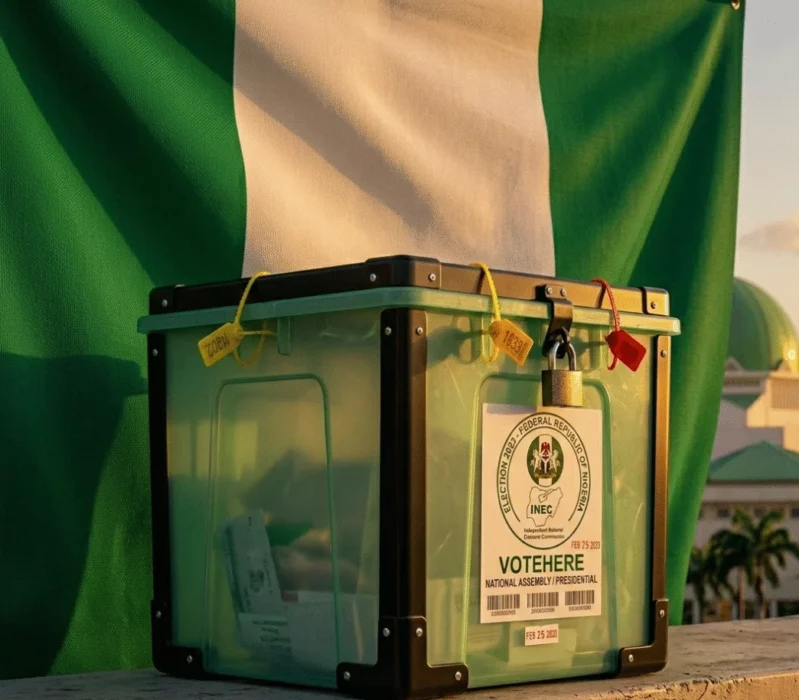
An EU-backed election observation coalition has warned that vote-buying and the compromise of ballot secrecy remain major threats to Nigeria’s 2027 general elections.
It urged security agencies to arrest and prosecute electoral offenders.
The coalition also called on the Independent National Electoral Commission (INEC) to strengthen transparency in the transmission of results, improve electoral inclusion, and ensure that voters can freely choose their preferred candidates without intimidation or financial inducement.
The recommendations were contained in a report presented in Abuja, yesterday, by the EU Support to Democratic Governance in Nigeria Election Observation Hub during the dissemination of its post-election reports on the Ekiti and Osun States’ governorship elections.
The hub comprises the Kukah Centre, TAF Africa, Nigerian Women Trust Fund, Yiaga Africa, International Press Centre and the Centre for Media and Society.
Presenting the report, Prof Bolade Eyinla, said Nigeria must address persistent weaknesses in electoral integrity ahead of the 2027 elections, particularly vote-buying and the protection of voters’ freedom of choice.
The report noted that although INEC had largely improved its ability to count votes accurately, protecting the freedom and secrecy of the ballot remained an unresolved challenge.
It said INEC improved the deployment of election personnel and materials during the Ekiti and Osun governorship elections, and that no fatalities were recorded on election day.
The commission’s declared results were also confirmed by an independent parallel tabulation, according to the report.
However, the observers said organised vote trading compromised voters’ choices and ballot secrecy, shifting the major electoral integrity concern from result collation to ballot secrecy.
They urged security agencies to extend enforcement beyond polling-unit premises to nearby locations where money was allegedly exchanged for votes.
The agencies were also asked to investigate and prosecute vote buyers, their agents and party financiers, as well as publish details of arrests and prosecutions arising from electoral offences and violence recorded during the two governorship elections.
The report identified several outstanding issues requiring urgent attention before 2027, including the lack of any reported arrests, investigations, or prosecutions of vote buyers and perpetrators of electoral violence in the two states.
It also raised concerns about the non-publication of result-transmission protocols, the failure to upload Forms EC8B and EC8C to INEC’s result-viewing portal, and the inadequate provision of assistive voting devices for persons with disabilities.
The observers further urged INEC to make the result collation process transparent and traceable from the polling units to the final declaration of results.
They recommended publishing relevant result forms on the INEC Result Viewing Portal, including records of polling units where elections were cancelled or did not take place.
The commission was also advised to publish clear guidelines on electronic results, explain its validation procedures, and clarify which version of a result would prevail in the event of discrepancies.
On inclusion, the coalition called for improved provision of Braille materials, magnifiers, and sign language interpreters, as well as the recruitment and training of persons with disabilities as election officials.
It also urged INEC to publish voter and turnout data disaggregated by sex and disability to improve accountability and electoral planning.
The report called on political parties and candidates to curb the misuse of incumbency and state resources, respect the electoral timetable, and strengthen internal party democracy in conducting primaries and candidate nominations.
It further urged political actors to respect the law, train their agents and commit to peaceful elections, including accepting lawful outcomes and resolving disputes through established legal channels.
The judiciary was advised to conclude pre-election cases promptly, prevent abuse of court processes and ensure that electoral disputes were handled impartially and in accordance with the law.
The coalition also called on the media, civil society organisations and election observers to intensify voter education, fact-checking and accountability advocacy, particularly in communities vulnerable to vote-buying and misinformation.
Speaking on behalf of the civil society organisations, the Executive Director of CEMESO, Dr Akin Akingbulu, said the observation exercise covered the entire electoral cycle rather than election day alone.
He said, “The Hub has built with that support deserves to be named for what it is. Its partners did not observe Ekiti and Osun for a single day. They observed them across the whole electoral cycle — before, during and after.”
Akingbulu said the observers assessed the electoral environment, mapped risks, engaged citizens, reported developments on election day and independently verified results before producing their findings.
He added that the exercise covered election administration, the media, women, persons with disabilities, political conduct and security.
“More than fourteen hundred accredited citizen observers carried that work into every Local Government Area of both states. They did not go to Ekiti and Osun to find fault. They went to find facts,” he said.
Akingbulu thanked the European Union for supporting Nigeria’s democratic process through its Support to Democratic Governance in Nigeria Programme.
He said the programme had invested in strengthening Nigerians’ capacity to participate in elections, monitor the process and contribute to electoral reforms.
We’ve got the edge. Get real-time reports, breaking scoops, and exclusive angles delivered straight to your phone. Don’t settle for stale news. Join LEADERSHIP NEWS on WhatsApp for 24/7 updates →
Join Our WhatsApp Channel