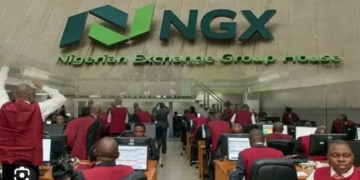

The Nigerian Exchange Group (NGX) has urged the federal government to review aspects of the new Capital Gains Tax regime, as the current structure could weaken Nigeria’s attractiveness as a destination for international capital.
Group managing director and chief executive officer of NGX Group, Temi Popoola, made the call while presenting the Exchange’s wish list to President Bola Tinubu.
He stressed that the request was not for the abolition of CGT but for a review aimed at improving competitiveness and retaining foreign investors.
Popoola said the Exchange supports government efforts to increase tax revenues, noting that Nigeria’s tax-to-GDP ratio remains low and that taxation is important for domestic revenue mobilisation.
He argued that the implementation of CGT must consider the behaviour of international investors, especially as Nigerian companies increasingly explore foreign markets for listings and access to capital.
The NGX Group CEO urged the federal government to adopt a more investment-friendly approach to CGT, particularly for foreign portfolio and institutional investors whose decisions are influenced by the overall cost of participating in a market.
“We are not asking for Capital Gains Tax to be abolished. We are simply asking for another look at the policy and for ways to optimise it,” he said.
He said the objective should be to strike a balance between the government’s need to generate additional revenue and the need to maintain Nigeria’s competitiveness in attracting international capital.
“For the Nigerian capital market, the treatment of capital gains is important because the market relies on both domestic and foreign investors to provide liquidity, deepen price discovery and support capital formation.
“Foreign portfolio investors have historically played a key role in the Nigerian equities market, although participation has been affected over the years by exchange-rate volatility, repatriation concerns and regulatory changes,” he stated.
Popoola said policymakers must ensure tax reforms do not unintentionally create incentives for Nigerian companies or international investors to favour foreign exchanges over the domestic market.
Beyond taxation, Popoola also urged the federal government to intensify its privatisation and listing programme to deepen the market and expand the number of large companies available to investors.
He cited the indigenisation programme of the 1970s, which led to listings like Nestlé Nigeria and Unilever Nigeria, and MTN Nigeria’s listing as examples of how government policy can grow the market.
He identified companies such as NLNG, Indorama and LMC Petrochemicals as candidates for listing, adding that government could also consider listing its interests in strategic assets.
Popoola argued that government-backed listings, combined with a competitive tax regime, would help position the Nigerian Exchange as a more attractive destination for both domestic and international investors.
We’ve got the edge. Get real-time reports, breaking scoops, and exclusive angles delivered straight to your phone. Don’t settle for stale news. Join LEADERSHIP NEWS on WhatsApp for 24/7 updates →
Join Our WhatsApp Channel