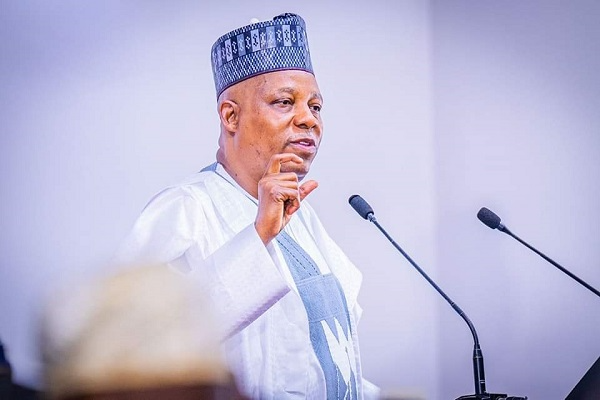
If I had a naira for every grand initiative launched at the Presidential Villa with pomp and pageantry, I’d probably be richer than Dangote by now. The latest addition to this endless parade of initiatives is the ‘Nutrition 774’ programme, unveiled by Vice President Kashim Shettima at Thursday’s National Economic Council (NEC) meeting.
Don’t get me wrong. The statistics the VP reeled out are disturbing enough to keep any parent awake at night. When 40 percent of our children under five are stunted, eight percent are wasting away, and 27 percent are underweight, we’re not just facing a health crisis – we’re staring at a national emergency that threatens our future.
But here’s my concern: we’ve been here before, haven’t we? Like a broken record, successive governments have launched similar initiatives with fancy names and colourful brochures. Remember the various school feeding programmes? Or the numerous maternal and child health initiatives that fizzled out faster than a Coca Cola loses its fizz?
The Vice President’s speech hit all the right notes – grassroots impact, critical nutrition support, stakeholder collaboration. Yet, I couldn’t help but notice the irony. Here we are, launching a nutrition initiative in air-conditioned chambers while market women can barely afford to feed their children with the soaring food prices.
Let’s talk real numbers. How much has been budgeted for this initiative? How will the funds be disbursed across the 774 local governments? What metrics will be used to measure success? These are the questions begging for answers, not flowery speeches about “futures unshackled by malnutrition.”
The involvement of local government chairmen in this initiative is particularly interesting. Anyone familiar with Nigeria’s local government system knows it’s where good initiatives go to die. Most local governments can barely pay salaries, let alone implement nutrition programmes. Yet, we’re expecting them to be key drivers of this initiative?
Take a look at our local governments today. Many lack basic healthcare facilities. Primary healthcare centres, which should be the foundation for implementing such nutrition programmes, are often understaffed and under-equipped. Some don’t even have cold chain facilities to store basic vaccines, let alone capacity for sophisticated nutrition interventions.
What makes this initiative different from its predecessors? The VP calls it “the very first government-led intervention to combat malnutrition at a broader scale.” What happened to the National Strategic Plan of Action for Nutrition (NSPAN) or the National Policy on Food and Nutrition? Were they not government-led? What lessons have we learned from their successes or failures?
To be fair, the Tinubu administration deserves credit for acknowledging the malnutrition crisis. But acknowledgment isn’t enough. We need more than just another initiative; we need a comprehensive overhaul of our food security architecture. The current food crisis, with prices beyond the reach of ordinary Nigerians, makes this even more urgent.
The timing of this launch is also curious. With inflation at record levels and food prices shooting through the roof, shouldn’t we be more focused on making food available and affordable first? What good is a nutrition programme when families can’t even afford three square meals? It’s like teaching someone to swim while they’re drowning.
Consider the reality on the ground. A bag of rice now costs more than the minimum wage. Beans, once the poor man’s protein, has become a luxury. Even garri, the traditional fallback food for many Nigerian families, is now priced like imported cereal. In this context, how effective can any nutrition programme be?
Here’s what I think should happen: First, let’s see a clear implementation roadmap. Not just promises, but actionable steps with timelines and deliverables. Second, let’s have transparency in funding. Every naira allocated should be traceable and accounted for. Third, we need a robust monitoring and evaluation framework that involves civil society organisations and community stakeholders.
The governors’ pledge of support is encouraging, but we’ve heard such pledges before. The real test will be in the execution. Will they match their words with action and resources? Will they create dedicated budget lines for nutrition in their state budgets? Will they ensure timely release of counterpart funding? Time will tell.
The private sector’s involvement could be a game-changer, but only if properly structured. We need more than just corporate social responsibility projects; we need sustainable partnerships that can outlive political terms. Companies in the food and beverage sector, for instance, could be incentivised to fortify their products and make them more accessible to vulnerable populations.
For this initiative to succeed where others failed, it must transcend the usual Nigerian government approach of throwing money at problems without proper monitoring and evaluation. We need clear metrics, regular public updates, and most importantly, accountability when things go wrong.
The stakes couldn’t be higher. A malnourished child today is a disadvantaged adult tomorrow. The economic cost of malnutrition, in terms of lost productivity and increased healthcare burden, is staggering. Studies suggest that malnutrition costs African economies between 3-16% of GDP annually.
Nigeria can’t afford such losses.
While the Nutrition 774 Initiative sounds promising on paper, the real work lies in moving it from the glossy pages of policy documents to the plates of hungry children across Nigeria. We need to see concrete action at the grassroots level – functional primary healthcare centres, trained community nutrition workers, regular supply of therapeutic foods, and effective monitoring systems.
Until then, pardon my scepticism, but I’ll hold my applause. After all, in Nigeria, we’ve learned that the distance between a Villa launch and actual implementation is often longer than the journey from Lagos to Maiduguri. Let’s hope this initiative proves me wrong and doesn’t end up as just another addition to our growing collection of well-intentioned but poorly executed programmes.
We’ve got the edge. Get real-time reports, breaking scoops, and exclusive angles delivered straight to your phone. Don’t settle for stale news. Join LEADERSHIP NEWS on WhatsApp for 24/7 updates →
Join Our WhatsApp Channel