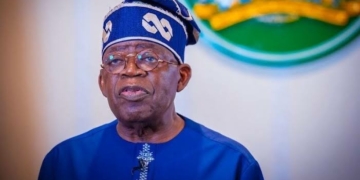


By Dr Kayode Fayemi
The Visitor, Chancellor, Pro-Chancellor and Chairman and members of the University Governing Council, Mr Vice Chancellor and Principal Officers of the University, Royal Fathers, staff and students, ladies and gentlemen.
I am deeply grateful for the invitation to deliver this lecture today, and for the warmth extended to me and my team.
It is a great honour to deliver the first Convocation Lecture of this citadel of medical learning. When the invitation was extended to me a couple of months ago, I accepted for three reasons. The first is my deep respect for the Asiwaju of Ila Orangun – our father and leader, His Excellency, Chief Bisi Akande whose personal sacrifice, honour and standing brought this university to this town. I should know.
I recall when the decision was taken to establish specialised health sciences universities in the six zones of the Federation and how my friend and former cabinet colleague, HM Education, Mallam Adamu Adamu arrived at the decision on where the one for the South West was to be located. For Adamu, there was no debate since he felt it was the least he could do to honour a man who had given so much of himself to our party and the country without asking for anything in return. He simply presented the President with a fait accompli and the President approved the recommendation without hesitation. Again, anyone familiar with the high esteem with which late President Buhari held Baba would hardly be surprised by the President’s response. Political leadership can make an institution possible. Its enduring legitimacy however must come from what FUHSI is able to deliver. We will only honour Baba Akande’s contributions fully by ensuring that the institution he helped bring into being delivers enduring public value.
The second reason for my acceptance is my admiration for what this university has achieved since its establishment in 2021. Quite apart from this first graduation which is remarkable on its own, barely four years after establishment, I’ve been most impressed by the accreditation of all its fifteen courses in four faculties by the National Universities Commission as well as the hundred percent clinical accreditation it has received and the over 3,000 students already in its enrolment.
The third reason for accepting to speak is the subject itself, because few questions should agitate our minds more. Too often, the global market for African skills resembles the commodity economy with which we are already familiar. African states invest public resources in training doctors, nurses and other health professionals and wealthier countries recruit them once they qualify. The skills are developed here, and much of the productive value is realised elsewhere.
In that last reason lies the paradox that brings us together. We have created universities for the sole purpose of training those who heal, yet a sick Nigerian may still travel a long way to meet a doctor, and some of the health workers we have trained here will leave us before they have served us. Can a nation build institutions of this kind and keep the benefits? To do so, such an institution must continue to renew itself, its methods, and the needs of society. This is the question behind the topic I was given – to reflect on the future of medical education in Nigeria, a future that will shape the health, wellbeing, and destiny of our nation. The World Medical Association has recently adopted the resolution that “the goal of medical education is to prepare practitioners to apply the latest scientific knowledge and skills to promote health, to prevent and cure human diseases and to import ethical standards.”
Convocation is a tradition with deep linguistic and religious roots. The word comes from the Latin – convocare, meaning “to call together,” and has a Greek cousin – ekklēsia, meaning “assembly”. It began as a sacred summons, tied to the Church of England, and around the sixteenth century, Oxford University adopted it to describe the gathering of its graduates. In our setting, it has become a send-off and this university, in its own style calls it Send Forth! I like that. To send forth is to entrust. A convocation does three things: it bears witness to a solemn duty, it inducts graduates to a community of scholars, and it charges newly minted minds to place their knowledge at the service of society. I will return to that charge at the end.
Mr. Vice Chancellor, the topic asks whether the challenges facing specialised medical education can be surmounted. Let me answer at once: YES, THEY CAN. Challenges are meant to be overcome and a country with our burden of disease has no alternative. But it is a YES with conditions attached. And the conditions are the subject of this lecture.
I will proceed in four steps. First, why the state must train people who heal. Second, where we currently stand. Third, the capabilities our graduates need; Fourth, four challenges these universities face and, for each, what we can learn from India, what Nigeria must do, and who must do it. Finally, a compact by which we can hold ourselves to account.
Why the State trains the Healers
The social contract theorists taught us that the state emerged primarily to attend to the security and welfare needs of the people. Within the framework of welfarism, healthcare occupies a prime position. In our own constitution, Section 14 (2) stresses that the primary responsibility of government is the “security and welfare of the citizens.”
Being Text of Convocation Lecture delivered at the Federal University of Health Sciences, Ila Orangun, Osun State, Nigeria. October 15, 2026.
There has been a considerable debate lately on whether health is a public good, private good or, indeed, mixed good. Paul Samuelson (1954) described a public good as a “collective consumption good”, accessible to every single individual in the society. On that basis, I align myself with the school of thought that treats public health as a public good. This is also the position of Szymanowski (2014) and Galea (2016), who add that health may nonetheless be a private good where it positively impacts individuals or even a mixed good where private good of multiple individuals may then become goods for the individuals and for society.
Health is wealth, as the saying goes, because everything else pales in its absence. Disease is not merely a personal misfortune. It is a disruption of the common order and only a healthy citizen can contribute meaningfully to society. Hence, it is incumbent upon the state, as provider and guarantor of the common good, to treat healthcare as duty, not a convenience. To train those who minister to the sick is to affirm a community’s commitment to life, justice and the flourishing of all. It is upon this philosophical foundation that the establishment of these institutions’ rests.
Our Constitution says as much in its own language. Chapter II directs the State to ensure adequate medical and health facilities for all persons, and equal and adequate educational qualifications opportunities at all levels (sections 17(3)(d) and 18). Lawyers will remind me that these directives are not justiciable, and they are right. But a promise that cannot be enforced in court must be enforced in the budget and at the ballot box.
I speak from some experience. In Ekiti, during my time as Governor, care for the vulnerable was a major plank of our policy. We ensured that the aged, pregnant women, children and people with disability had access to free healthcare and we paid a monthly stipend of five thousand Naira to qualifying indigent citizens above the age of 65 in our Owo Arugbo scheme.
We also learned quickly that a health policy is only as good as the people available to deliver it. We, therefore, pulled out all the stops to make medical education a reality, graduating the pioneer set of medical doctors from Ekiti State University and providing automatic employment to the first set of graduating medical doctors as House officers in 2019. Since then, Ekiti has graduated seven sets of medical doctors from our state university. Many of the departments in the State Teaching Hospital are superintended by some of these graduates’ delivering services to our people. In any case, data and studies from all over the world show that physicians are highly likely to practice in the geographic area where they are trained. We also recruited health workers across the board and was the first state in the Southwest to pay CONHESS and CONMESS for health workers.
I learned something else as Visitor to Ekiti State University. Underfunding is real, but it cannot be an excuse for failing to meet the obligations for which a university exists. I said so then, and I say so again today. I will say the same to government, because the duty to fund and the duty to perform belong together.
Where we Stand
In Nigeria, medical programmes were housed in conventional universities and other institutions until 2015, when the Ondo State Government under Governor Olusegun Mimiko established the University of Medical Sciences, Ondo, which the National Universities Commission recognised that April as the 139th university in the country. Its founders said plainly that the aim was to reverse the brain drain in the medical profession and to build an institutional base for training. Since then, ten specialised medical/health sciences universities have received NUC approval in the country (six federal, two states and two private), signaling a new era in specialized medical education.
These universities respond to a workforce crisis that is at once a shortage and a problem of distribution. The figures vary with the source, and I will not claim a precision the data do not support. The Coordinating Minister of Health and Social Welfare, Professor Mohammed Ali Pate has spoken of some 85,000 to 90,000 registered doctors, of whom about 55,000 are licensed and practising in the country, and of some 15,000 lost to migration in five years. A report in The Punch newspaper in January 2026 put our need at 300,000 doctors against roughly 40,000 in practice. (Onwuzoo, 2026). The Minister also observed that our most skilled doctors are concentrated in Lagos, Abuja and a few other urban centres. The exact numbers matter less than the direction: too few doctors, too many in too few places, and too many leaving the country and many equally migrating to other professions and vocations.
Two interesting facts provide additional information. The first is that Nigeria now trains more doctors than it can place. The Registrar of the Medical and Dental Council told the Senate this year that our medical schools produce about 6,000 doctors annually, but the centralised housemanship system can absorb only about 4,000 of them. Every year, some 2000 newly inducted doctors are left waiting for the placement that completes their training. At the same time, government has doubled medical school admission, from about 5000 to nearly 10,000 a year with a projection of an increase to about 19,000. That is a correct ambition but unless housemanship, residency and faculty expand with it, we will simply lengthen the queue.
The second is that this is not a Nigerian peculiarity. But an African one. The World Health Organisation’s State of the Health Workforce in Africa 2026 reports that in 2024 some 943,000 trained health workers on our continent were unemployed, even as health systems remained understaffed, and that nearly half of health workers say they intend to migrate. The WHO’s own conclusion is the thesis of this lecture: training alone is not enough. A country that trains doctors and then fails to employ them has not solved its shortage. It has merely subsidised someone else’s.
The burden of disease makes the matter urgent. Malaria and Lassa fever are endemic and persist, and maternal and child mortality remain a national shame. School health is almost nonexistent, and cholera still rears its ugly head every now and again. These are our diseases. We cannot rely solely on imported knowledge to defeat them. Specialised universities are expected to generate homegrown solutions to homegrown problems. This is what the Federal University of Health Sciences, Ila Orangun (FUHSI) also claims to be its mission on its website: “to produce highly skilled healthcare professionals who possess not only the required technical competence but also the ethical grounding and empathy needed to reform public health services.”
These universities therefore carry four burdens. Will they fulfill the purpose for which they were created? Can they become true citadels of learning? Can they escape the fate of earlier specialised universities? And can they retain their graduates in the service of the nation? I will take each in turn.
For each, I will draw selectively on India’s specialised institutions including its Indian Institutes of Technology and Management and its All-India Institutes of Medical Sciences. Their contributions to the country’s standing in information technology, pharmaceuticals and medicine offer useful lessons for Nigeria. For context, a small cluster of specialised institutions in India (like our own FUHSI) produce a vast majority of the country’s research and innovations (Singh, 2020). I do not hold India up as a paradise. The comparison has limits: our institutional arrangements must be assessed against our own financing, governance and service needs. We can, however, learn from the model without assuming its results can simply be transplanted. After all, India too loses talent abroad. But the design lessons are worth having.
The capabilities our graduates will need
What, then, should a graduate of this university be able to do in the years ahead? The answer must embrace nurses, midwives, pharmacists, laboratory scientists, public health professionals and other health disciplines, alongside doctors. A health system works through their combined competence.
First, deliver safe and respectful care. In a systematic analysis using 2016 data from 137 low- and middle-income countries, Kruk and colleagues estimated that 5 million deaths amenable to healthcare were attributable to poor quality care, compared with 3.6 million attributable to non-use of services (Kruk, et al, 2018). These are historical modelled estimates across countries, not present-day Nigerian counts. The lesson herein is simple: expanding access and graduate numbers must be accompanied by better care. Students need supervised clinical exposure, simulation and assessment that demonstrates competence, with patient safety and respectful care taught throughout.
Second, work across the health system. Students should learn together where their responsibilities meet: recognising emergencies, communicating clearly, organising referrals, and responding to preventable harm. Sustained placements in primary care and community settings should complement teaching hospital experience. Graduates should understand how insurance, procurement and financing affect the care a patient receives. I propose that each university and its service partners identify where these placements will occur and who will supervise them. The Ekiti State Health Ministry offers some form of internship in this regard, and such opportunities can be explored further and expanded.
Third, use of technology critically and ethically. WHO’s guidance on generative artificial intelligence identifies applications in clinical care, professional education and research, but also risks from inaccurate outputs, biased data, automation bias and cybersecurity failures (WHO, 2024). Our graduates should understand digital records, data interpretation, privacy and the limits of algorithmic recommendations. A graduate should be able to examine a patient, interpret evidence, work within a team and question a machine’s recommendation. Furthermore, technology must be evaluated for the task and population in which it will be used based on racial peculiarities.
Fourth, turn evidence into better services. I propose that quality improvement, implementation research and economic evaluation become practical elements of health professional education. Students should learn to ask not only whether an intervention works, but whether a facility can deliver it reliably, whether patients can access it and whether it is affordable. Faculties should develop research agendas with service managers and communities, addressing today’s needs while preparing for changing patterns of disease and future emergencies like pandemic preparedness. The 2026 Nobel Prize in Medicine/Physiology, awarded for the extensive work on Optogenetics which is an innovation that uses light to control the activity of nerve cells, reminds us that major discoveries could emerge from curiosity-driven research. I challenge the graduands and faculty to look within to solve local problems, and to think globally in your approach. Who knows? Your work today may earn you global recognition, perhaps even a Nobel prize in the future.
Will they fulfill the purpose for which they were established?
The very reason these universities exist is to train competent professionals who will serve Nigeria’s people. I believe they can do it. We have the talent to begin the work. What we must do is to hold it. That begins with the curriculum built around the illnesses our people have, with strong ties to teaching hospitals and community health programmes with digital innovation, from telemedicine to artificial intelligence, treated as part of the core rather than an ornament. This is not fashion. The WHO finds that health workers in our region correctly diagnose only about six in ten cases, and treat correctly only about four in ten of those. Tools that support diagnosis and extend scarce specialists into primary care, are part of the answer, and graduates who cannot use them well will be poorly equipped for the practice they are entering. We must fund the work that connects research findings to practice, whether through a new product, a better care process or a change in policy. A medical university that publishes but cannot translate has done only half its job.
Consider the E-MOTIVE trial. Across hospitals in Nigeria, Kenya, South Africa and Tanzania, early detection of postpartum hemorrhage and a coordinated first response treatment bundle reduced the relative risk of a composite of severe bleeding, laparotomy, for bleeding or death from bleeding after vaginal birth by 60% compared with usual care (Gallos, et al, 2023).
This is the kind of contribution our universities should seek: rigorous research linked to a practical improvement in care. New discoveries matter, but so does learning how to deliver established treatment reliably. I propose partnerships in which university teams and health facilities test improvements, assess their costs, and share results. The measure of translation should include a safer care process and a useful policy change, as well as a patient or product.
Here, India’s first lesson is strategic differentiation. India defined a clear mandate for each specialised institution, whether in technology, management or medicine. Nigeria’s medical universities should do the same. Each should carry a distinctive concentration, in cancer treatment, diseases of the internal organs, drug development, or biotechnology, so that no two are rivals for the same prestige and everyone has something to be known for. The responsibility is plain. Owners, whether federal, state or private, must write the mission into the law that creates the university. Governing Councils must translate it into programmes. And the Federal Ministry of Health must link each university to teaching hospitals that can carry its graduates from classrooms to bedside. These universities are thus expected to bridge this gap through production of qualified medical personnel.
Can they Become True Citadels of Learning?
The notion of a world class university has become something of a buzzword. Philip Altbach (2004) observed that everyone wants one, but nobody quite knows what it is or how to build it. What we do know is that such institutions do not emerge by chance. According to Salmi (2009), they rest on three factors: a high concentration of talent, abundant resources, and a governance environment that gives them freedom, autonomy and visionary leadership. Let me take these in turn and ask what India did.
On talent, the IITs and AIIMS attract students and faculty from across India and beyond. Admission is rigorous and impersonal, so that only the most gifted gain entrance, and it is backed by scholarships and grants, particularly for students from poor backgrounds who pass the entrance examination. Nigeria has the raw material. More than half of our people are under 30, with a median age of 18. What we must build is a process that finds the gifted wherever they are born, and a faculty drawn from across Africa and the world.
On resources, India’s specialised institutions are funded through special government allocation, functional private partnerships and substantial endowments, and they receive more focus than conventional universities. Nigeria’s medical universities should be funded in a similar way if we want similar results. Government should be more willing to invest, precisely because of their peculiar mission. But money runs both ways. A university that receives special funding owes the public special performance, and I would expect its audited accounts to be published every year.
On autonomy, the success of the IITs and AIIMS is tied to relative freedom and visionary leadership. They enjoy wide latitude, including admissions and hiring, and their leaders do not spend their weeks in the capital seeking approvals. It matters that this freedom is not a favour. It rests on Acts of the Indian Parliament that declare these institutions to be of national importance. Goodwill changes with governments; a statute outlasts them. Nigeria’s specialised medical/health sciences universities need autonomy in law, not autonomy by courtesy.
Let me register a caveat. Autonomy without accountability is licence, and I do not propose it. The freedom I have in mind is freedom to pursue the mission, under councils that are open about how they choose vice-chancellors and how they spend public money. So, the question before us is not whether we can afford to fund these universities as citadels of learning, it is whether we can afford to fund them as anything less.
Can they Escape the Fate of Earlier Specialised Universities?
In the 1980s, Nigeria embarked on an ambitious journey of creating specialised universities of Agriculture and Technology – in Abeokuta, Akure, Makurdi among others. The vision was to produce graduates who would drive food sufficiency and technological advancement, ensuring that our nation could stand tall in these critical sectors. Forty years on, the results remain a matter of debate. Many of the institutions drifted from their founding mission, into social sciences and even medical programmes. At a point, it took the firm hand of the National Universities Commission to prevent a complete deviation from their original path.
Ask yourselves: how far have we advanced towards food sufficiency? What is the current state of technological development in Nigeria? What is our true standing in agriculture today? If the goals of those specialised universities remain unfulfilled, what is the fate of the new medical universities? Can we truly guarantee that they will remain faithful to their mission? Or will history repeat itself? It will, unless we design against it.
Mission drift has familiar causes: the pull of popular courses that pay the bill, pressure to add faculties for reasons that have nothing to do with the founding purpose, and the absence of any person or body whose job is to say no. India’s answer was strategic differentiation, defined in law and defended by institutions. Ours must be the same.
Practically, this means the mission should be written into the establishing law of each specialised university. No faculty outside the health sciences should be added without the approval of the NUC and the Visitor. And each university should submit to a published mission audit every five years by an independent body. Transparent governance, adequate funding and independent oversight are not luxuries. They are the fence around the field.
Let me register another caveat because this is a delicate point. Nations establish specialised universities for strategic purpose, not for ethnic or regional balancing or self-aggrandisement. I do not dismiss the principle of fair representation that our Constitution embraces. Access to these universities must be fair and open to every Nigerian who qualifies. But where a university is sited and what it teaches, should follow strategic need. A medical university located to satisfy a map instead of a mission becomes a monument, not an institution. This university shows what conviction and sacrifice can achieve. It will honour that conviction fully only if it delivers results that outlive the moment.
Even if we achieve the above – Can we stop the Japa syndrome?
After significant investment in subsidising medical education in Nigeria, the graduates often migrate to Euro-American societies. The reasons are not mysterious: better remuneration, better working conditions, clearer career prospects, and wider opportunity. It is difficult to fault individuals for pursuing fulfilment when the system at home offers little hope or stability. But it is also unfair to the Nigerian state, having trained health workers at subsidised rate or tuition free in many public universities and then lose them to societies where their products did not enjoy such free tertiary education.
Here lies the deeper paradox. Nigeria bears the cost of nurturing talent yet reaps extraordinarily little of the reward. Two years ago, the then President of the National Postgraduate Medical College, Professor Akin Osibogun warned that migration has left the College short of doctors to train as specialists. When the exodus reaches the pipeline that produces our specialists, we are no longer merely losing doctors. We are losing the capacity to replace them. And I have seen this in real life. More than half of the fifty pioneer medical graduates of EKSU that we offered employment in 2019 have left the country in search of greener pastures.
We cannot continue like this! Yet moralising about the choices our young people make gets us nowhere. People respond to opportunity, working conditions and security. Consequently, we must be realistic about what is possible. As a democratic country where freedom of movement is guaranteed in our Constitution, we cannot wall in graduates, and I would not recommend such. A country that can only keep its health workers by compulsion will hold them without ever keeping them. The more important question is how these movements affect our economy and how their benefits can be shared more fairly.
I would rather suggest a system that people choose to stay in with a structured arrangement between producing and recipient countries. Our own National Policy on Health Workforce Migration approved in August 2024 already says as much: track who leaves, improve retention especially in rural areas, and manage migration through ethical, bilateral agreements. Its weakness is not its content but its funding and the states that have yet to adopt it. For example, we may consider bonding our recent graduates (particularly the ones from public universities) for a number of mutually agreed years to compensate the country for the investments on their training like many state-run medical colleges in India and Pakistan do. We may also insist that recipient countries cover the replacement cost of every health worker lost to them with this reflected in structured partnership agreements. Indeed, at the Africa Health Workforce Investment Forum in Accra in May 2026, Nigeria correctly argued that destination countries should invest in training health workers in the country that supply them. That argument deserves to be pressed, with numbers, in every bilateral negotiation.
If our ultimate goal however is local retention without compulsion, this requires four things: Competitive compensation. Working facilities, from reliable power to functional equipment. A visible career ladder, above all more residency and fellowship places, because a young doctor who cannot see the next rung on the ladder will look for it elsewhere. And, for those who serve in underserved communities, incentives that are real, such as housing and car allowances and priorities in postgraduate training. Timing matters here., because the traffic will not always run one way. The United Kingdom’s General Medical Council reports that departures of internationally qualified doctors rose by a quarter in 2024, and the inflow of new international doctors has levelled off and that NHS is committed to prioritising its own graduates for postgraduate training (General Medical Council, 2025). If doors abroad narrow, we must have doors at home open.
There is a second thought, and it is a question of imagination. Our diaspora is a national asset. Remittances to Nigeria exceeded $22billion in 2025 and have consistently outranked foreign direct investment in the last five years (World Bank, 2025). Since the mid-1980s, our Technical Aid Corps has sent health workers to countries less endowed than ours. A country that exports skills can also draw skills back. Let each medical university build a formal programme through which its diaspora network teaches, supervise and mentor, in person or by telemedicine, for a season each year. This approach could turn brain drain to brain gain. I am aware that the Association of Nigerian Physicians in the Americas (ANPA) runs health festivals annually in different states of the federation. Retention and circulation are not rivals. They are two halves of one strategy. And every time I run into some of the doctors we employed in Ekiti in the UK, I always encourage them to find ways to give back to a country that gave them so much and many take to the wise counsel. A good example of this is the recent collaboration between my current employer – King’s College, London and the AfreximBank in establishing the state-of-the-art African Medical Centre of Excellence (AMCE) in Abuja dedicated to providing specialised care whilst offering an opportunity for brain circulation by redirecting the traffic of medical professionals back to Nigeria.
Without doubt, the creation of the specialised universities is a bold and visionary step towards addressing the problems that gave rise to them. I have identified four critical challenges facing the new universities: fulfilling the essence of their founding mission, becoming true citadels of learning, avoiding the pitfalls that plagued past specialised universities, and retaining their graduates to serve the nation. These challenges are real, but they are not insurmountable.
So, what these calls for is a shared responsibility. The Federal and States’ Ministries of Health must fix pay and facilities. The National Postgraduate Medical College must modernise the curriculum and make it relevant to our situation and need, the Medical and Dental Council must maintain standards when the pipeline is widened, and the teaching and specialist hospitals must widen the pipeline. The universities must build the diaspora bridge. And all of us must stop treating the departure of a health worker as a private matter. It is a brewing national crisis, and we must not wait till it blows up on our faces.
Towards a Compact for the Specialised Medical University
Let me gather these threads into a compact. None of its items is new. What has been missing is the assignment of responsibility and the courage to measure.
Commitment What it means Who acts How we will know
Protect the
mandate Entrench the founding mission in the
establishing law. No faculty outside
the health sciences without NUC and
Visitor approval. Owners (federal and
state governments),
NUC, Governing
Councils Independent mission
audit published every
five years
Fund the mission A dedicated, predictable funding
window, matched by endowments
and private partnerships. Federal and state
governments,
TETFund-type
window, private
sector, alumni Ring-fenced share of
budget; audited
accounts published
yearly
Free the
leadership Autonomy in admissions and hiring
within NUC standards. Vice-
Chancellors chosen by an open,
merit-based process. Owners, Governing
Councils Selection process
published; approval
chains shortened
Choose talent by
merit Rigorous, impersonal admission;
scholarships for able students from
poor families; faculty recruited
across Africa and the diaspora. Universities, JAMB,
NUC, philanthropy Published admission
criteria; number of
scholarships
Open the pipeline More residency and fellowship
places; rural-service posts with real
incentives. Federal Ministry of
Health, NPMCN,
MDCN, teaching
hospitals, states Residency places
created; rural posts
filled
Retain and
circulate Competitive pay, working facilities
and a career ladder; a structured
diaspora teaching and mentoring
programme, bonding options Federal Ministry of
Health, states,
universities, diaspora
associations Share of graduates
practising in Nigeria
after five years;
diaspora teaching
weeks
Measure in public An annual public scorecard on
retention, research translated into
practice, and rural placement. Governing Councils,
NUC Scorecard published
every year
A compact of this kind costs less than the failure it prevents. And it has a virtue that speeches lack. At the end of each year, it can be checked against the commitment.
Conclusion
The progress of a nation is determined not by the amount of its natural endowment, but by the quality of its people. The quality of the people is, in turn, a function of the quality of its education. Nations establish specialised universities for strategic purpose, not for ethnic or regional balancing. The establishment of specialised universities in Nigeria is a welcome development.
So, can the challenges be surmounted? Yes, if the mandate is protected in law. Yes, if money and autonomy arrive together with accountability. Yes, if talent is chosen by merit and the pipeline is open. And yes, if our graduates find at home a career worth staying for. Take away any one of these and the answer changes. For Nigeria, the challenge is not merely to establish medical and health sciences universities. It is to make them catalysts of healthcare innovation, talent retention, and global competitiveness.
I thank you for your attention.
References
Altbach, Philip G. (2004). The costs and benefits of world-class universities. Academe, 90 (1): 20-23.
Galea, S. (2016). Public health as a public good. Boston University School of Public Health, 10. https://www.bu.edu/sph/news/articles/2016/public-health-as-a-public-good/
Gallos, I., Devall, A., Martin, J., Middleton, L., Beeson, L., Galadanci, H., … & Coomarasamy, A. (2023). Randomized trial of early detection and treatment of postpartum hemorrhage. New England Journal of Medicine, 389(1): 11-21.
General Medical Council. (2025). The state of medical education and practice in the UK: Workforce Report 2025. General Medical Council. https://www.gmc-uk.org
Kruk, M. E., Gage, A. D., Joseph, N. T., Danaei, G., García-Saisó, S., & Salomon, J. A. (2018). Mortality due to low-quality health systems in the universal health coverage era: A systematic analysis of amenable deaths in 137 countries, The Lancet, 392(10160): 2203-2212. https://doi.org/10.1016/S0140-6736(18)31668-4
Onwuzoo, Angela (January, 25, 2026). Japa: Nigeria needs 300,000 doctors but has only 40,000, Punch, https://punchng.com/japa-nigeria-needs-300000-doctors-but-has-only-40000/
Salmi, Jamil (2009). What makes a University Great? Forbes, https://www.forbes.com/2009/08/10/world-class-best-university-ranking-world-bank-opinions-colleges-salmi.html
Samuelson, Paul A. (1954). The pure theory of public expenditure. The Review of Economics and Statistics, 36(4): 387-389
Singh, G. (2020). Analysis of quantity and quality of medical research in India: A narrative review. Journal of Clinical and Diagnostic Research, 14(3): LE01-LE04. https://doi.org/10.7860/JCDR/2020/43357.13604
Szymanowski, Rafal (2014). Health as a Public Good. Political Dialogue, (17): 41-50. DOI: 10.12775/DP.2014.013
World Health Organization. (2024). Ethics and governance of artificial intelligence for health: Guidance on large multi-modal models. World Health Organization. https://doi.org/10.48666/ANKX-SV42
World Bank. (2025). Personal remittances, received (current US$) – Nigeria. World Bank Open Data. https://data.worldbank.org/indicator/BX.TRF.PWKR.CD.DT?locations=NG
We’ve got the edge. Get real-time reports, breaking scoops, and exclusive angles delivered straight to your phone. Don’t settle for stale news. Join LEADERSHIP NEWS on WhatsApp for 24/7 updates →
Join Our WhatsApp Channel