
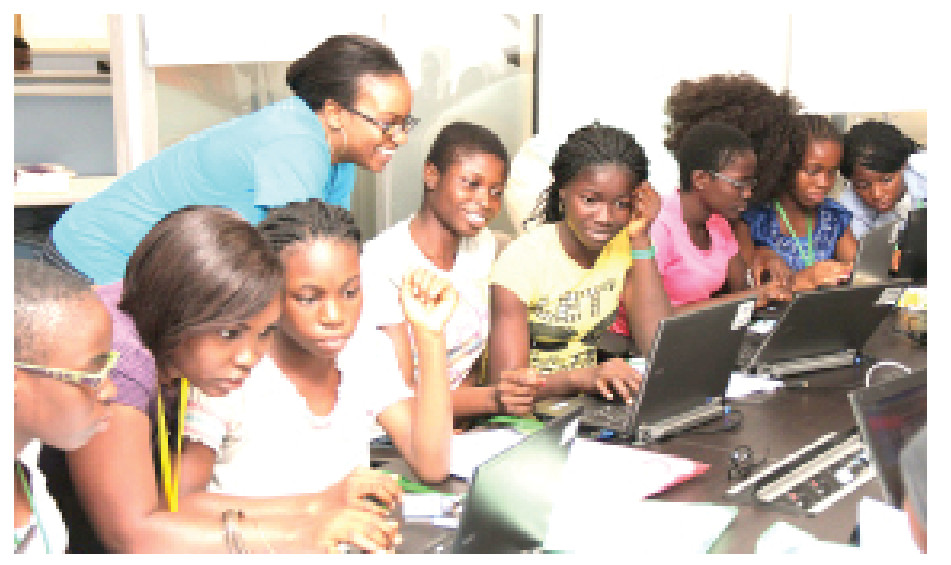
Science and innovation drive modern societies, yet across the world, women and girls remain on the margins of science, technology, engineering and mathematics.
The International Day of Women and Girls in Science, observed every 11 February, serves as a reminder that progress in STEM cannot be fully realised while half the population continues to face systemic exclusion.
In Nigeria, this imbalance remains deeply entrenched, shaped by cultural norms, educational gaps and limited opportunities for girls.
Globally, women make up only 35 per cent of STEM graduates, according to UNESCO, and less than 30 per cent of researchers.
Their representation is even lower in engineering and technology-related fields. These statistics show a global trend that Nigeria reflects sharply, where the journey into science for girls often ends before it properly begins.
UNESCO has long identified gender stereotypes as a major barrier. From early education, girls are frequently discouraged from pursuing science through subtle messaging that labels STEM as difficult or unsuitable for them.
These perceptions are reinforced by poorly resourced schools, limited access to quality science education and a lack of visible female role models.
In response, UNESCO supports initiatives that promote inclusive STEM education, strengthen teacher capacity and expand mentorship and role-model programmes that showcase women succeeding in science.
Nigeria’s reality, however, reveals persistent structural gaps. According to UNESCO, Nigeria has one of the lowest rates of female participation in STEM education worldwide.
Data from the National Bureau of Statistics also show that women account for only about 22 per cent of engineering and technology graduates annually, while they represent roughly 20 per cent of the ICT workforce.
These figures show long-standing barriers that limit girls’ entry into STEM fields and restrict their progression into professional careers.
For many Nigerian women, the imbalance is experienced first-hand. Ngozi Caleb, a mathematics graduate, recalls that during her university days, only four women were enrolled in a department of about 50 students.
She said the isolation was striking and often discouraging.
“When I walked into the Department of Mathematics class at the university, I quickly realised something was different.
“As I looked around the room, it became clear that I stood out in a way I had not anticipated. Out of an entire class of aspiring mathematicians, my presence was a striking imbalance that spoke volumes without a single word being said.”
According to her, such environments reinforce the perception that science is a male space, contributing to low retention rates for female students.
The challenge extends beyond Nigeria to the wider African continent, where a rapidly growing youth population underscores the urgency of STEM reform.
By 2030, young Africans are expected to constitute 42 per cent of the world’s youth. While this presents enormous potential, the continent faces a significant skills gap.
The World Economic Forum estimates that Africa will need 23 million additional STEM graduates by 2030 to meet labour market demands in key sectors.
Gender inequality compounds this challenge as women make up about 30 per cent of science professionals in Africa, but less than 15 per cent of engineering and technology researchers in parts of West and Central Africa.
Apart from gender, poverty, rural location, disability and limited digital access further exclude many young people from STEM education.
To address these gaps, UNESCO continues to support gender-responsive STEM programmes across Africa, focusing on teacher training, digital skills development and mentorship.
Its landmark report, Cracking the Code, remains a cornerstone for policymakers seeking to remove barriers to girls’ participation in science. At the continental level, recent efforts such as the 2024 Addis Ababa conference on transforming STEM education signal renewed commitment to inclusive reform.
We’ve got the edge. Get real-time reports, breaking scoops, and exclusive angles delivered straight to your phone. Don’t settle for stale news. Join LEADERSHIP NEWS on WhatsApp for 24/7 updates →
Join Our WhatsApp Channel