In this article, MARK ITSIBOR asseses the recent economic reforms in Nigeria in relation to current global vulnerabilities
When Nigeria embarked on a broad wave of economic reforms nearly two years ago, the decisions were difficult, controversial, and politically risky. Foreign exchange liberalisation unsettled businesses. Fuel subsidy removal triggered public discontent. Tight monetary policies raised borrowing costs and slowed consumption in the short term.
Yet, as the global economy grapples with renewed geopolitical tensions, rising energy prices, and fragile capital flows, many economists argue that those reforms may now be providing Nigeria with an important layer of protection against external shocks.
The ongoing conflict in the Middle East has once again exposed the vulnerability of emerging economies to global disruptions.
Oil and gas prices have surged, shipping costs have climbed, and financial conditions have tightened across international markets. Several African economies are facing renewed inflationary pressure and worsening fiscal strains.
But amid the turbulence, Nigeria is increasingly being viewed as an economy that, while still vulnerable, is becoming structurally stronger and more resilient than it was just a few years ago.
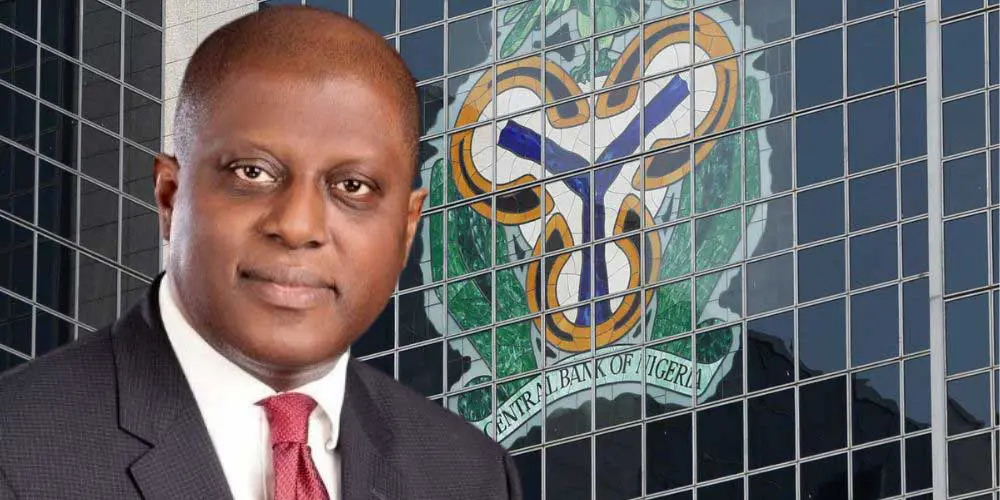
Analysts say the reforms undertaken by the fiscal authorities and the Central Bank of Nigeria under the current administration are beginning to alter the country’s economic fundamentals in ways that could support long-term stability and growth.
For years, Nigeria’s economy struggled under the weight of multiple distortions. A heavily managed foreign exchange system created arbitrage opportunities and discouraged investment. Fuel subsidies consumed enormous public resources. Fiscal deficits widened, while inflation and currency instability weakened investor confidence.
By mid-2023, pressure on the economy had intensified. Foreign exchange shortages disrupted manufacturing and trade. Businesses faced uncertainty over pricing and access to dollars. International investors became increasingly cautious.
The response from policymakers marked one of the most significant economic resets Nigeria has seen in decades.
The Federal Government initiated the removal of fuel subsidies, while the CBN moved to unify exchange rates and reduce direct interventions in the foreign exchange market. The apex bank also ended the practice of financing fiscal deficits through overdraft arrangements, a policy long criticised by economists for fuelling inflationary pressures.
At the same time, authorities introduced tighter monetary measures aimed at restoring credibility to monetary policy and stabilising prices. Though painful initially, the reforms were designed to restore macroeconomic balance and create a more market-driven economy.
Among the most consequential reforms was the liberalisation of the foreign exchange market.
Before the changes, Nigeria operated multiple exchange rate windows that created significant pricing distortions and encouraged speculative activities. Businesses often struggled to access foreign exchange through official channels, forcing many to rely on the parallel market.
The CBN’s decision to unify the exchange rate and clear an estimated $7 billion foreign exchange backlog was widely interpreted as a signal of renewed policy seriousness.
The reforms also improved transparency in the FX market and enhanced regulatory oversight of financial flows.
Over time, analysts say these measures helped restore confidence among foreign investors and multilateral institutions.
Nigeria’s sovereign risk premium has declined significantly in recent months, while the country successfully returned to international capital markets in late 2025 after a prolonged absence.
The World Bank described the FX reforms as a bold but necessary intervention capable of improving the long-term sustainability of the economy.
The impact is also becoming visible in reserve accretion and capital inflows. The stability of the exchange rate in recent months has reduced uncertainty for investors and businesses alike.
According to Cardoso, Nigeria now receives roughly $600 million monthly from diaspora remittances, providing an important source of foreign exchange liquidity.
Inflation fight and monetary discipline
Inflation remains one of the biggest economic challenges facing Nigeria, particularly given the pressure it places on household incomes and business costs.
The CBN’s response has been anchored on orthodox monetary policy measures aimed at restoring price stability and anchoring market expectations.
Cardoso has repeatedly argued that achieving macroeconomic stability requires close coordination between fiscal and monetary authorities. “Managing disinflation amidst persistent shocks requires not only robust policies but also coordination between fiscal and monetary authorities to anchor expectations and maintain investor confidence,” he said recently.
The apex bank’s monetary tightening measures initially drew criticism from segments of the private sector concerned about rising borrowing costs. However, supporters argue that the policies were necessary to restore policy credibility after years of loose monetary conditions.
More recently, improving inflation trends have allowed the Monetary Policy Committee to gradually ease policy conditions to support economic recovery.
The CBN says the easing reflects confidence that inflationary pressures are beginning to moderate, even as authorities remain cautious about external risks.
Another pillar of the reform programme has been strengthening the banking sector.
The CBN introduced new minimum capital requirements for banks, with implementation scheduled to conclude in 2026. The recapitalisation exercise is intended to position Nigerian banks to support a larger and more diversified economy.
According to the apex bank, several financial institutions have already raised fresh capital through rights issues and public offerings ahead of the deadline.
Cardoso maintains that the banking system remains fundamentally strong.
He noted that non-performing loans remain within prudential benchmarks, while liquidity ratios continue to exceed regulatory minimums. Stress tests conducted by regulators also indicated that the sector retains adequate resilience against potential shocks.
Analysts say stronger bank capitalisation could improve credit availability for businesses, particularly micro, small and medium enterprises, while supporting investment in critical sectors such as infrastructure, agriculture, and manufacturing.
Fiscal reforms and revenue mobilisation
Beyond monetary policy, fiscal reforms have also played a major role in reshaping Nigeria’s economic outlook.
The removal of fuel subsidies significantly reduced fiscal pressures and freed up government resources for other priorities. Authorities have also intensified efforts to improve tax collection, expand revenue sources, and reduce leakages in public finance management.
Economists say these measures are helping to create a more sustainable fiscal environment at a time when many developing economies are struggling with rising debt service obligations.
Improved fiscal discipline has also strengthened Nigeria’s engagement with international lenders and investors.
While public debt remains a concern, analysts argue that the country’s debt profile is becoming more manageable due to stronger revenues, improved external balances, and ongoing reforms.
Global institutions acknowledge progress
International financial institutions have increasingly recognised Nigeria’s reform efforts, even while cautioning that challenges remain.
In its latest Global Economic Prospects report, the World Bank upgraded Nigeria’s growth forecast for 2026 to 4.4 per cent, citing the impact of structural reforms and prudent monetary management.
The bank expects growth to be driven by expansion in services, recovery in agriculture, and gradual improvement in non-oil industries. It also noted that reforms in taxation and monetary policy are likely to strengthen investor sentiment and further reduce inflationary pressures.
The International Monetary Fund has acknowledged that economies implementing difficult reforms are better positioned to absorb global shocks.
Managing Director Kristalina Georgieva recently observed that countries capable of sustaining oil and gas exports during the Middle East crisis would face lower risks than heavily import-dependent economies.
However, she warned that global uncertainty remains elevated and that emerging economies must continue strengthening buffers against future disruptions.
Persistent risks beneath the optimism
Despite improving indicators, economists caution against excessive optimism.
Inflationary pressures remain elevated compared to historical levels, while food prices continue to strain household purchasing power. High energy costs, insecurity in agricultural regions, and infrastructure deficits still pose serious risks to growth.
The World Bank has warned that Sub-Saharan Africa’s broader recovery remains fragile due to high debt burdens, geopolitical uncertainty, and structural weaknesses.
Its Africa Economic Update noted that rising fuel and fertiliser prices could worsen inflation across the region and disproportionately affect vulnerable households.
For Nigeria, sustaining reform momentum while protecting vulnerable citizens remains a delicate balancing act.
There are also concerns that policy consistency will be critical. Investors and businesses are closely watching whether authorities maintain commitment to market-driven reforms or revert to interventionist measures under political pressure.
Still, many economists believe the reforms are laying the foundation for stronger long-term growth.
Nigeria’s growing digital economy, expanding telecommunications sector, and increasing local refining capacity are seen as potential drivers of industrial expansion and export growth. The operationalisation of large-scale domestic refining is expected to reduce pressure on foreign exchange demand linked to fuel imports, while supporting industrial activity.
Agriculture and manufacturing could also benefit from improved access to foreign exchange and more stable macroeconomic conditions.
For younger Nigerians, the hope is that a more stable economy will eventually translate into greater job creation and business opportunities.
A cautious but stronger economy
Nigeria’s economic reform journey remains unfinished. The country continues to face difficult social and economic realities, and many households are yet to feel the full benefits of the changes underway.
Yet, there is increasing evidence that the reforms undertaken over the past two years are beginning to strengthen the economy’s resilience in ways that were previously absent.
The combination of exchange rate reforms, tighter monetary discipline, fiscal restructuring, and banking sector strengthening has created buffers that may help Nigeria better withstand future shocks.
As global uncertainty deepens, the true test of the reforms may not simply be whether they attract investors or improve macroeconomic indicators, but whether they ultimately deliver sustainable growth, lower inflation, and broader economic inclusion.
For now, Nigeria appears to be moving gradually from a period of economic firefighting toward one focused on rebuilding credibility, restoring stability, and positioning the economy for long-term resilience.
We’ve got the edge. Get real-time reports, breaking scoops, and exclusive angles delivered straight to your phone. Don’t settle for stale news. Join LEADERSHIP NEWS on WhatsApp for 24/7 updates →
Join Our WhatsApp Channel