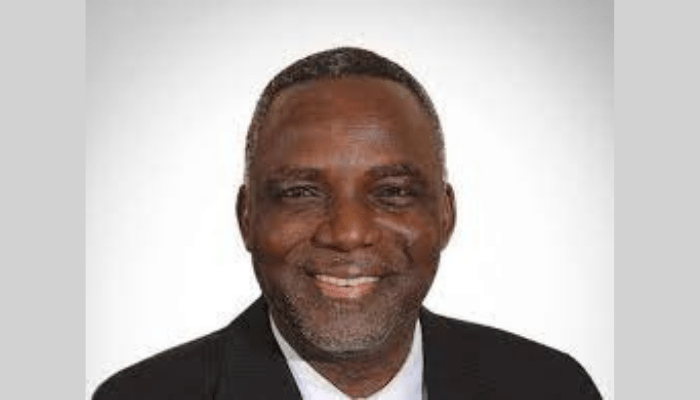
Nigeria must generate and make available at least 100,000 megawatts (MW) of electricity to meet its industrial, economic, and population demands, according to Barth Nnaji, former minister of power and chairman of Geometric Power Limited.
Speaking during an interview on Arise TV’s Morning Show, Nnaji said Nigeria’s current energy generation and transmission capabilities fall woefully short of the levels required to stimulate sustainable economic growth and provide reliable power to its over 200 million citizens.
“As we are now, the transmission infrastructure is simply not going to be able to carry the required power in the nation. We need at least 100,000mw of power here to be available—not just installed—to be able to serve this country,” he said.
Nnaji highlighted that Nigeria’s installed power capacity—currently hovering around 13,000MW, with less than 5,000MW actually available on the grid—lags behind the energy needs of comparable emerging economies. In contrast, South Africa, with a much smaller population, has an installed capacity of over 58,000mw, while Brazil and India are generating over 180,000mw and 400,000mw respectively.
Speaking on the Federal Government’s new National Integrated Electricity Policy, Nnaji described the initiative as promising but warned that without proper execution, it may not yield significant results.
“For the policy to work, there must be aggressive investment in generation capacity, complete overhaul and expansion of transmission infrastructure, and the implementation of cost-reflective tariffs,” he stated.
He criticised the continued financial burden placed on the federal government due to a dysfunctional pricing model in the electricity sector, pointing to the more than N4 trillion debt accumulated due to unsustainable electricity subsidies.
“If we want to have electricity, it must be paid for. There is no place in the world where electricity is free. But it must be affordable and cost-reflective. When DisCos are unable to recover their costs, and the Federal Government continues to bear the gap, it becomes unsustainable,” Nnaji explained.
The former minister also weighed in on the Federal Government’s proposal to ban the importation of solar panels in a bid to promote local manufacturing. While supportive of the idea in principle, Nnaji expressed doubts about Nigeria’s current readiness for such a transition.
“The idea of producing goods for our consumption is good. But do we have the capacity to produce solar panels to meet demand? I’m not sure that we are there yet,” he said.
He cautioned that while the move could eventually boost domestic manufacturing, a sudden ban could lead to unintended consequences, including shortages and price hikes.
“I don’t think that immediately banning the importation of solar panels will get us there. But perhaps it might stimulate a lot of people to invest in local production,” he noted.
Instead of relying solely on renewables, Nnaji advocated for a more balanced and pragmatic energy strategy—one that leverages Nigeria’s abundant natural gas reserves as a bridge fuel while scaling up renewable energy solutions over time.
“We think that renewable energy is an immediate solution. It is not going to be an immediate solution for a while,” he said.
He urged the government and private sector to invest more in gas-powered electricity plants, saying the country’s massive natural gas resources remain underutilised.
“We have an abundance of natural gas. We need to capitalise on this by producing the gas to power plants. At the same time, we should be encouraging the building of solar plants. It must be a combined strategy,” he said.
Nnaji’s remarks come at a time when Nigeria is grappling with a deepening power crisis that has crippled industries, constrained economic productivity, and hindered foreign investment.
As global conversations around energy transition and climate change accelerate, stakeholders are calling on the Nigerian government to make bold, data-driven decisions to address energy poverty while unlocking the economic potential of a stable electricity supply.For Nnaji, the way forward is clear: “We cannot afford to delay. Power is the foundation of industrial growth, job creation, and national prosperity. Without adequate power, development will remain a distant dream.”
We’ve got the edge. Get real-time reports, breaking scoops, and exclusive angles delivered straight to your phone. Don’t settle for stale news. Join LEADERSHIP NEWS on WhatsApp for 24/7 updates →
Join Our WhatsApp Channel