Nigeria’s real estate sector is entering what industry analysts describe as a defining phase, as broader economic reforms reshape how capital, housing demand, and development strategies interact across the country.
Reviewing the 2026 market outlook prepared by the managing director of Legendary Foreshore, Mr. Victor Ameh indicates that the sector is no longer insulated from macroeconomic realities such as inflation, foreign exchange volatility, and rising interest rates. Instead, these pressures are now directly influencing what gets built, who can afford it, and which developers survive.
At the heart of this shift is a stark contradiction: Nigeria faces a housing deficit estimated between 20 and 28 million units, yet affordability remains the biggest barrier to closing that gap. Demand is not the problem. Execution is.
Economic tightening, driven by reforms aimed at stabilizing public finances and restructuring key sectors, has significantly raised the cost of capital. Developers who once relied on speculative funding or informal financing structures are now facing a harsher environment in which access to structured finance determines viability.
Mortgage penetration, still below 1 per cent, continues to limit average Nigerians’ ability to purchase homes. This leaves most developments dependent on equity funding, short-term capital, or instalment-based sales models, all of which are increasingly strained under current economic conditions.
The report highlights that affordability has emerged as the “gatekeeper” of the market. Rising living costs, including rent, energy, transportation, and service charges, are forcing tenants and buyers to reassess what they can sustain. As a result, projects that do not align with actual income levels are struggling to attract occupants, regardless of how well they are branded.
This trend is already reshaping development priorities. Luxury housing, once a dominant focus in cities like Lagos and Abuja, is losing momentum to mid-market and affordable housing segments. Developers are being pushed toward smaller units, phased construction, and cost-efficient designs that reflect economic realities rather than aspirational pricing.
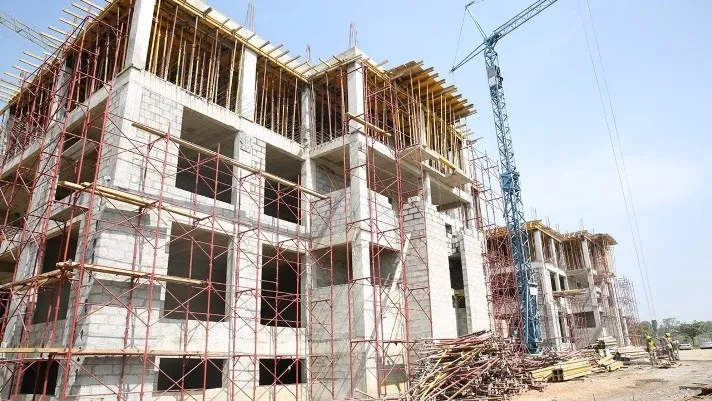
Construction economics has also become a major pressure point. Nigeria’s heavy reliance on imported building materials means foreign exchange fluctuations directly impact project costs. Many developments are now at risk of stalling or failing entirely due to sudden cost escalations.
To cope, developers are adopting new strategies: standardizing designs, locking in supply chains early, and substituting imported materials with local alternatives where possible. The era of ambitious, high-cost architectural projects without clear financial planning is fading.
Urbanization continues to intensify the situation. With Nigeria’s population surpassing 230 million and more than half living in urban areas, cities are experiencing sustained migration. This is driving rental demand, particularly in economic corridors where employment opportunities exist.
However, tenants are becoming more selective. According to the outlook, the days of paying premium rents for poorly managed or inadequately serviced properties are coming to an end. There is a growing expectation that pricing must match the quality of infrastructure and services provided.
Government policy is also under pressure to adapt. The report calls for digitisation of land administration systems, faster approval processes, and expanded housing finance mechanisms. Without these reforms, analysts warn that demand will remain “trapped,” unable to translate into actual housing supply.
For investors, the message is equally clear: capital is becoming more cautious. The market is shifting away from speculative investments toward income-generating assets with clear documentation and predictable cash flow, with industrial real estate such as logistics hubs and warehouses emerging as a more stable alternative to traditional residential and commercial developments.
Ultimately, 2026 is being framed as a year of separation within the industry. Developers with strong financial discipline, operational efficiency, and credible execution models are expected to gain market share. Those relying on hype, aesthetics, or weak structures risk being pushed out.
The report concludes that the Nigerian real estate market is not slowing down; it is being refined. In this new phase, economic realities are no longer background factors; they are the central force determining who builds, who buys, and who survives.
We’ve got the edge. Get real-time reports, breaking scoops, and exclusive angles delivered straight to your phone. Don’t settle for stale news. Join LEADERSHIP NEWS on WhatsApp for 24/7 updates →
Join Our WhatsApp Channel