By Babayola M. Toungo
I came across an article published in Leadership newspaper on August 9, 2026, by Shu’aibu Shua’ibu, which sought to revisit the events surrounding the emergence of Chief Olusegun Obasanjo as the presidential candidate of the Peoples Democratic Party in 1999 and, in the process, brought the late Salihijo Ahmad into the long-running political history of Obasanjo and Alhaji Atiku Abubakar.
Having read the article carefully, I feel compelled to set the record straight. What the writer presented about Salihijo Ahmad is, in all material respects, incorrect. I say this with some confidence because I was not merely a distant observer of the events being discussed; I was involved.
The first and most important point is this: Salihijo Ahmad was never considered as a running mate to Chief Olusegun Obasanjo in 1999. At no point, to the best of my knowledge and recollection, was Salihijo proposed, canvassed or seriously considered for the vice-presidential position. That is not a matter of interpretation. It is a matter of fact. The second assertion in the article is equally problematic. The late Salihijo Ahmad did not personally contribute N70 million to the Obasanjo campaign. The story behind the figure is quite different.
At the time, there existed a group known as the Millennium Collective, a group of Nigerians who were deeply concerned about the return of democracy, the restoration of democratic institutions and the emergence of a political order founded on good governance. The Collective was involved in the political ferment surrounding Nigeria’s transition from military rule to democratic government and took a particular interest in the kind of leadership that would emerge from that process.
The Collective supported the emergence of Chief Olusegun Obasanjo and, importantly, advocated for the late Abba Kyari to be chosen as Obasanjo’s running mate. It was the Millennium Collective, as a group, that made a contribution of N100 million to the political effort. Salihijo Ahmad was a member of the Collective. That is the connection.
Somehow, almost three decades later, that collective contribution has been transformed into a personal donation of N70 million by Salihijo, while Salihijo himself has been retrospectively presented as a possible vice-presidential candidate. Neither proposition reflects the reality of what happened.
There is a significant difference between saying that a man belonged to a group which made a political contribution and saying that the man personally made that contribution. There is an even greater difference between being a member of a political advocacy group and being a contender for the vice-presidential nomination. Those distinctions may appear small to someone reconstructing history from a distance. To those of us who were there, they are anything but small.
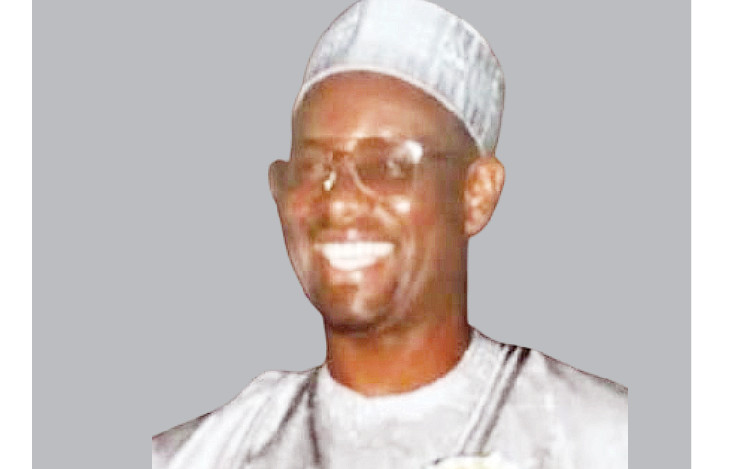
Salihijo Ahmad was an influential Nigerian who, like many others of his generation, played his part in the struggle to move Nigeria away from military rule and towards democratic government. His contribution to that period should be remembered accurately and in its proper context.
There is therefore no need to manufacture a political biography for him that he never had.
What I find particularly difficult to understand is why Salihijo’s name has been introduced into the present exchange between Obasanjo and Atiku in the first place. These are two men who dominated Nigerian politics for much of the period under discussion. They occupied the two highest elective offices in the country between 1999 and 2007. They participated directly in the events whose history is now being contested. They have both spoken extensively about that period and, if necessary, have ample records, witnesses and political history with which to defend their respective versions of events.
Salihijo Ahmad has none of those privileges. He died in July 1999, only weeks after Nigeria returned to democratic rule and barely two months after Obasanjo assumed office as President. For 27 years, he has had no voice with which to explain himself, correct a misrepresentation or challenge an account attributed to him. There is something deeply unsettling about bringing the name of a dead man into a political quarrel between two living protagonists who are perfectly capable of answering for themselves.
History is important precisely because memory is fragile. And when the people who made history begin to disappear, those who remain have an even greater responsibility to preserve the distinction between what happened and what we would now like to believe happened.
The events surrounding the formation of the PDP, the struggle for its presidential ticket, the Jos convention, the negotiations that preceded the emergence of Obasanjo as the party’s presidential candidate and the eventual choice of his running mate were undoubtedly complex. Different political actors played different roles. There were alliances, negotiations, competing interests and considerable uncertainty about the direction Nigeria’s new democracy would take. Those events deserve serious historical treatment.
But serious history cannot be constructed by connecting unrelated facts simply because they make a compelling contemporary story. If the Millennium Collective contributed N100 million, then that is what should be recorded. If Salihijo Ahmad was a member of the Collective, then that should be recorded as well. If the Collective supported Abba Kyari for the vice-presidential slot, that is part of the historical record.
But Salihijo should not be transformed into a vice-presidential contender merely because he belonged to a group that participated in the political process. Neither should a collective contribution be retrospectively converted into a personal donation attributed to him. This matters beyond Salihijo himself.
A generation of Nigerians who participated in the struggle for democracy is gradually passing away. With their departure, firsthand memories of the extraordinary period preceding the 1999 elections are also disappearing. Those of us who were privileged to witness some of those events have a duty to preserve the truth as we remember it, even when that truth may not fit neatly into the political narratives of today.
The history of 1999 should not become collateral damage in a political argument in 2026.
Obasanjo and Atiku have their own records. They have their own versions of history. They have more than enough political experience, public statements and documentary evidence to make their respective cases. There is simply no reason to recruit Salihijo Ahmad into a quarrel he is no longer here to contest. The dead deserve at least the dignity of an accurate memory. Salihijo Ahmad should therefore be remembered for the role he actually played in Nigeria’s transition to democracy, not for roles subsequently attributed to him.
And, for the sake of the historical record, I believe it is important to state this plainly: Salihijo Ahmad was never considered as Chief Olusegun Obasanjo’s running mate in 1999. He did not personally contribute N70 million to Obasanjo’s campaign. He was a member of the Millennium Collective, which contributed N100 million to the political process and advocated for the late Abba Kyari to be chosen as Obasanjo’s running mate.
That is the history as I know it. And, importantly, I was there.
We’ve got the edge. Get real-time reports, breaking scoops, and exclusive angles delivered straight to your phone. Don’t settle for stale news. Join LEADERSHIP NEWS on WhatsApp for 24/7 updates →
Join Our WhatsApp Channel